
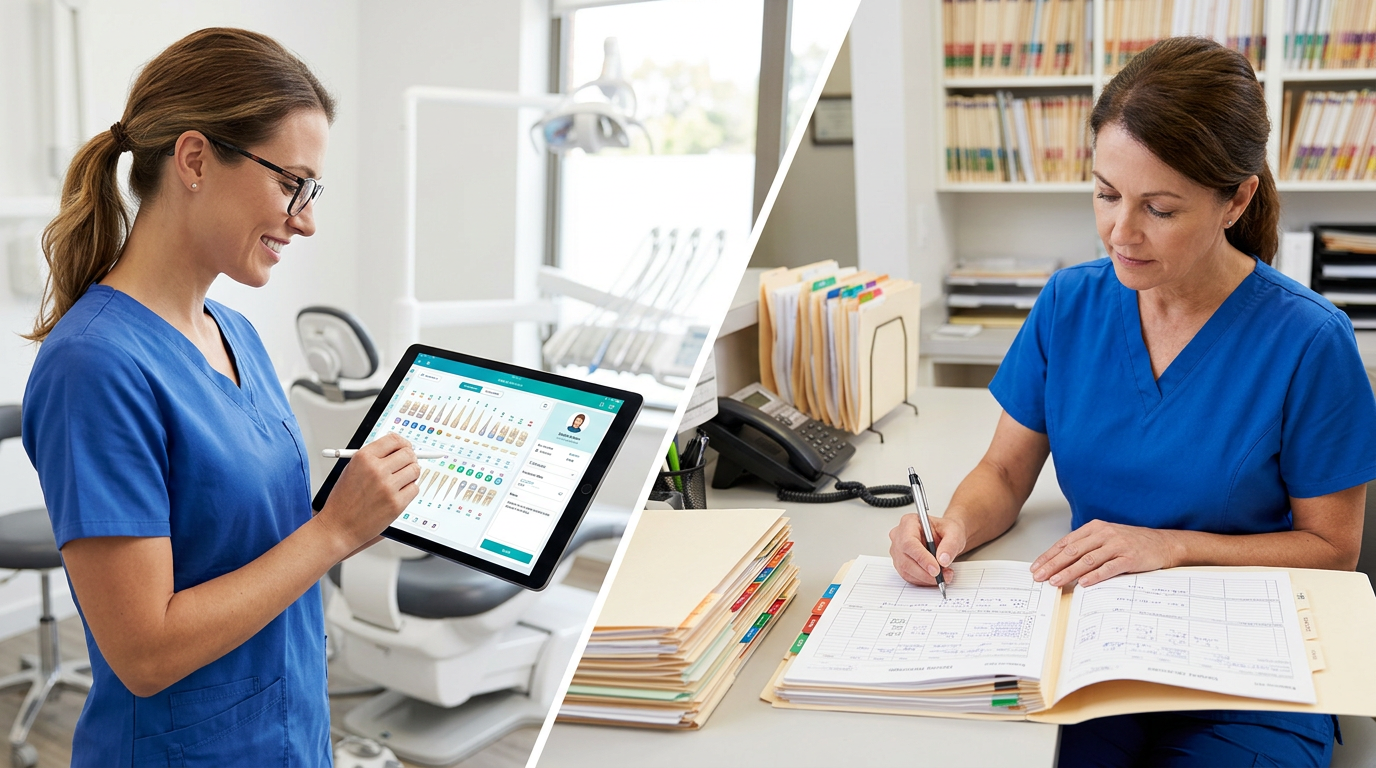
Digital Dental Charting vs. Paper Charts: Which Wins on Accuracy?
Digital dental charting is fast replacing the paper chart as the foundation of accurate record-keeping in modern practices, and for good reason. Most clinicians know the pain firsthand: a smudged probing depth, a treatment note no one can read, or a folder that vanishes the day a patient walks in for an emergency. For decades, paper charts were the only repository of a patient's oral health journey. Today, digital systems offer a clearly superior path on accuracy, efficiency, and security. This guide compares digital charting against traditional paper records head-to-head, so you can decide which method truly protects your patients and your practice. At Denti360, we know that choosing the right record-keeping system shapes both patient care and day-to-day operations.
The Legacy of Paper Charts: Why Practices Relied on Them
Before weighing the case for digital, it helps to understand why paper charts endured. For generations, they were the only option, a tangible record of every patient interaction. A typical chart held hand-written notes, diagrams, treatment plans, consent forms, and medical histories. Practices adopted them for one simple reason: they were straightforward, and nothing else existed.
Advantages of Paper Charts
- Low Initial Cost: A paper-based system needs little upfront investment, mostly charts, folders, pens, and filing cabinets.
- No Technical Expertise Required: Staff need no computer skills or software training to use paper charts.
- Tangible Format: Some clinicians and patients value the physical presence of a chart, which can feel more personal.
- Immediate Accessibility Within the Office: In a single location, a well-organized chart can be pulled quickly from a cabinet.
Disadvantages of Paper Charts
- Risk of Loss or Damage: Fire, water, or simple misplacement can destroy a chart, and lost data is often gone for good.
- Legibility Issues: Illegible handwriting invites misinterpretation, treatment errors, and disputes.
- Space Requirements: A growing practice needs ever more room for filing cabinets, which gets costly and cumbersome.
- Time-Consuming Tasks: Filing, retrieving, and updating charts eat into time that belongs to patient care.
- Limited Accessibility: Access stops at the physical chart, making remote work or multi-location collaboration impossible.
- Difficulty in Data Analysis: Pulling data for reporting, research, or practice analysis is impractical at best.
- Security Vulnerabilities: Lockable cabinets offer modest protection, but paper remains exposed to unauthorized access or theft.
- Environmental Impact: Constant paper and printing use adds to environmental concerns.
The Rise of Digital Dental Charting: A Paradigm Shift
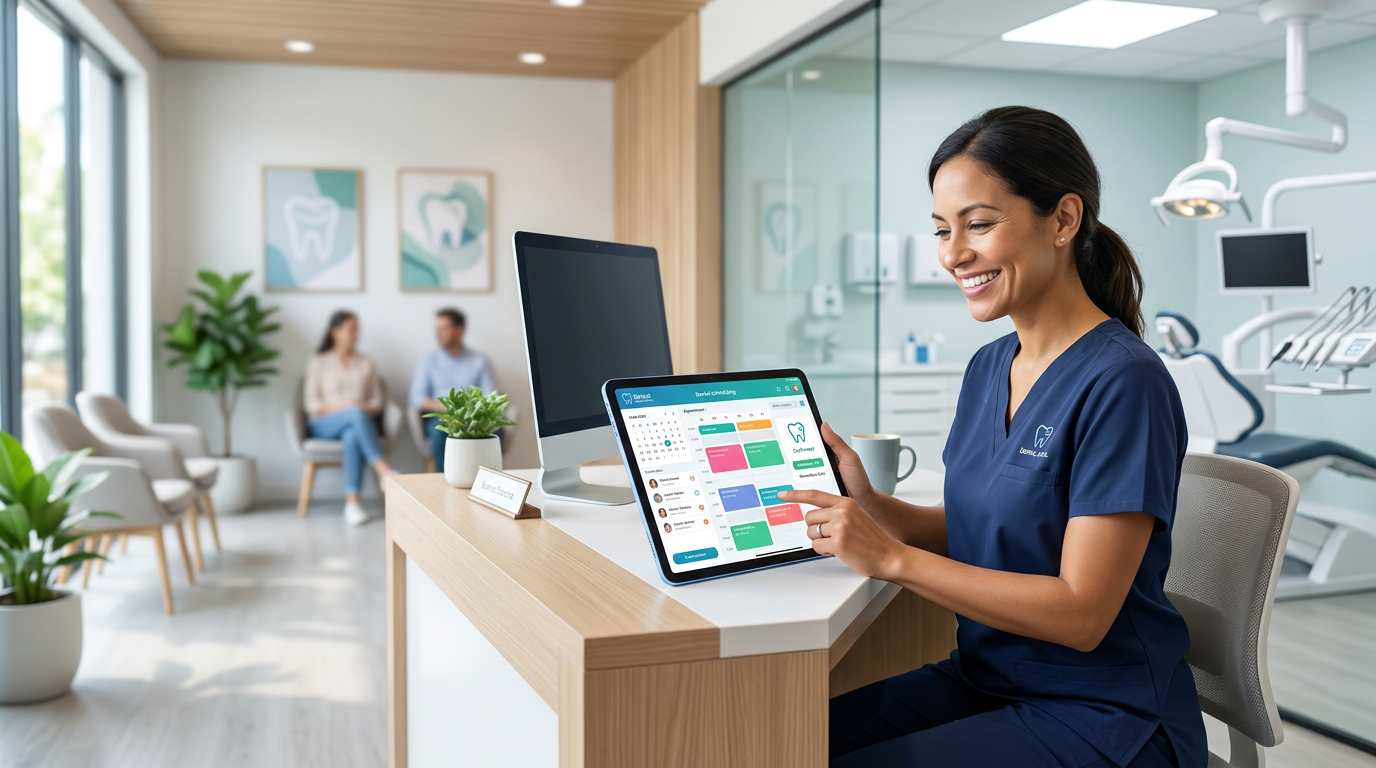
Digital dental charting uses purpose-built software and hardware to create, store, and manage patient records electronically. It pulls charting, medical history, treatment plans, imaging, and administrative details into one unified, accessible system. The result is a fundamental change in how practices handle information, moving toward greater efficiency, accuracy, and security.
Core Components of Digital Dental Charting Systems
- Electronic Health Records (EHR) Software: The central platform for managing all patient data.
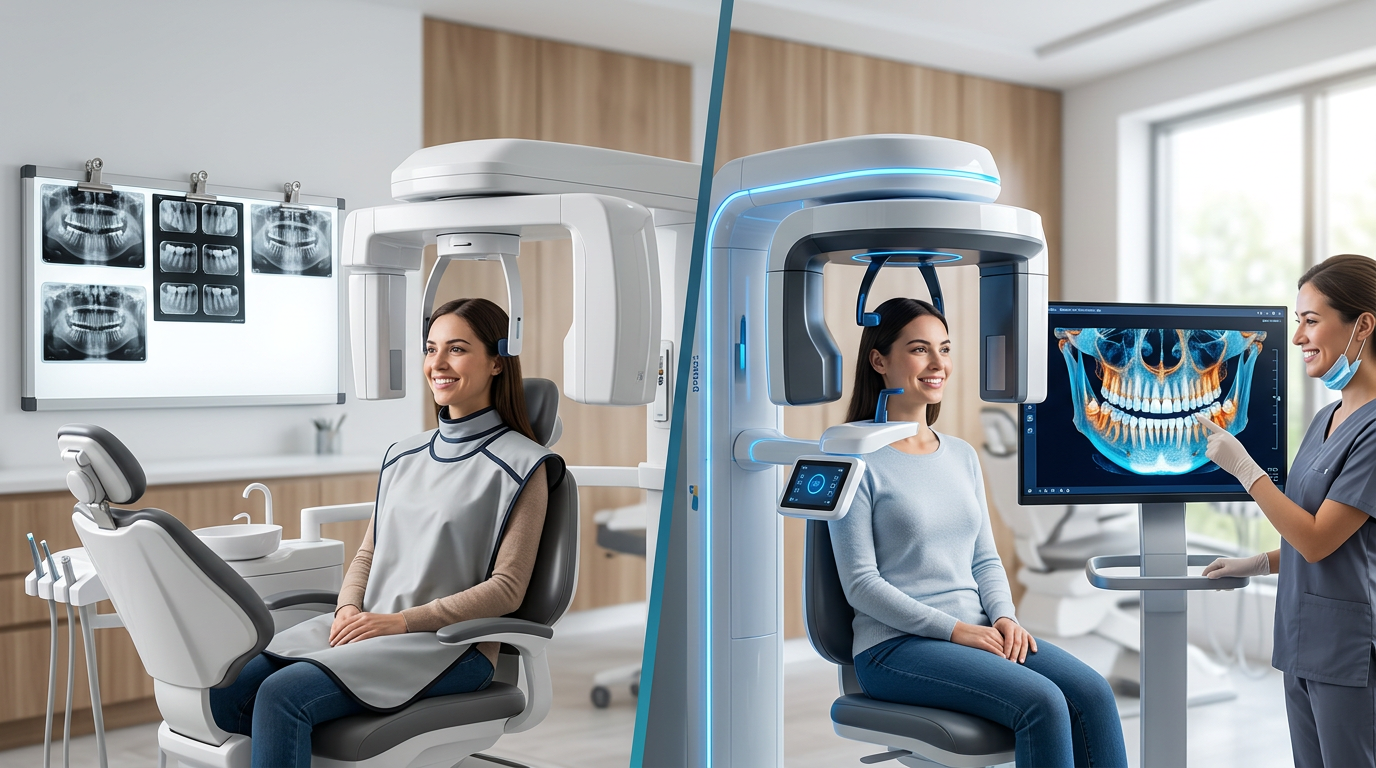
- Digital Radiography Integration: Seamless display and management of X-rays and other imaging.
- Intraoral Camera Integration: High-resolution images of the oral cavity linked directly to patient records.
- Periodontal Charting Tools: Automated recording of probing depths, recession, mobility, and other periodontal indicators.
- Treatment Planning Modules: Tools for creating, presenting, and tracking treatment plans.
- Patient Education Tools: Visual aids that explain conditions and treatments to patients.
Advantages of Digital Dental Charting
- Enhanced Accuracy and Legibility: No more handwriting guesswork. Entries stay clear and consistent, while standardized templates and auto-fill options reduce errors.
- Improved Efficiency and Time Savings:
- Instant Retrieval: Records open instantly from any authorized workstation or remotely, saving valuable chairside time.
- Streamlined Workflows: Charting, note-taking, and history updates become faster and more intuitive.
- Reduced Administrative Burden: No manual filing, sorting, or searching, which frees staff for more productive work and smoother patient management.
- Superior Data Security and Backup:
- Encryption: Data is typically encrypted to guard against unauthorized access.
- Access Controls: User authentication and role-based access ensure only authorized personnel view or edit specific parts of a record.
- Automated Backups: Regular, often cloud-based backups protect against hardware failure, disaster, or human error.
- Audit Trails: Systems log every action, creating an immutable trail for compliance and accountability.
- Seamless Integration with Other Technologies: Digital charting connects with practice management software, digital imaging, CAD/CAM systems, and patient communication platforms to form one holistic ecosystem.
- Advanced Data Analysis and Reporting: Digital data is easy to query for performance metrics, patient demographics, treatment outcomes, and research, fueling smarter strategic decisions.
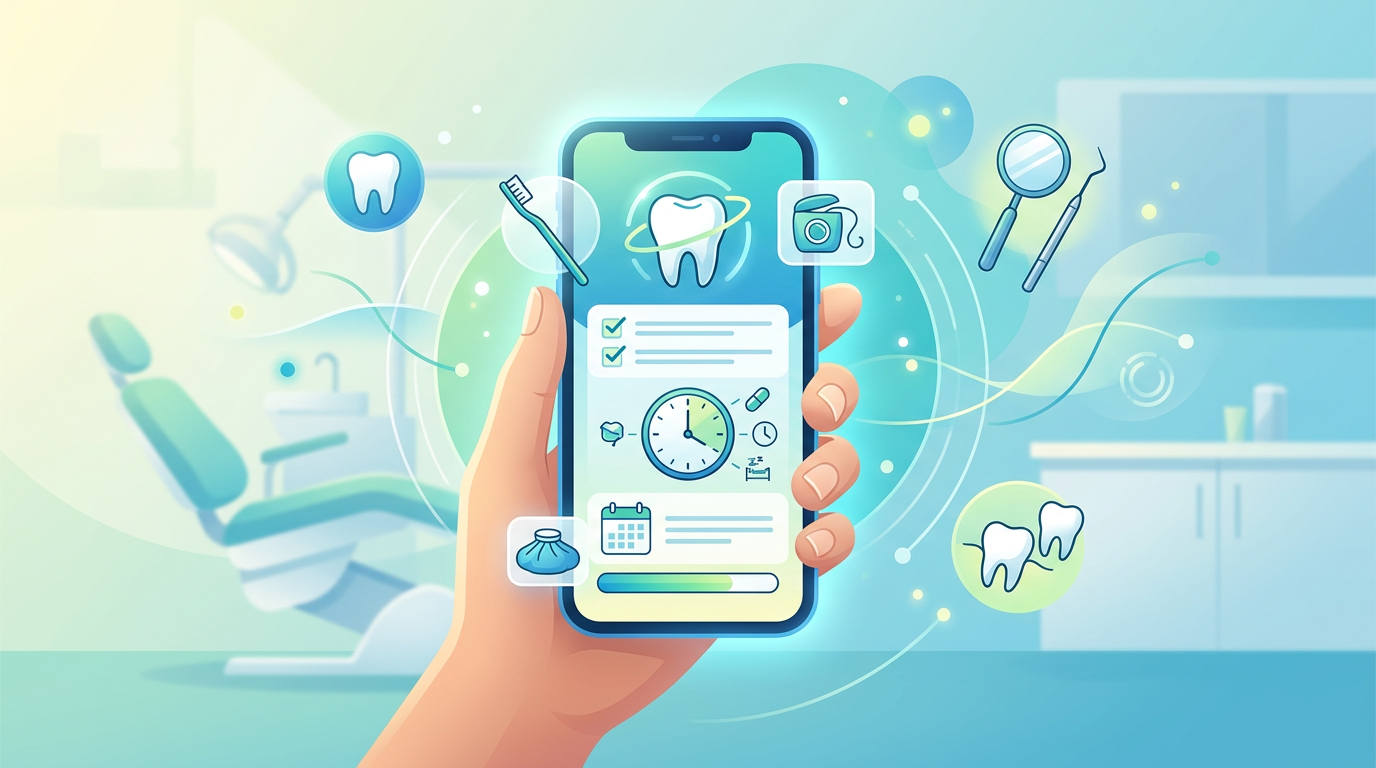
- Enhanced Patient Engagement and Education: Digital X-rays, intraoral images, and animated explanations on-screen help patients understand their conditions and treatments, building trust and informed consent.
- Environmental Friendliness: Far less paper means a greener practice.
- Remote Accessibility and Collaboration: Secure remote access lets dentists review records from outside the office for urgent consults or multi-site management.
- Compliance and Regulatory Adherence: Digital systems are built to help practices meet HIPAA (or local equivalent) requirements for data privacy and security, and audit trails simplify compliance checks.
Disadvantages of Digital Dental Charting
- Higher Initial Investment: Software licenses, hardware, networking, and implementation carry real upfront costs.
- Learning Curve and Training: Staff need time and resources to become proficient with a new system.
- Dependency on Technology: Reliance on power, connectivity, and working hardware means possible downtime during outages.
- Data Migration Challenges: Converting existing paper records to digital can be a substantial, time-consuming, and costly project.
- Security Risks From Cyber-Attacks: Even robust systems face threats like hacking or ransomware, so strong protocols and vigilance matter.
- Software Updates and Maintenance: Ongoing licenses, updates, and IT support keep the system functional and secure.
Why Digital Charting Wins on Accuracy and Efficiency
Weigh the trade-offs and digital dental charting stands out as the superior method for accurate record-keeping in a modern practice. Paper charts offer simplicity and low cost, but their weaknesses in legibility, accessibility, security, and data analysis cripple their usefulness in today's fast-paced, tightly regulated environment.
Despite the higher upfront investment and learning curve, digital systems deliver a framework that:
- Minimizes Human Error: Standardized entry replaces illegible handwriting.
- Enhances Data Integrity: Structured fields, automated entries, and audit trails keep records trustworthy.
- Improves Data Security: Encryption, access controls, and comprehensive backups protect patient data.
- Boosts Operational Efficiency: Streamlined workflows, instant retrieval, and seamless integration keep the practice moving.
- Empowers Informed Decision-Making: Advanced analytics surface insights paper never could.
The Future of Dental Record-Keeping With Denti360
At Denti360, we see a sophisticated digital charting system as more than an upgrade; it is a strategic move for any practice committed to top-quality care, efficient operations, and long-term sustainability. The payoff reaches well beyond record-keeping, touching patient education, treatment planning, billing, and regulatory compliance alike. Explore the full range of practice benefits that come with going digital.
As technology advances, the gap between paper and digital will only widen. AI-powered diagnostics, predictive analytics, and deeper interoperability are already on the horizon, cementing digital systems as the backbone of future practices. Adopting a robust charting solution now puts your practice at the leading edge of dental innovation.
Moving from paper to digital is a significant decision, but with careful planning, proper training, and the right technology partner, the transition can be smooth and deeply rewarding. Embrace a future where accuracy, efficiency, and security converge into an unmatched patient and practice experience.
Conclusion: Make the Move to Digital Charting
The comparison is clear: digital dental charting outperforms paper on accuracy, security, and efficiency. Paper charts served the profession well for decades, but modern systems now outmatch them at nearly every turn. For any practice chasing precise records, streamlined operations, stronger data security, and better patient care, the shift to digital charting is a necessity rather than an option. Make the move and your practice will be ready to meet the demands and seize the opportunities of modern dentistry well into 2026 and beyond. Ready to see it in action? Book a demo with Denti360 and start your transition today.