Ask any experienced dentist what separates a practice that patients trust for life from one they visit once and forget, and the answer rarely comes down to a single treatment or a piece of equipment. It comes down to philosophy. The dental practices that consistently deliver outstanding outcomes — clinical and experiential — tend to operate from a coherent framework that balances three interconnected commitments: proactive prevention, purposeful use of technology, and care that genuinely centres the patient as a person, not just a set of teeth. This is what we call the dental triad, and it is increasingly the benchmark against which modern dental practice in India is measured.
Prevention: The Most Undervalued Pillar of Oral Health
Preventive dentistry is not glamorous, but the evidence for its impact is overwhelming. Catching early-stage caries before they progress to pulpal involvement, identifying periodontal disease at the gingivitis stage rather than after bone loss has occurred, and educating patients on dietary habits that erode enamel — these interventions save patients pain, money, and tooth structure. They also build the kind of long-term trust that fills a practice with loyal, recall-compliant patients.
Effective prevention in a contemporary Indian dental practice spans several dimensions:
- Risk-stratified recall intervals: Not every patient needs a six-monthly recall. High-risk patients — those with a history of rapid caries progression, uncontrolled diabetes, or poor home care — may benefit from three-monthly appointments, while low-risk patients can safely extend to nine or twelve months. Using your dental practice management software to flag and manage these different recall schedules ensures no patient slips through.
- Individualised oral hygiene coaching: Generic advice to "brush twice a day" rarely changes behaviour. Demonstrating technique, recommending specific interdental cleaning tools for a patient's anatomy, and following up at the next appointment to check compliance — this is what actually moves the needle.
- Systemic health integration: The relationship between oral health and conditions like diabetes, cardiovascular disease, and pre-term birth is well-established. Practices that routinely take medical histories, flag systemic risk factors, and communicate with patients' physicians when relevant are practising dentistry at its most complete.
- Protective measures for at-risk patients: Pit and fissure sealants for children with deep molar anatomy, custom occlusal splints for bruxists, and fluoride varnish applications for caries-prone adults — these targeted interventions prevent predictable problems and demonstrate clinical thoroughness.
The challenge is that preventive conversations take time, and time is always under pressure in a busy schedule. This is where dental software India practices increasingly rely on becomes essential: automated recall reminders, pre-populated risk assessment forms, and patient education content delivered between appointments all extend the preventive conversation beyond the treatment room.
Technology: Precision, Efficiency, and the Patient Experience
Dental technology in India has advanced rapidly, and the gap between what is available and what most practices have adopted remains significant. The practices that invest thoughtfully in the right technology — rather than accumulating equipment for its own sake — see measurable improvements in diagnostic accuracy, treatment outcomes, and patient confidence.
Several technologies deserve particular attention:
- Digital radiography: The shift from film to digital X-rays reduces radiation exposure, produces immediately reviewable images, and allows comparison across time on a screen rather than a lightbox. For patients, being able to see their own X-ray on a monitor during the consultation makes the diagnosis tangible and meaningful.
- Intraoral cameras: A brief intraoral camera scan at every appointment changes the dynamic of the patient conversation entirely. Patients who can see a cracked cusp or a failing margin for themselves are far more likely to consent to the treatment than those who are simply told it exists.
- CBCT imaging for implant and surgical planning: Cone beam CT allows three-dimensional visualisation of bone volume, nerve canal position, and sinus proximity before implant placement. The precision this enables reduces surgical risk and improves implant positioning — outcomes that matter clinically and protect the practice medico-legally.
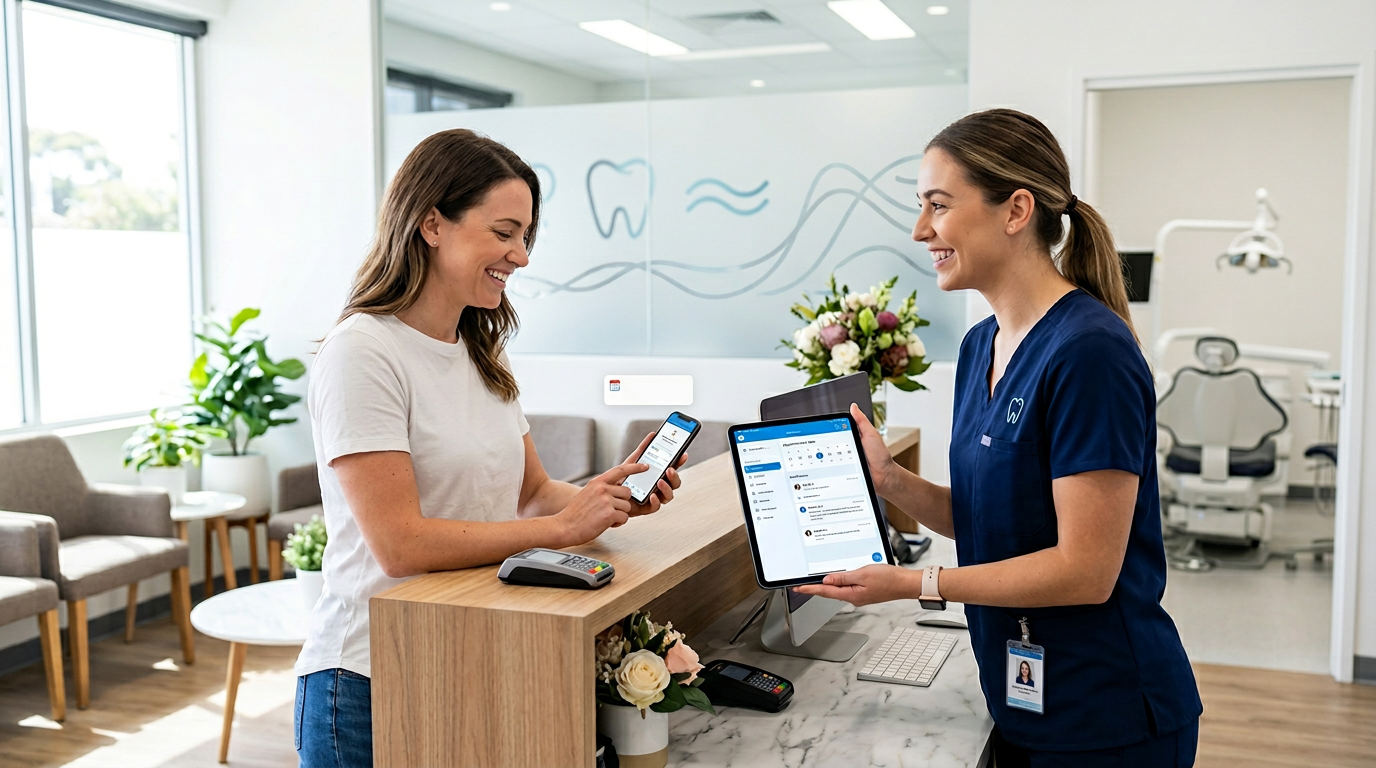
- Practice management software as a clinical tool: Technology is not limited to chairside equipment. Dental software that integrates scheduling, patient records, treatment planning, billing, and communication functions as the nervous system of a modern practice. Denti360 is built on this integrated model, ensuring that clinical and administrative workflows reinforce rather than obstruct each other.
The key principle is intentionality. Every technology investment should solve a specific clinical or operational problem. Practices that adopt this discipline find that their technology estate generates return on investment rather than simply generating depreciation.
Patient-Centred Care: The Differentiator That Cannot Be Automated
Prevention and technology are necessary conditions for an excellent dental practice. But they are not sufficient. The third pillar — patient-centred care — is what transforms a technically competent clinic into one that patients genuinely value and actively refer to friends and family.
Patient-centred care in practice means several things:
- Listening before diagnosing: Patients who feel heard are more likely to trust the diagnosis and accept the treatment plan. A two-minute consultation opening that invites the patient to describe their concern in their own words — without interruption — changes the entire tone of the appointment.
- Presenting options, not verdicts: Most clinical situations have more than one defensible treatment pathway. Presenting two or three options with their respective trade-offs (cost, durability, invasiveness, aesthetics) respects the patient's autonomy and builds a collaborative rather than paternalistic relationship.
- Managing anxiety with competence and empathy: Dental anxiety is significantly prevalent in India, and many patients avoid necessary treatment for years as a result. Practices that create a calm physical environment, explain each step before performing it, and offer conscious sedation where appropriate reduce the barrier to care for this group.
- Transparent, jargon-free financial communication: Billing surprises are among the most common causes of patient dissatisfaction. Clear upfront cost estimates, with a breakdown of what insurance covers and what the patient owes, delivered before treatment begins, prevent almost all of these conflicts.
- Continuity between visits: Remembering that a patient was anxious about their extraction, following up on the systemic condition they mentioned, or noting that a child has started secondary school — these details, when recorded in the patient management system and reviewed before each appointment, make patients feel known rather than processed.
How the Three Pillars Reinforce Each Other
The dental triad works because its components are mutually reinforcing rather than independent. Prevention without patient-centred communication produces advice that patients intellectually accept but behaviourally ignore. Technology without a preventive philosophy generates impressive diagnostics that are applied reactively rather than strategically. Patient-centred care without clinical excellence is warmth without substance.
Consider a practical example. A patient presents with early-stage periodontal disease. A prevention-oriented practice identifies it proactively during a routine examination. Technology — periodontal charting software, digital radiography showing early bone levels, an intraoral camera showing inflamed margins — makes the diagnosis visible and credible to the patient. Patient-centred communication explains the link between periodontal disease and systemic health in plain language, involves the patient in choosing between treatment options, and uses the practice management system to schedule appropriate recall intervals and send between-visit oral hygiene tips. The outcome is a patient who understands why treatment matters, complies with the plan, and returns reliably.
Dental practice management software like Denti360 is built to support all three pillars simultaneously — automating the administrative elements of prevention, integrating clinical documentation for better technology-assisted diagnosis, and enabling the personalised communication that makes patients feel genuinely cared for.
Conclusion: Building a Practice That Lasts
The dental practices that will thrive over the next decade in India are those that treat prevention, technology, and patient-centred care not as separate initiatives but as an integrated operating philosophy. This is not an abstract aspiration — it is a set of specific, implementable practices that compound over time into a reputation, a patient base, and a business that is both clinically excellent and financially sustainable.
If you are curious about how Denti360 can support all three pillars of the dental triad in your practice, book a free Denti360 demo. We will show you exactly how the platform works in practices like yours.