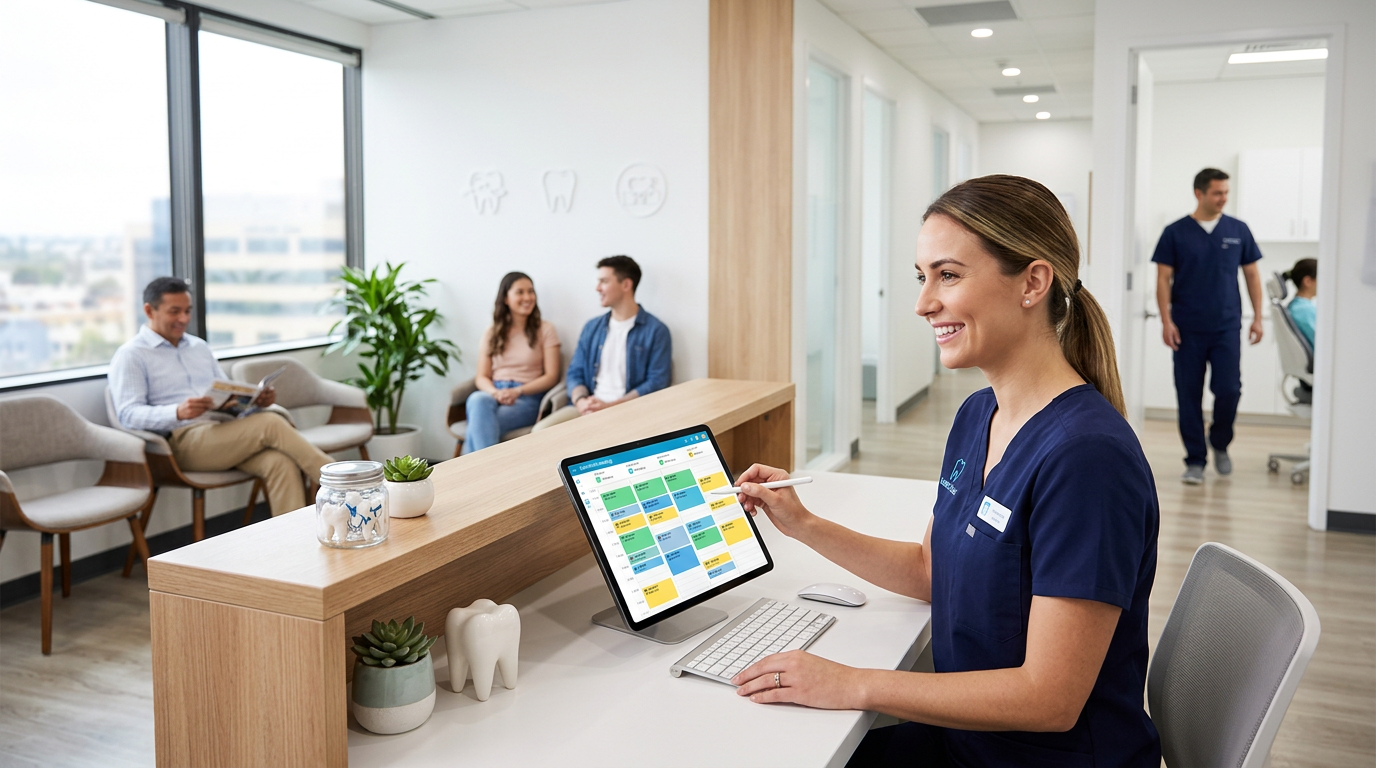

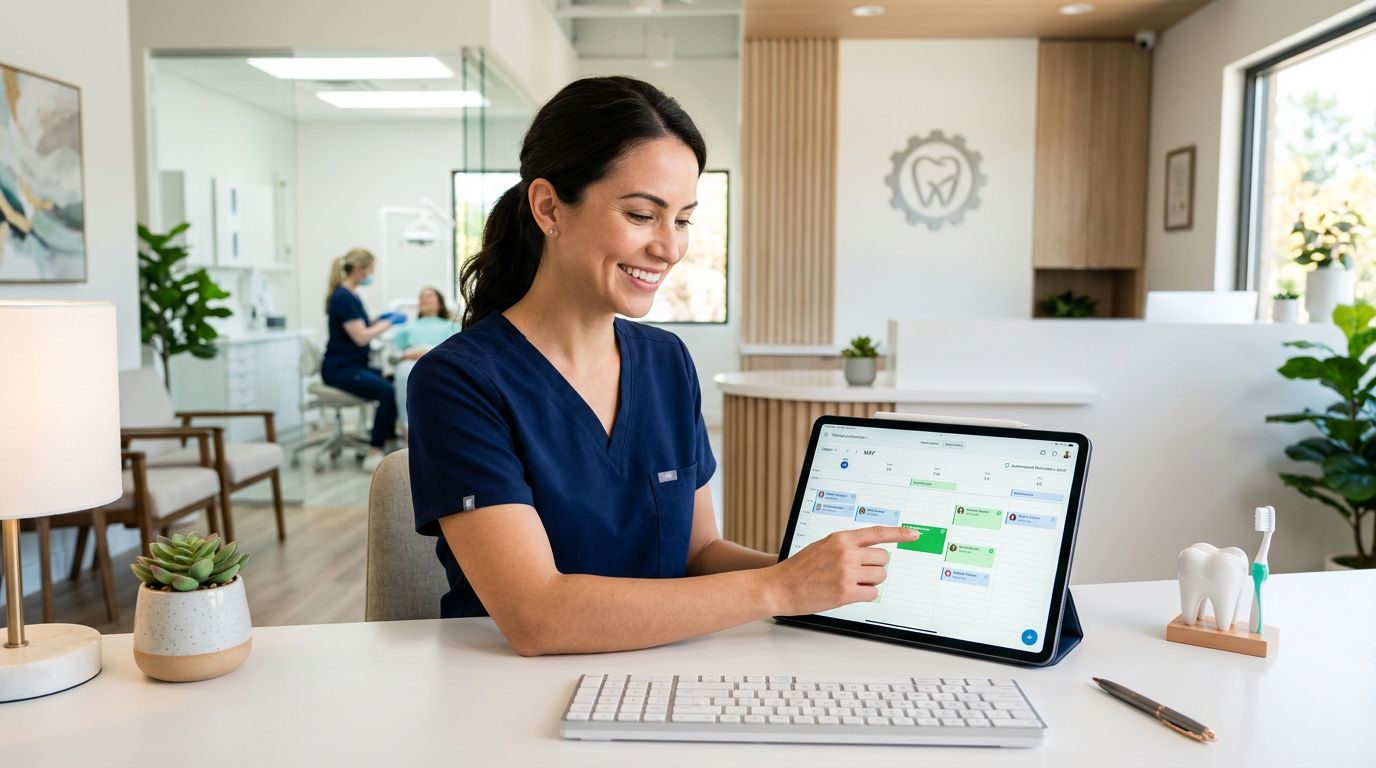
Every dental professional knows the frustration: a carefully planned appointment block, a treatment room prepared, a clinician ready — and then a patient who simply does not show up. No-shows and last-minute cancellations are among the most persistent operational challenges in dental practice management, and their impact goes well beyond a single empty chair. For preventative care appointments in particular, where the stakes for the patient are high but the urgency feels low, missed visits can lead to quietly progressing disease that will eventually require far more intensive — and expensive — treatment.
Automated scheduling software has changed the practical reality of patient attendance management for dental clinics across India. When implemented thoughtfully, these tools can reduce no-show rates substantially, improve the patient experience, and free up clinical teams to focus on care rather than calendar management.
Why Preventative Appointments Are the Most Vulnerable to No-Shows
Not all missed appointments carry the same weight. A patient who skips a restoration appointment and is in pain will reschedule quickly out of necessity. A patient who misses a routine cleaning or a six-monthly check-up may not think about it again for months — or ever. This is what makes preventative care appointments the most vulnerable segment of a dental schedule.
The reasons patients miss these appointments are well understood: they forget, something else comes up, they feel fine so the visit does not feel urgent, or the friction of calling to reschedule feels like more effort than it is worth. None of these reasons reflects a lack of intention. Most patients genuinely mean to come in when they book the appointment. Life simply gets in the way, and without a timely prompt, the appointment slips.
The clinical consequence of this pattern compounds over time. Gingivitis that would have been caught at a six-month visit becomes periodontitis. A small interproximal lesion becomes a restoration. A restoration becomes a root canal. The patient ends up spending significantly more money and time in the chair — and the clinic ends up with a higher administrative burden managing complex cases that could have been prevented. From both a clinical and a business perspective, keeping patients engaged with preventative care is one of the highest-return activities a dental practice can prioritise.
How Automated Scheduling Software Addresses the Root Causes of No-Shows
The most effective approach to reducing no-shows targets the specific reasons patients miss appointments, rather than applying a generic intervention. Automated scheduling software built for dental practices works on multiple levels simultaneously.
Automated reminders address forgetfulness directly. A series of messages — typically one a week before the appointment, one 48 hours before, and one on the morning of — delivered via SMS or WhatsApp keeps the appointment visible in the patient's awareness at the moments when they can still rearrange their schedule without cancelling. The timing matters as much as the medium: a reminder sent seven days out gives the patient time to make arrangements; a reminder sent that morning reduces the cognitive distance between receiving the message and walking out the door.
Easy confirmation and rescheduling address a different friction point. Many patients who cannot attend an appointment simply do not cancel because calling the clinic feels like an effort. When the reminder message includes a simple reply option — confirm with a Y, reschedule with an R — the barrier to communication drops to almost nothing. Practices that give patients this kind of low-friction two-way communication receive earlier notice of likely no-shows, giving the team time to fill the slot from a waitlist rather than discovering the gap when the patient does not arrive.
Online self-booking increases commitment to appointments that patients have chosen themselves. There is a meaningful psychological difference between an appointment the patient was given by the front desk and one the patient selected from available options at their own convenience. Patients who book online at a time that genuinely suits them are more likely to attend, and they also tend to engage more actively with the practice overall.
Recall Systems: Closing the Gap Between Appointments
Reducing no-shows for existing appointments is only half the challenge. The other half is ensuring that patients actually book their next appointment before the gap becomes a dropout. This is where automated recall systems are indispensable.
A well-configured recall system in dental software like Denti360 tracks every patient's recall interval based on their clinical profile — periodontal maintenance patients every three months, standard recall patients every six months — and automatically triggers a booking invitation as the due date approaches. The message can be personalised with the patient's name and their last visit date, giving it the feel of a direct communication from the clinic rather than a generic broadcast.
Patients who do not respond to the first recall message can be followed up automatically with a second message a few weeks later. Those who still do not respond can be flagged for a personal call from the front desk, allowing the team to focus their direct outreach on the patients who genuinely need a human touch rather than spending time calling the full list.
For Indian dental clinics where recall management has traditionally relied on a front-desk team member manually working through a list of due patients each month, this kind of automation is a significant operational shift. It does not remove the need for human judgment — it focuses human effort where it has the most impact.
Waitlist Management: Turning Every Cancellation into a Filled Slot
Even with excellent reminder systems, some level of cancellation is inevitable. The question is how quickly and consistently a practice can respond. A manual process — checking a paper waitlist, making phone calls, leaving voicemails, waiting for callbacks — often results in a slot that sits empty despite there being patients who would have taken it if they had been notified in time.
Automated waitlist management integrated into your scheduling software changes this dynamic entirely. When a cancellation is received, the system immediately identifies waitlisted patients who match the slot's parameters: the procedure type, duration, provider, and time of day. Notifications go out automatically, and the first patient to confirm gets the appointment. The practice's schedule is updated in real time, and no manual intervention is required unless the team wants to override the automated selection for clinical reasons.
For clinics with consistently high demand, this means that last-minute cancellations almost never result in empty chairs. For clinics still building their patient base, it means that every available slot is offered to patients who want it, rather than going to waste because the notification process was too slow.
What the Data Says: Measuring the Impact of Automated Scheduling
One of the practical advantages of using dental software for appointment management is that the system generates data that makes the impact of your interventions visible and measurable. No-show rates before and after implementing automated reminders, cancellation patterns by day of the week or appointment type, confirmation rates across different reminder channels — all of this information is available in the reporting dashboards of a well-configured system.
This data is valuable for two reasons. First, it allows you to refine your approach based on what is actually working for your specific patient population. If SMS reminders produce higher confirmation rates than email for your patients, you adjust your channel mix accordingly. If a particular appointment type has a persistently high no-show rate despite reminders, that signals a deeper issue — perhaps a lack of perceived urgency that needs to be addressed through patient education as well as operational changes.
Second, the data creates accountability. When practice owners and managers can see the no-show rate as a concrete number that changes over time, it becomes something the team can work toward improving systematically rather than simply accepting as an unavoidable feature of running a dental clinic.
Implementation: Making the Transition Work for Your Team
The benefits of automated scheduling software are only realised if the system is actually used consistently. Implementation is not just a technical process — it is a change management exercise that requires buy-in from the entire team.
Start by training front-desk staff thoroughly on both the technical functions and the rationale behind each feature. When the team understands why automated reminders are sent at specific intervals, they are more likely to configure them correctly and less likely to override the system manually when they feel like a personal call would be more effective. Invest time in customising reminder messages so they sound like they come from your clinic, not from a generic software vendor.
Communicate the changes to your patients proactively. A simple message explaining that the clinic is now sending appointment reminders via WhatsApp, and that patients can confirm or reschedule by replying, sets expectations and reduces the confusion that can occur when patients receive an unexpected automated message for the first time.
Review the data regularly — monthly at minimum — and make adjustments based on what you find. Automated scheduling software is not a set-and-forget solution. The most effective implementations are ones where the practice treats the system as a tool to be refined over time, not a configuration to be completed once and left unchanged.
Conclusion
Patient attendance for preventative dental care is one of the clearest indicators of a healthy, well-managed dental practice. High attendance rates mean patients are getting the care they need, the schedule is running efficiently, and the clinic's revenue is predictable and stable. Achieving this consistently requires more than good clinical skills — it requires the right operational infrastructure, with automated scheduling software at its core.
If your clinic is ready to reduce no-shows, improve recall rates, and give your front-desk team tools that actually work, Denti360 is built for exactly this. Book a free Denti360 demo and see how our automated scheduling and dental practice management platform can help your clinic run more smoothly — for your team and your patients.