

Running a dental clinic in India today means managing more moving parts than ever before — patient appointments across multiple practitioners, insurance claims, treatment planning, digital radiographs, patient communications, staff schedules, and financial reporting — all simultaneously. Individual software tools can solve individual problems, but the real gains come when every part of your practice connects. That is the promise of integrated dental solutions, and it is the foundation on which Denti360 is built. This article explores what a genuinely integrated platform looks like in practice, and why it matters for dental clinics and dental chains across India.
The Problem with Disconnected Dental Software
Many practices in India have accumulated software point solutions over time: one system for scheduling, another for digital X-rays, a spreadsheet for billing, a WhatsApp group for staff coordination. Each tool may perform its specific function adequately, but the gaps between them create friction — and friction costs money and time.
When patient data lives in multiple systems that do not talk to each other, staff must re-enter information manually, creating errors and consuming hours every week. When the imaging system does not link to the clinical record, attaching a radiograph to an insurance claim becomes a multi-step manual process. When billing is separate from scheduling, tracking unpaid balances against specific appointment outcomes requires reconciliation that is error-prone at best.
The result is a practice that functions, but not at the level of efficiency or patient experience that modern dental care demands. For growing practices and multi-location dental chains in India, these inefficiencies do not scale — they compound.
What Integration Actually Means in Dental Practice Management
True integration in dental practice management software means that a single action in one part of the system automatically updates all relevant records across the platform. A patient who books an appointment online appears in the schedule, triggers an automated reminder sequence, and has their insurance eligibility checked — without any staff intervention. When the treating dentist completes a clinical note and marks a procedure as done, the billing module is automatically notified and the claim preparation begins. When a patient pays, the account balance updates in real time and the payment is logged against the correct appointment.
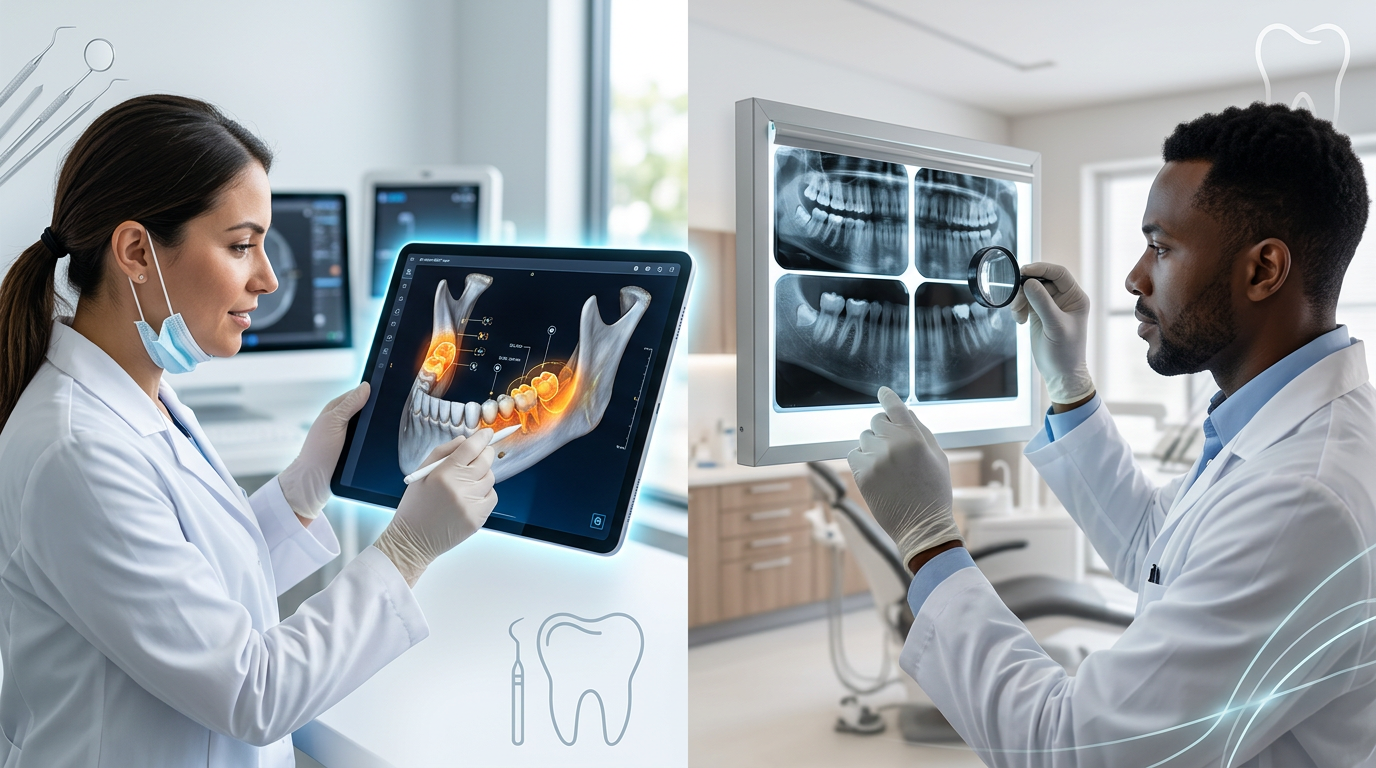
For dental diagnostics, integration means that radiographs captured on the digital sensor appear instantly in the patient's electronic health record, linked to the date of service and accessible to any authorised practitioner in the practice — without anyone manually uploading or filing an image. AI-assisted analysis of those radiographs, where available, generates annotations that are stored alongside the image in the same record.
Denti360 is designed around this principle of deep integration. Rather than connecting disparate tools through fragile interfaces, the platform is built as a single system in which all modules — patient management, scheduling, clinical records, imaging, billing, and reporting — share the same underlying data. There is no duplication, no reconciliation overhead, and no single point of failure at the interface between systems.
Key Capabilities That Drive Practice Efficiency
Patient Management and Digital Records
Every interaction with a patient — from the first inquiry to the final payment — is recorded in a unified electronic health record. Medical history, treatment plans, clinical notes, radiographs, consent forms, billing history, and communication logs are all accessible from a single patient profile. For multi-practitioner clinics, this means any dentist can open a patient record and immediately understand the full context of that patient's care, without asking colleagues or hunting through paper files.
Intelligent Scheduling and Automated Communications
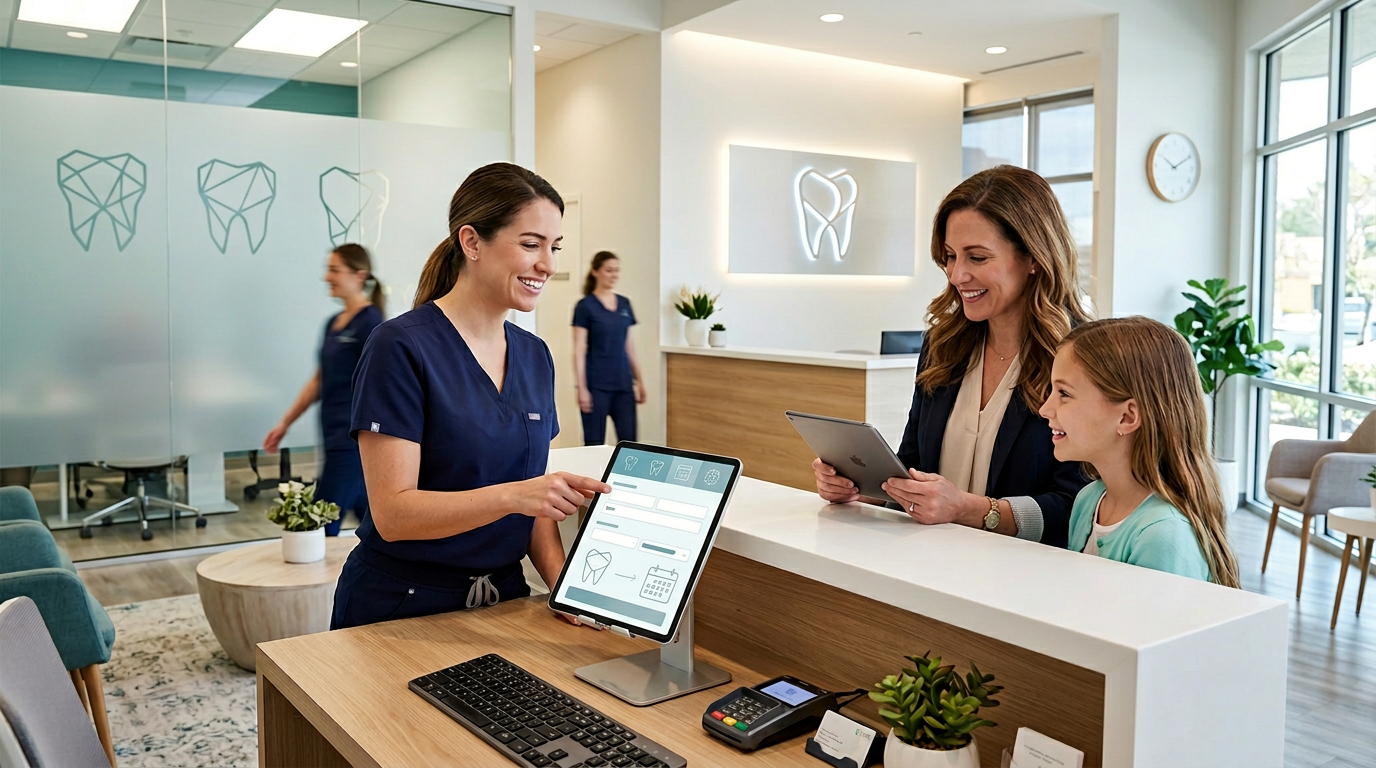
Denti360's scheduling module manages appointment bookings, practitioner availability, operatory allocation, and recall management in a single view. Automated SMS and WhatsApp reminders reduce no-shows without requiring manual follow-up from front-desk staff. Patients can confirm, reschedule, or cancel through the same channels, with the system updating availability in real time. For busy multi-dentist practices, the reduction in missed appointments and the associated improvement in chair utilisation is one of the most immediately measurable financial benefits of the platform.
Dental Billing and Revenue Cycle Management
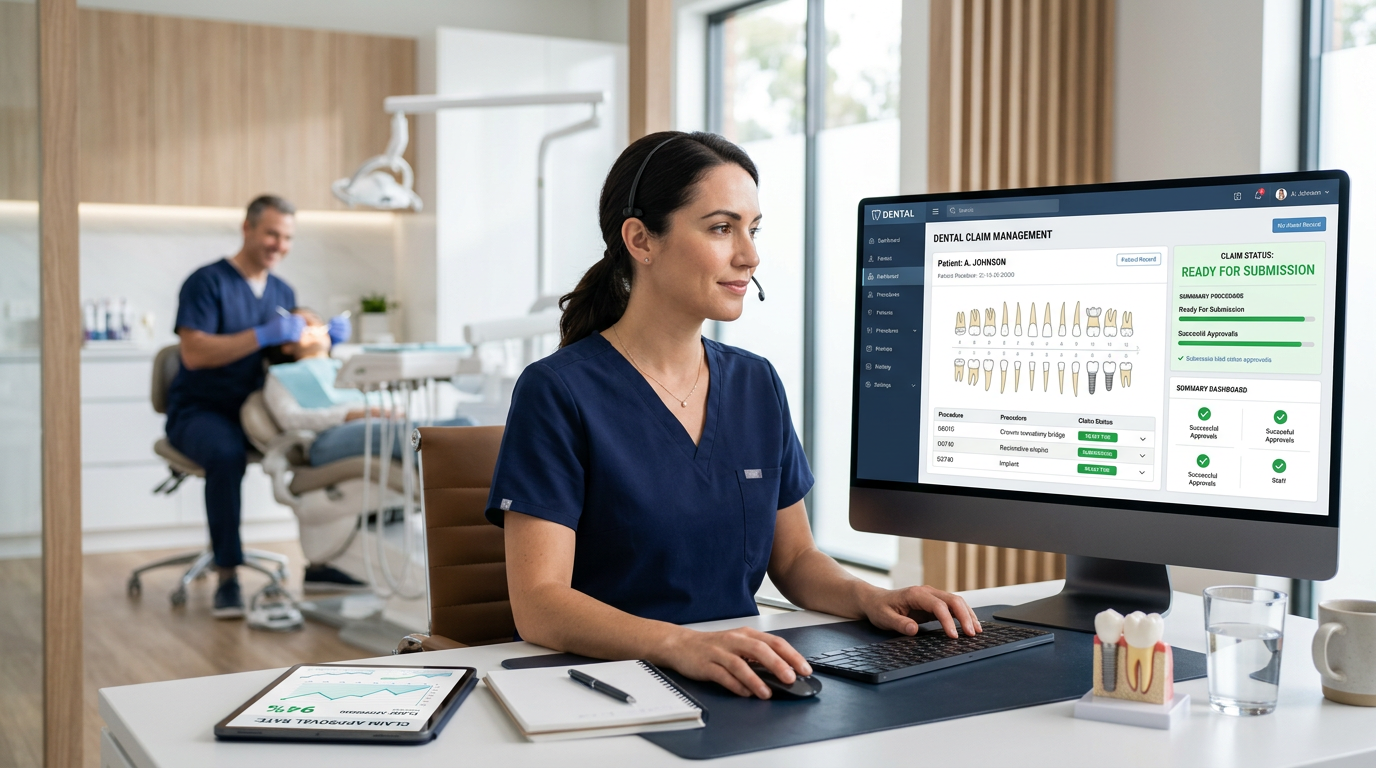
For dental clinics working with insurance panels in India, the billing process is a significant source of administrative overhead and revenue leakage. Denti360's billing module integrates eligibility verification, claim preparation, attachment management, and denial tracking into the same workflow as clinical documentation. When a procedure is completed and noted clinically, the billing codes are pre-populated, required documentation is identified, and the claim is ready for review and submission — reducing the lag between treatment delivery and revenue collection.
Denial analytics built into the platform identify patterns in rejected claims, giving practice managers actionable data to address recurring errors before they continue to affect revenue. This kind of visibility is difficult to achieve with separate billing software that lacks access to the clinical context of each claim.
Reporting and Business Intelligence
A dental practice generates data constantly — appointment volumes, procedure mix, revenue by practitioner, patient retention rates, treatment acceptance rates, outstanding balances. Denti360's reporting module aggregates this data across the platform and presents it in dashboards designed for dental practice management, not generic business metrics. Practice owners can identify which procedure categories are growing, where chair time is being lost, and which practitioners are achieving the highest treatment acceptance — all from a single view, without exporting data to a spreadsheet.
For dental chains managing multiple branches, consolidated reporting across locations is a fundamental requirement that individual clinic software simply cannot meet. Integrated dental software at the chain level enables the kind of standardisation and performance benchmarking that drives consistent quality and profitability across a growing network.
The Patient Experience Advantage
Integration improves the internal experience for staff and management, but it also transforms the patient-facing experience in ways that patients notice and value. When the system knows a patient's history, their next recall date is automatically scheduled and the reminder goes out without any manual trigger. When a treatment plan is updated, the patient receives a summary through the portal. When a payment is made online, the receipt is generated instantly and the account is updated in real time.
These small moments of seamlessness accumulate into a perception of a clinic that is organised, attentive, and modern — exactly the impression that builds patient loyalty and drives referrals in a competitive dental market.
Conclusion
The dental revolution is not about any single technology — AI imaging, digital radiography, CAD/CAM restorations, or clear aligners. It is about connecting these capabilities within a practice management framework that is as sophisticated as the clinical care being delivered. Denti360's integrated approach eliminates the friction between systems, gives every member of the dental team the information they need at the moment they need it, and creates the kind of patient experience that defines a modern dental practice in India.
If you are ready to see what a fully integrated dental practice management platform looks like in action, book a free Denti360 demo. We will walk you through the platform from patient intake to claim submission — and show you exactly where your current setup might be leaving efficiency and revenue on the table.