

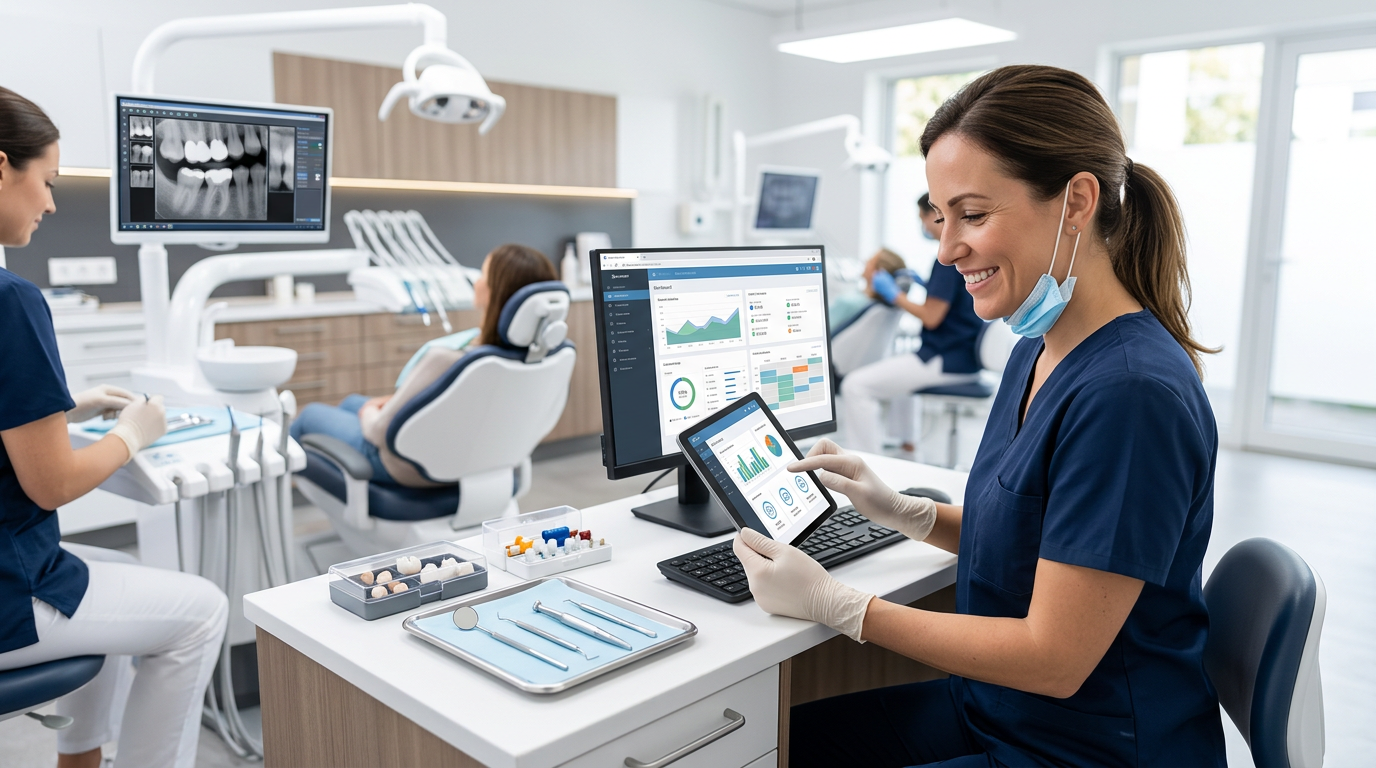
Optimizing Restorative Dentistry: 5 Strategies for Enhanced Practice Efficiency
Dental practice efficiency in restorative dentistry directly drives profitability, patient satisfaction, and staff morale—yet manual workflows and scheduling bottlenecks quietly cost practices hours and revenue every week. For Denti360, a leader in dental technology, streamlining restorative operations is essential. Restorative procedures, from simple fillings to complex crown and bridge work, make up a large share of any general practice, so managing them efficiently has outsized impact. This post details five practical ways to boost efficiency in restorative dentistry, combining proven best practices with cutting-edge technology.
1. Implement an Advanced Digital Workflow for Diagnostics and Treatment Planning
The traditional restorative workflow involves many manual steps, from impression taking to lab communication, each an opportunity for error and delay. A fully digital workflow revolutionizes this. Digital radiography, intraoral scanners, and 3D imaging (CBCT) are no longer luxuries but necessities for a modern, efficient practice.
Digital Radiography and CBCT: Precision and Speed
Digital X-rays deliver immediate results, reduced patient radiation exposure, and superior diagnostics compared to film. CBCT scans add a three-dimensional view of oral structures, invaluable for precise diagnosis and planning of complex cases such as endodontic treatments, implant placements, and extensive prosthetic rehabilitations. This detail minimizes treatment surprises, enabling accurate planning and fewer chairside adjustments.
Intraoral Scanners: Eliminating Traditional Impressions
One of the most significant advances for restorative efficiency is the intraoral scanner. It replaces messy, time-consuming, uncomfortable traditional impressions, capturing highly accurate digital models of a patient's dentition in minutes. These digital impressions can be sent to the lab immediately, reducing turnaround for crowns, inlays, onlays, and veneers. The precision often yields better-fitting restorations, minimizing adjustment appointments and improving comfort. For practices using in-house CAD/CAM, digital impressions are the first step toward same-day dentistry, a powerful differentiator.
Integrated Treatment Planning Software
Bringing all digital data—scans, X-rays, and patient records—into a single integrated treatment planning software enables comprehensive case review and collaborative planning. This keeps the whole dental team, from hygienists to specialists, on the same page for cohesive, efficient treatment delivery. Predictive analytics in some advanced software can even estimate treatment outcomes and material requirements, refining efficiency further.
2. Optimize Appointment Scheduling and Patient Flow
Efficient patient flow and smart appointment scheduling are foundational to a productive restorative practice. Schedule bottlenecks waste chair time, cause staff overtime, and frustrate patients, while a well-managed schedule maximizes productivity and smooths the experience.
Strategic Appointment Blocking
Instead of first-come, first-served, use strategic appointment blocking. Allocate specific slots to different restorative procedures—longer appointments for complex crown preparations or multiple fillings in the morning when the team is freshest; shorter procedures like single composite fillings or cementations in gaps or afternoons. This ensures the right time for each procedure, reducing rush and improving quality.
Minimizing No-Shows and Late Arrivals
Use automated appointment reminders via SMS, email, or a dedicated patient portal. Confirming 24-48 hours in advance significantly reduces no-shows. A clear cancellation policy with a fee for missed appointments (within legal and ethical guidelines) encourages patients to value their scheduled time. For late arrivals, a firm policy prevents impact on subsequent appointments, perhaps requiring rescheduling beyond a certain grace period.
Team Huddle and Daily Briefings
A brief morning team huddle before the first patient is powerful. Review the day's schedule, identify challenges, discuss patient-specific needs, and confirm material and instrument readiness. This proactive communication minimizes mid-day disruptions and keeps restorative cases flowing smoothly.
Leveraging Technology for Patient Check-In and Forms
Digital check-in kiosks or pre-appointment online forms reduce front-desk burden and let patients complete paperwork in advance. This streamlines arrival and frees front-office staff for more complex tasks and inquiries, supporting overall efficiency.
3. Standardize and Streamline Restorative Procedures
Consistency in how restorative procedures are performed and managed produces real efficiency gains. Standardization isn't rigidity; it means establishing best practices and protocols the whole team follows consistently.
Develop Clear Protocols and Checklists
For common procedures like composite fillings, crown preparations, and temporary crown fabrication, develop detailed step-by-step protocols covering instrument setup, anesthesia, impression techniques, and post-operative instructions. Checklists ensure every step is completed and materials are ready, reducing variation, minimizing errors, and ensuring a high standard of care regardless of who assists.
Optimal Tray Setups and Material Management
Pre-packaged, procedure-specific restorative trays save time during operatory setup and breakdown. Keep instruments and materials consistently stocked and organized, and implement a robust inventory system to prevent running out of critical supplies mid-procedure. Bulk purchasing of frequently used items can also be cost-efficient.
Delegation of Duties to Qualified Auxiliaries
Maximize your assistants' and hygienists' skills by delegating tasks within their scope—preliminary impressions, placing and removing temporary restorations, digital scans, custom trays, and post-operative instructions. With auxiliaries handling these duties, the dentist focuses on procedures requiring direct expertise, sharply increasing chairside productivity while empowering the team and boosting job satisfaction. Defining who does what is easier with role-based access across the practice.
Ergonomics and Operatory Design
An ergonomically designed operatory prevents fatigue and enhances efficiency. Keep instruments within easy reach, lighting optimal, and the chair positioned for patient comfort and practitioner access. A well-organized, clutter-free operatory facilitates smooth procedures and quick turnovers.
4. Embrace In-House CAD/CAM Technology
For practices handling high volumes of single-unit crown and onlay restorations, in-house CAD/CAM technology such as the Denti360 milling unit is a game-changer. It lets dentists design, mill, and place ceramic restorations in a single appointment.
Same-Day Dentistry: A Paradigm Shift
Same-day crowns eliminate temporary restorations, secondary cementation appointments, and patient inconvenience. This dramatically reduces chair time across two appointments, frees scheduling slots, and minimizes lab costs and communication issues. Patients highly value the convenience and speed, making same-day dentistry a strong differentiator and attraction tool.
Enhanced Control and Quality
With in-house CAD/CAM, the dentist controls the entire restorative process from scanning and design to milling, allowing immediate adjustments and ensuring precise fit and esthetics while reducing remakes and callbacks. Modern ceramic materials used with CAD/CAM are exceptional, offering durable, highly esthetic restorations.
Return on Investment (ROI)
The initial investment in CAD/CAM can be substantial, but the long-term ROI is often compelling. Reduced lab fees, higher patient satisfaction, greater chairside productivity, and the ability to offer a premium service quickly offset the cost. Many practices find the efficiency gains let them accommodate more patients and perform more restorative procedures in the same timeframe, driving significant revenue growth.
5. Invest in Continuous Staff Training and Team Empowerment
No technology or protocol reaches its potential without a skilled, motivated, empowered team. Continuous training and a culture of teamwork are essential for sustained restorative efficiency.
Regular Training and Skill Development
Invest in regular training on new technologies (intraoral scanners, CAD/CAM software), updated restorative techniques, and patient communication. Training assistants expertly in digital scanning protocols, for example, significantly speeds up impression-taking. Denti360, through its educational resources, often provides training on leveraging its technologies fully. Keep the team current on the latest materials and workflows. By 2025, the pace of technological advancement in dentistry is expected to accelerate further, making ongoing education more critical than ever.
Cross-Training and Role Flexibility
Cross-training staff across restorative roles—front desk understanding operatory setup, assistants managing inventory—creates a more resilient, flexible team. This sustains efficiency even when a team member is absent, preventing bottlenecks and maintaining smooth operations.
Foster a Culture of Continuous Improvement
Encourage staff to identify improvements and suggest solutions. Regular team meetings that welcome and discuss suggestions yield innovative approaches to efficiency challenges. Empowering team members to own their roles and contribute to process optimization creates an engaged, proactive workforce. When staff feel valued and heard, they commit more readily to efficient practices.
Performance Feedback and Goal Setting
Regular performance reviews and collaborative goal setting help team members see their contribution to efficiency. Provide constructive feedback and recognize achievements to boost morale and reinforce efficient behaviors. Align individual goals with the practice's overall restorative efficiency objectives.
Conclusion
Improving efficiency in restorative dentistry is a multifaceted effort that blends smart technology adoption, optimized workflows, clear protocols, and a highly skilled team. By implementing advanced digital workflows, refining scheduling, standardizing procedures, embracing in-house CAD/CAM, and investing in continuous training, practices can boost productivity, reduce costs, and elevate the patient experience. To see how Denti360 supports these strategies, explore the full platform features or contact our team—because working smarter, not just faster, builds a more resilient, successful practice for the future.