
Patient wait time is one of the most consistently cited complaints in dental practice reviews across India. It costs practices more than satisfaction scores — it costs them retention. A patient who waits 40 minutes past their appointment time without explanation is a patient who is quietly evaluating alternatives. Meanwhile, the underlying scheduling problem that caused the delay is eroding staff morale and compressing the time available for each clinical interaction. The solution is not to work faster; it is to schedule smarter. Modern dental scheduling software makes this achievable, and this guide covers the specific strategies that produce the most measurable improvement in patient wait times and practice efficiency.
Start With Accurate Time Allocation
The most common root cause of schedule overrun is systematic underestimation of procedure duration. Many practices set appointment slots based on optimistic assumptions — how long a procedure takes when everything goes perfectly — rather than on actual data. The result is a schedule that looks efficient on paper and runs 20 minutes behind before noon.
Fixing this begins with an audit. Pull data from your dental practice management software on actual versus scheduled appointment duration by procedure type and by provider. You will almost certainly find that certain procedures consistently run long, and that different clinicians have meaningfully different working tempos. Use this data to set realistic default durations in your scheduling configuration.
Beyond accurate baseline durations, build buffer time into the schedule. Five to eight minutes between appointments is not wasted time — it is insurance against the routine complications that occur in clinical dentistry: a patient who needs more local anaesthetic, a restoration that requires additional adjustment, a parent with a question about their child's treatment. Without buffer, one unavoidable overrun cascades through the entire afternoon.
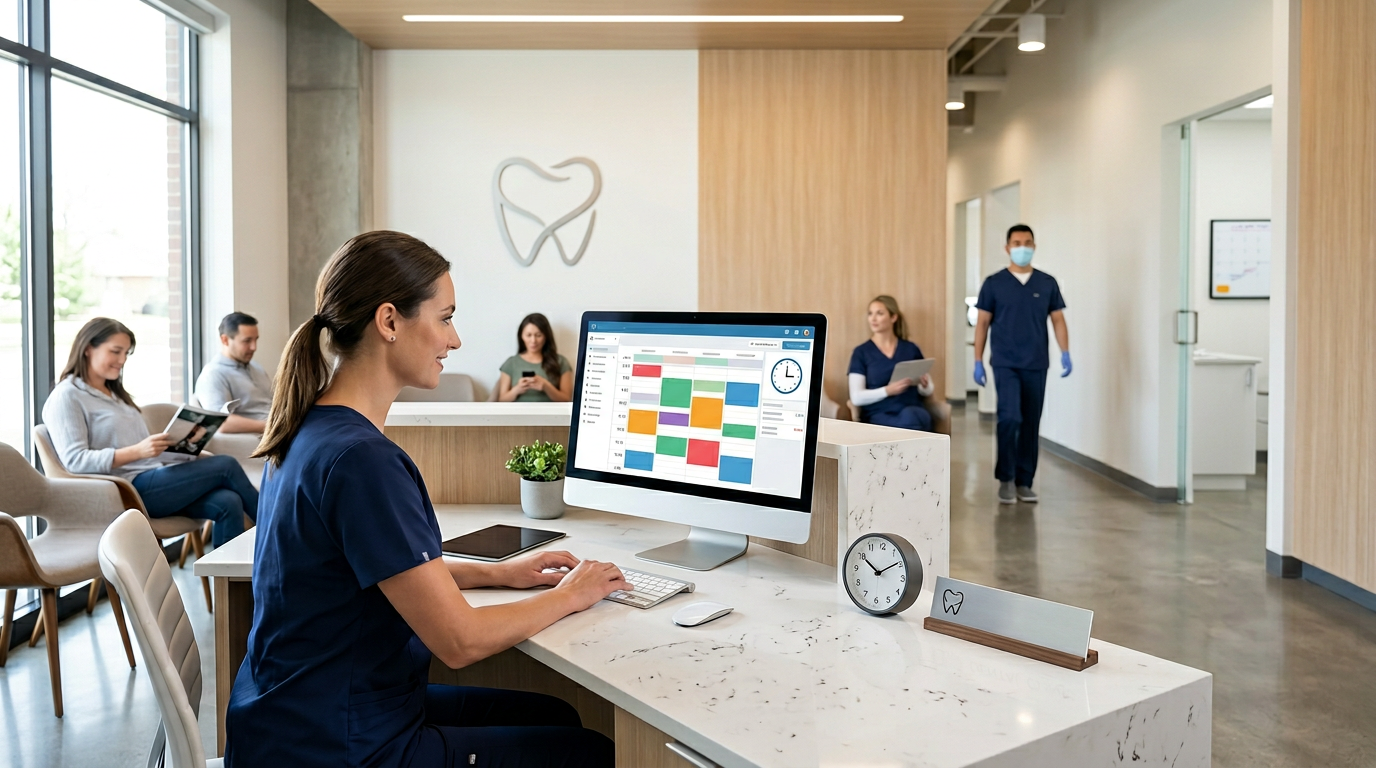
Also factor in resource constraints. If you have two operatories and three clinicians, the schedule must account for the physical limit on simultaneous treatments. Dental scheduling software that visualises chair and equipment utilisation alongside the appointment calendar makes these conflicts visible before they become delays.
Automate Reminders to Reduce No-Shows and Late Arrivals
A no-show at 10 am creates an empty slot that could have been filled — if you had known about it earlier. A patient who arrives 15 minutes late for a 30-minute appointment creates a ripple that affects every subsequent patient. Both problems are substantially reduced by a well-structured automated reminder system.
The reminder sequence that produces the best results in Indian dental practices typically includes three touches:
- A confirmation message 72 hours before the appointment, with the date, time, location, and any preparation instructions specific to the procedure.
- A reminder 24 hours out with a clear invitation to confirm or reschedule — and a mechanism for doing so that does not require a phone call to the clinic during business hours.
- A day-of message two hours before the appointment reminding the patient of the time and prompting them to arrive a few minutes early if they have forms to complete.
Two-way confirmation — where patients can reply to confirm or request a change — is particularly effective. When integrated with your scheduling system, these responses update the appointment status automatically, alerting the front desk to contact waitlisted patients if a slot opens. This closed loop between cancellations and replacements is one of the highest-value features of modern dental software.
Reduce Waiting Room Time With Digital Patient Intake
Much of the time patients spend in the waiting area before being called in is actually time spent completing forms that could have been filled out at home. Medical history updates, consent forms, insurance information — these are all documents that patients can complete on their own device before they arrive, given the right tools.
A patient portal that allows pre-visit form completion does three things simultaneously: it reduces the time the patient spends in the waiting room, it eliminates the bottleneck at the front desk when multiple patients arrive at the same time, and it gives the clinician access to completed intake information before entering the operatory. That last point — being able to review a medical history update or a chief complaint note before the appointment begins — directly improves the quality of the clinical interaction.
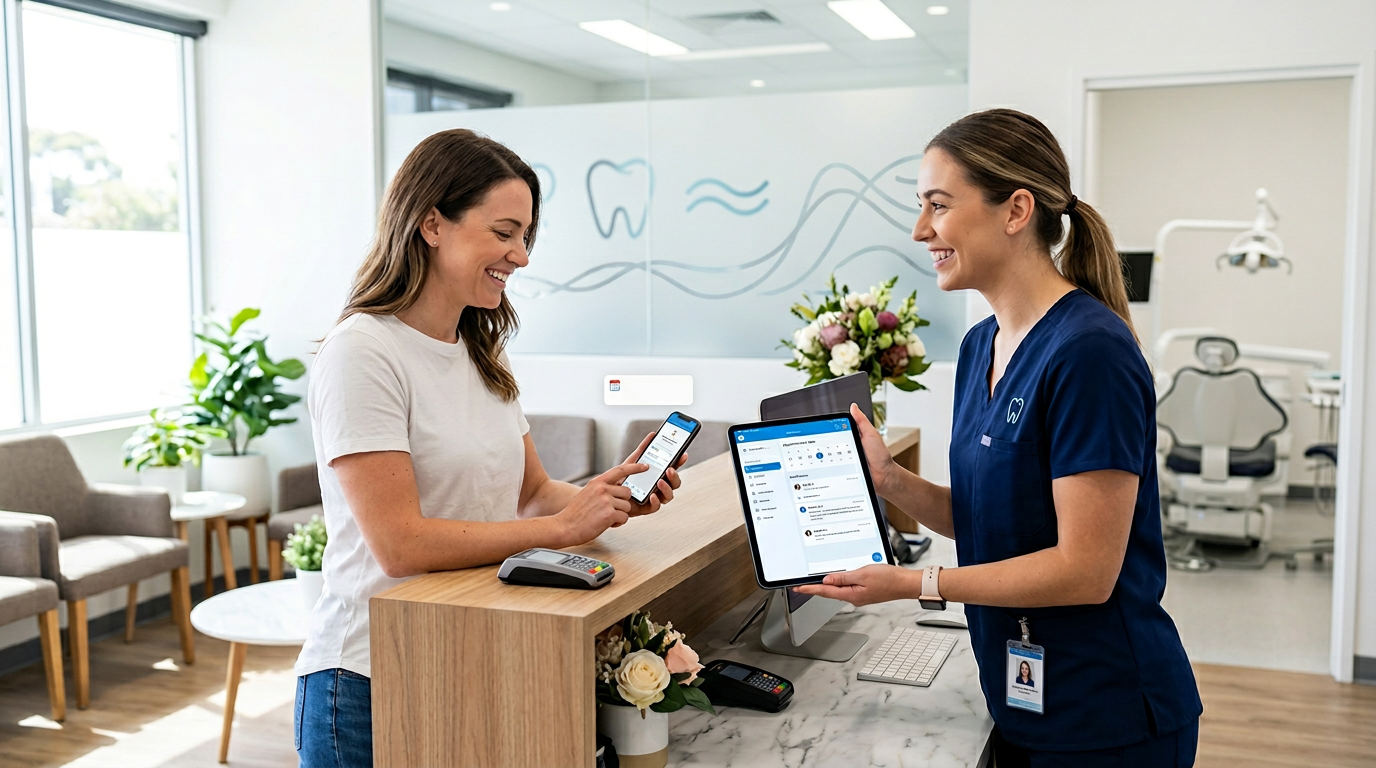
Digital check-in works alongside this. When patients can mark themselves as arrived via their phone or a tablet in reception, the front desk gets an automatic notification and the clinical team is alerted that the patient is ready. This replaces the queue at the reception counter with a streamlined flow that moves patients from arrival to chair more quickly.
Use Scheduling Analytics to Find and Fix Bottlenecks
Scheduling problems that persist despite good intentions are almost always data problems in disguise. The practice manager who suspects that Tuesday afternoons run long but cannot quantify it will make imprecise adjustments. The one who can pull a report showing that Tuesday 2–4 pm consistently overruns by an average of 18 minutes, and that the bottleneck is concentrated on crown prep appointments, can make targeted changes.
The reporting capabilities of your dental practice management platform are the diagnostic tool for this analysis. Metrics worth monitoring on a monthly basis include:
- No-show rate by appointment type and day of week: Patterns here tell you where reminder sequences need strengthening.
- Average overrun by procedure type and clinician: This data drives accurate time allocation adjustments.
- Waitlist conversion rate: How often does a cancelled slot get filled from the waitlist? A low rate suggests the waitlist notification process is too slow or the contact method is wrong.
- Chair utilisation rate: If operatories are consistently at 60% utilisation, there is scheduling room that is not being captured. If they are consistently at 100% with overruns, the schedule is over-committed.
Denti360's analytics dashboard surfaces these metrics without requiring manual report generation, making it practical for practice managers to review them regularly and act on what they find.
Train the Team, Not Just the Software
Technology enables better scheduling, but it does not replace the judgment of experienced front-desk staff. The practices with the most efficient schedules are those where the entire team — from reception to dental assistants to clinicians — communicates in real time about how the day is actually progressing.
When a procedure runs long, the clinical team should signal this to the front desk so that the next patient can be updated before they arrive or while they are still in reception. When a patient is clearly anxious or has additional concerns, the dentist should flag this for the scheduler so that future appointments allow adequate time. When a new patient books online and has selected an appointment type that does not match what they have described in the intake notes, a trained staff member should catch this before the day of the appointment.
None of this replaces good software — but good software combined with a well-trained, communicating team produces results that neither achieves independently. Invest in staff training on your scheduling platform as seriously as you invest in clinical training on new equipment.
Conclusion: Efficient Scheduling Is a Clinical Quality Issue
Reducing patient wait times is not just about convenience — it is about delivering care in an environment where patients feel respected and where clinicians have the time and headspace to do their best work. The strategies in this guide — accurate time allocation, automated reminders with two-way confirmation, digital patient intake, data-driven bottleneck analysis, and team communication — work together to create a schedule that is both full and predictable.
Denti360's scheduling and practice management tools are built to support all of these capabilities in an integrated platform designed for Indian dental practices. Book a free Denti360 demo and see how the scheduling module can be configured for your specific clinical mix and patient volume.