
Optimizing Dental Scheduling for Emergency Care
Emergency dental scheduling is the moment your practice is tested most: a patient arrives in acute pain or with a traumatic injury, and your day's carefully planned calendar has to bend without breaking. These unpredictable arrivals demand immediate attention and a highly adaptable system. For Denti360, a leader in dental healthcare and technology, robust emergency scheduling is not just about efficiency; it is about delivering compassionate, timely, high-quality care when patients need it most. This guide explores the multifaceted approach required to optimize emergency dental appointments, protecting both patient satisfaction and operational smoothness.
Why Efficient Emergency Dental Scheduling Is Critical
A dental emergency can strike at any moment, from severe toothaches and abscesses to knocked-out teeth, broken restorations, or soft tissue injuries. The pain and anxiety involved demand prompt professional care. For patients, quickly securing an appointment with a trusted provider during a crisis is paramount; delays can worsen the condition, increase discomfort, and lead to more complex, costly treatment. For the practice, an inefficient system causes disruption, staff stress, lost revenue from missed opportunities, and a tarnished reputation when patients feel unsupported.
Optimizing this part of practice management is therefore a cornerstone of patient-centric care and sustainable growth. It signals accessibility, responsiveness, and clinical excellence. In a competitive market, practices that consistently accommodate emergencies stand out, earning greater loyalty and positive word-of-mouth referrals.
Key Pillars of Optimized Emergency Dental Scheduling
1. Build Robust Triage Protocols
The first contact for an emergency patient is often a phone call. A well-defined triage protocol accurately assesses the urgency and nature of the emergency, guides the patient, and prepares the clinical team. It should include:
- Standardized questions: Give front desk staff a script covering symptom location, type, severity and onset of pain, and associated signs like swelling, fever, or recent trauma.
- Pain scale assessment: Use a 1-10 pain scale to quantify discomfort and help prioritize cases.
- Risk assessment: Identify red flags such as airway compromise, severe bleeding, or systemic infection that may require immediate hospital referral or rapid intervention.
- Categorization: Classify emergencies (for example, immediate, urgent within 24 hours, urgent within 48 hours, or non-urgent but needing attention) to guide scheduling.
- First aid advice: Provide clear, concise first aid instructions over the phone to ease symptoms and prevent further damage until the patient is seen.
Staff training is paramount. Front desk personnel must ask sensitive questions skillfully, empathize with patients in distress, and document information accurately for the clinical team.
2. Reserve Dedicated Emergency Slots and Buffer Times
One of the most effective strategies is to allocate specific time slots for emergencies in advance. These can include:
- Morning and afternoon flex slots: Designate a 15 to 30 minute slot at the start of each session, or after lunch, for emergency walk-ins or urgent calls.
- End-of-day slots: A slot near closing accommodates late-breaking emergencies without delaying other appointments.
- Buffer zones: Build 5 to 10 minute buffers between longer procedures to absorb minor delays or quick emergency assessments.
- Huddle time: Start each day with a brief team huddle to review the schedule, spot tight spots, and discuss known or anticipated emergencies.
The number and placement of these slots depends on your volume, typical emergency frequency, and provider availability. The goal is flexibility without disrupting the day. Smart appointment scheduling makes building this flexibility into the calendar far easier.
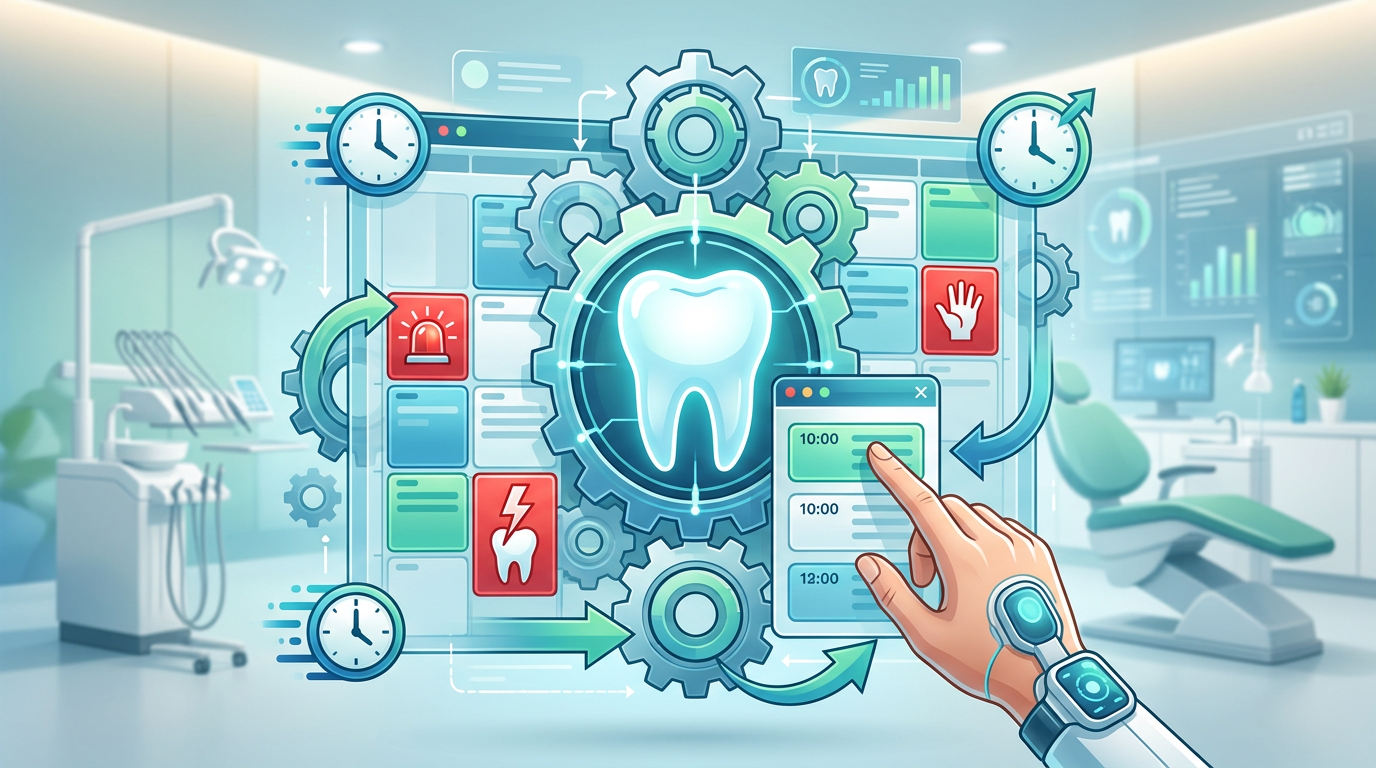
3. Leverage Dental Practice Management Software
Modern practice management software is indispensable for emergency scheduling. Denti360's platform offers features that transform how emergencies are handled:
- Dynamic scheduling interfaces: Drag-and-drop rescheduling, quick identification of open slots, and visual indicators for emergency appointments.
- Automated reminders and confirmations: Beyond routine appointments, the system sends immediate confirmations for emergency bookings, reducing no-shows for urgent cases.
- Patient communication tools: Integrated SMS and email allow rapid updates on appointment status, directions, or pre-appointment information.
- Integrated triage forms: Digital forms sent before arrival streamline intake and give the clinical team vital information upfront.
- Reporting and analytics: Track emergency visit frequency, types, wait times, and resolution rates. If data reveals a spike in emergencies on Mondays or after holidays, the practice can adjust buffer times or staffing for future planning, perhaps even in 2026.
- Provider availability management: View multiple providers' schedules to quickly identify who can handle an emergency, even across locations.
Fully integrating these tools streamlines workflows, reduces administrative burden, and ensures emergency patients are processed efficiently from first contact to treatment.
4. Invest in Cross-Training and Team Collaboration
Optimized emergency scheduling is a team effort, from the front desk to assistants and hygienists:
- Front desk empowerment: Ensure front desk staff can make initial scheduling decisions based on triage protocols, with access to the necessary tools and information. Clear role-based access keeps those decisions appropriate to each team member's responsibilities.
- Clinical team flexibility: Cross-train assistants and hygienists to support emergency evaluations, take radiographs, and prepare treatment rooms quickly.
- Dentist availability: Define a clear protocol for which dentist handles emergencies, especially in multi-dentist practices, perhaps through a rotation or designated coverage on certain days.
- Regular communication: Foster open communication so the front desk can relay emergency information fast and the clinical team can give feedback on scheduling effectiveness.
Regular meetings to review emergency protocols and hypothetical scenarios significantly improve preparedness and response times.
5. Manage Patient Communication and Expectations
Even with the best systems, delays happen. Transparent communication with emergency patients is vital:
- Set realistic expectations: When booking an emergency, explain that the patient will be seen promptly but may wait briefly depending on the severity of other cases.
- Keep them informed: If an unexpected delay arises, proactively update the patient with an apology and an estimated new wait time.
- Comfort measures: Offer water, comfortable seating, or a quiet area for patients in pain while they wait.
- Emergency contact information: Give clear instructions for contacting the practice outside regular hours, including local emergency room information if the practice does not offer 24/7 care.
Managing expectations with empathetic communication greatly reduces frustration, even during stressful moments.
6. Plan for After-Hours Emergencies
Dental emergencies do not respect business hours, so practices need an after-hours plan:
- Answering service or voicemail: A professional answering service can triage calls, give basic advice, and relay critical messages to the on-call dentist. A well-crafted voicemail can direct patients to the right resources.
- On-call rotation: In multi-dentist practices, establish an equitable on-call rotation.
- Emergency referral network: Maintain a list of local emergency dental clinics or hospitals that can provide care when the practice is closed or the case exceeds its capabilities.
Clear, accessible information about after-hours procedures should appear on the practice website and answering machine message.
7. Commit to Continuous Review and Adaptation
No scheduling system is perfect, and practice dynamics evolve. Regularly review and adapt your emergency protocols:
- Monthly or quarterly reviews: Discuss recent cases, identify bottlenecks, celebrate successes, and pinpoint improvements.
- Patient feedback: Ask emergency patients about their experience from initial call to treatment.
- Technology updates: Stay current with new features in Denti360's software that enhance scheduling efficiency, such as any new AI-driven scheduling features introduced in 2026.
- Staff training refreshers: Periodically refresh training on triage, software, and patient communication.
This iterative process keeps your emergency response agile, efficient, and patient-centered.
Conclusion
Optimizing emergency dental scheduling is complex but immensely rewarding, blending robust protocols, strategic time allocation, advanced technology like Denti360's integrated solutions, a well-trained collaborative team, and compassionate communication. Master these elements and your practice can navigate emergencies with ease while building a reputation as a reliable, patient-first provider. Ready to turn unpredictable emergencies into a source of patient loyalty? Talk to the Denti360 team about putting an optimized emergency scheduling system to work, an investment in both operational excellence and superior patient care.