
Streamlining Dental Insurance Claims for Complex Restorative Procedures
Dental insurance claims for complex restorative procedures can stall reimbursement for weeks and pile administrative work onto your team, even when the treatment is clearly life-changing for the patient. From meticulous documentation to nuanced coding and the daunting pre-authorization process, simplifying these claims is about more than efficiency; it protects patients from financial stress and keeps your practice financially stable. At Denti360, we understand these challenges and equip dental professionals with the knowledge and tools to navigate them. This guide covers strategies, best practices, and technological solutions that turn the claims labyrinth into a clear pathway to reimbursement.
Complex restorative procedures span full-mouth rehabilitations, extensive fixed prosthodontics such as multiple crowns, bridges, and implants with grafting, removable prosthodontics with precision attachments, and advanced endodontic or periodontic therapies combined with restoration. Each carries unique diagnostic considerations, planning complexity, and specific submission requirements. The volume of information, varying payer policies, and evolving CDT codes demand a systematic, proactive approach.
The Foundation: Accurate Diagnosis and Comprehensive Treatment Planning
A successful claim begins long before the claim form. It starts with an accurate diagnosis and a well-documented treatment plan. Insurance companies assess medical necessity, demonstrated through clear, objective evidence of the patient's condition and the treatment's rationale.
The Power of Diagnostic Records
For complex cases, standard radiographs rarely suffice. Practices should routinely gather robust diagnostic records, including:
- High-quality intraoral and extraoral photographs: Visual evidence of existing conditions and pre- and post-treatment status, including full-face, smile, retracted, and occlusal views.
- Complete periodontal charting: Essential for documenting periodontal health or disease, especially for surgical or reconstructive procedures.
- Study models/casts: Physical or digital models showing occlusion, arch relationships, and dentition to justify extensive restorative work.
- Panoramic and full-mouth series radiographs: Standard for assessing dental health, bone levels, and pathology.
- Cone Beam Computed Tomography (CBCT) scans: Indispensable for implant planning, identifying anatomy, assessing bone volume and quality, and diagnosing complex pathology, providing irrefutable evidence for grafting or specific placement strategies.
- Occlusal analysis: Documentation of discrepancies, wear patterns, and TMJ issues supporting comprehensive restorative treatment.
Each record should be meticulously dated and clearly labeled to match the patient's record and treatment plan. Consistency across all documentation is paramount.
Crafting a Detailed Treatment Plan
The treatment plan must clearly articulate:
- Diagnosis for each tooth/site: The specific conditions requiring intervention.
- Proposed procedures: The sequence and type of treatment.
- Rationale for treatment: Why this procedure is medically necessary and most appropriate, connecting diagnostic findings to the proposed solution.
- Prognosis: The anticipated outcome.
- Alternatives considered: Briefly note alternatives and why the chosen plan is superior for this patient.
Payers increasingly scrutinize complex cases. A well-articulated plan tied to strong diagnostic evidence significantly reduces denials and requests for more information.
Mastering CDT Coding for Complex Procedures
Accurate Current Dental Terminology (CDT) coding is how practices communicate treatment to insurers. Complex restorative procedures often involve multiple codes, modifiers, and a deep understanding of their application.
Specificity and Unbundling
The golden rule is specificity. Do not bundle procedures with distinct CDT codes; code each service separately and support it with documentation. If a patient undergoes a bone graft, then implant placement, then a crown, these are three distinct procedures, each with its own code. Unbundling ensures every component is recognized and potentially reimbursed.
Leveraging 'By Report' Codes (99) and Narrative Descriptions
Sometimes a standard CDT code cannot capture a procedure's complexity. In those cases, 'by report' codes (e.g., Dxxxx.99) apply, and a detailed narrative is essential. The narrative should:
- Explain precisely what was done.
- Justify the medical necessity.
- Describe unusual circumstances or complexities.
- Provide the time involved and any special materials used.
Treat the narrative as your chance to tell the procedure's story, leaving no room for ambiguity.
Understanding Modifiers and Their Impact
While CDT codes describe procedures, modifiers add information about a service performed. Though less common in dental than medical coding, specific modifiers may apply, particularly with medical cross-coding or scenarios such as multiple procedures on the same tooth in one visit, which is rare in complex restorative work. Staying current on the latest CDT manual and payer guidelines is crucial.
Medical Cross-Coding for Enhanced Reimbursement
Many complex restorative procedures have a medical component, particularly those involving pathology, trauma, or oral surgery. Identifying medical cross-coding opportunities, billing the patient's medical insurance, can improve reimbursement and lower out-of-pocket costs. Procedures often eligible include:
- CBCT scans
- Excision of lesions (biopsies)
- Bone grafting procedures
- Sinus lifts
- Treatment for TMJ disorders
- Sleep apnea appliances
- Treatment of accidental injuries (dental trauma)
- Certain implant-related procedures, especially when tied to medically necessary reconstruction such as after tumor resection.
Successful cross-coding requires familiarity with CPT codes, ICD-10-CM diagnosis codes, and medical carrier policies. Denti360 offers resources and training to help practices navigate this underutilized avenue for reimbursement.
The Critical Role of Pre-Authorization (Predetermination)
For complex, costly restorative procedures, pre-authorization, also called predetermination or pre-treatment estimate, is often a necessity. It lets the practice obtain an estimate of coverage before treatment, giving both patient and practice financial clarity.
Benefits of Pre-Authorization
- Financial clarity for patients: Reduces anxiety about out-of-pocket costs, raising treatment acceptance.
- Informed consent: Patients make more informed decisions about proceeding.
- Reduced surprises: Minimizes unexpected denials or lower-than-expected reimbursement.
- Streamlined billing: A pre-authorized claim processes more quickly once treatment is complete.
- Opportunity for adjustment: A lower-than-expected estimate creates a chance to add documentation, appeal, or discuss alternatives before treatment begins.
Submitting a Robust Pre-Authorization Request
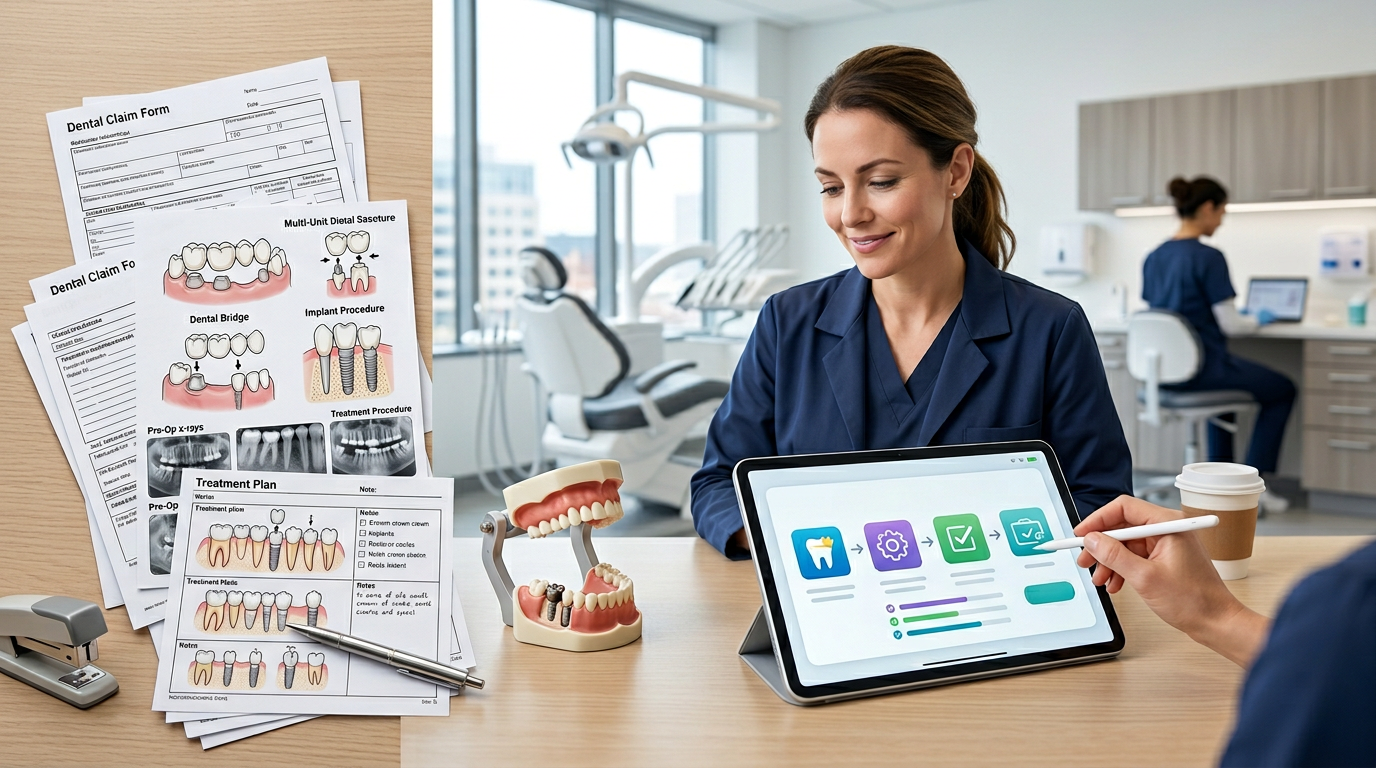
A pre-authorization for complex cases should mirror a full claim in thoroughness. Include:
- Completed claim form: Clearly marked 'predetermination' or 'pre-authorization'.
- Detailed treatment plan: With all proposed CDT codes.
- Comprehensive diagnostic records: Radiographs, photos, charting, CBCT scans, study models, and everything supporting medical necessity.
- Narrative justification: A concise letter explaining the diagnosis, proposed treatment, why it is necessary, and how it aligns with findings, highlighting complexity and expected outcome.
- Periodontal history: Where applicable, including dates and services.
- Previous restorations: The history of prior restorations in the area, especially if replacement is due to failure or irreparable damage.
Track the request diligently and follow up within the expected timeframe. Most insurers provide a benefits estimate and a validity period for the pre-authorization.
Effective Appeals and Reconsideration Strategies
Even with meticulous preparation, denials or reduced payments happen. Knowing how to appeal effectively is a crucial skill for handling complex claims.
Analyzing the Denial Reason
First, understand exactly why the claim was denied or downgraded. The Explanation of Benefits (EOB) or Electronic Remittance Advice (ERA) states the reason. Common reasons include:
- Lack of medical necessity (insufficient documentation).
- Missing information.
- Service not covered (plan limitations or exclusions).
- Downgraded procedure (e.g., a crown to a filling).
- Predetermination expired.
- Frequency limitations.
Crafting a Compelling Appeal Letter
An appeal letter should be professional, clear, and evidence-based. It should:
- Reference the original claim: Include patient name, subscriber ID, date of service, and claim number.
- State the reason for the appeal: Address the specific denial reason the payer cited.
- Reiterate medical necessity: Use diagnostic records and the treatment plan to re-emphasize necessity, quoting specific findings from radiographs, photographs, or clinical notes.
- Provide additional documentation: Include anything missing from the original submission or new clinical findings.
- Reference payer policy (if applicable): Cite the policy if the denial contradicts it.
- Be persistent and polite: Keep a professional tone and escalate if necessary.
Keep copies of all correspondence and documentation, and follow up within the insurer's specified appeal timeframe.
Leveraging Peer-to-Peer Reviews
For particularly complex cases with significant medical necessity, a peer-to-peer review is invaluable. The treating dentist speaks directly with the insurer's dental consultant, clarifying misunderstandings and conveying clinical perspective that written documentation may miss. Prepare thoroughly with all patient records and the treatment plan accessible.
The Role of Technology and Automation
In 2026 and beyond, leveraging technology is essential for simplifying complex claims. Denti360 champions advanced solutions for efficiency and accuracy, capabilities you can explore across our platform features.
Practice Management Software Integration
Modern practice management software is pivotal. Look for:
- Integrated billing and claims submission: Direct electronic submission (EDI) reduces errors and speeds processing.
- Automated eligibility verification: Instantly check eligibility and benefits before appointments.
- Code scrubbing: Identifies potential coding errors or missing information before submission.
- Digital imaging integration: Easily attach radiographs, photos, and CBCT images to claims.
- Tracking and reporting: Monitor claim status, spot denial trends, and track financial performance as part of broader financial tracking.
AI and Machine Learning in Claims Processing
The future of claims processing lies in AI and machine learning. These technologies can:
- Predict denial risks: Analyze past claim data to spot denial patterns and prompt proactive adjustments.
- Automate documentation checks: Flag missing diagnostic records or insufficient narratives based on procedure codes.
- Suggest optimal coding: Recommend appropriate CDT codes and medical cross-coding opportunities from the diagnosis and plan.
- Streamline EOB analysis: Automatically interpret EOBs and flag discrepancies or appeal opportunities.
Denti360 is actively developing AI-powered tools to make claims handling smarter, faster, and more accurate.
Outsourcing and Claims Management Services
For practices overwhelmed by complexity or volume, outsourcing to a specialized dental billing company can be highly effective. These services bring expert knowledge of coding, payer policies, and appeals, freeing the practice to focus on care. Ensure any service specializes in complex restorative procedures with a strong reimbursement track record.
Building Strong Relationships with Payers
Though often seen as adversaries, insurers are also partners in patient care, and professional relationships can improve claim outcomes:
- Know your payer representatives: Identify key contacts for frequently used plans.
- Attend webinars and training: Many payers offer education on policies and coding guidelines.
- Read policy updates: Stay informed about coverage, deductibles, frequency limitations, and requirements for complex procedures.
- Document all communications: Keep records of calls, emails, and advice from payer representatives.
A proactive approach to payer guidelines minimizes friction and improves claims efficiency.
Empower Your Practice with Denti360
Simplifying insurance claims for complex restorative procedures takes precision, persistence, and modern technology. By focusing on meticulous documentation, accurate and specific CDT coding, pre-authorization, a mastered appeal process, and advanced technological solutions, practices significantly improve reimbursement rates and reduce administrative overhead. Denti360 is committed to being your partner in this journey, demystifying the claims process so you can deliver exceptional care without administrative drag. To transform complex claims into an opportunity for greater efficiency, financial stability, and enhanced patient access to restorative care, connect with the Denti360 team today.