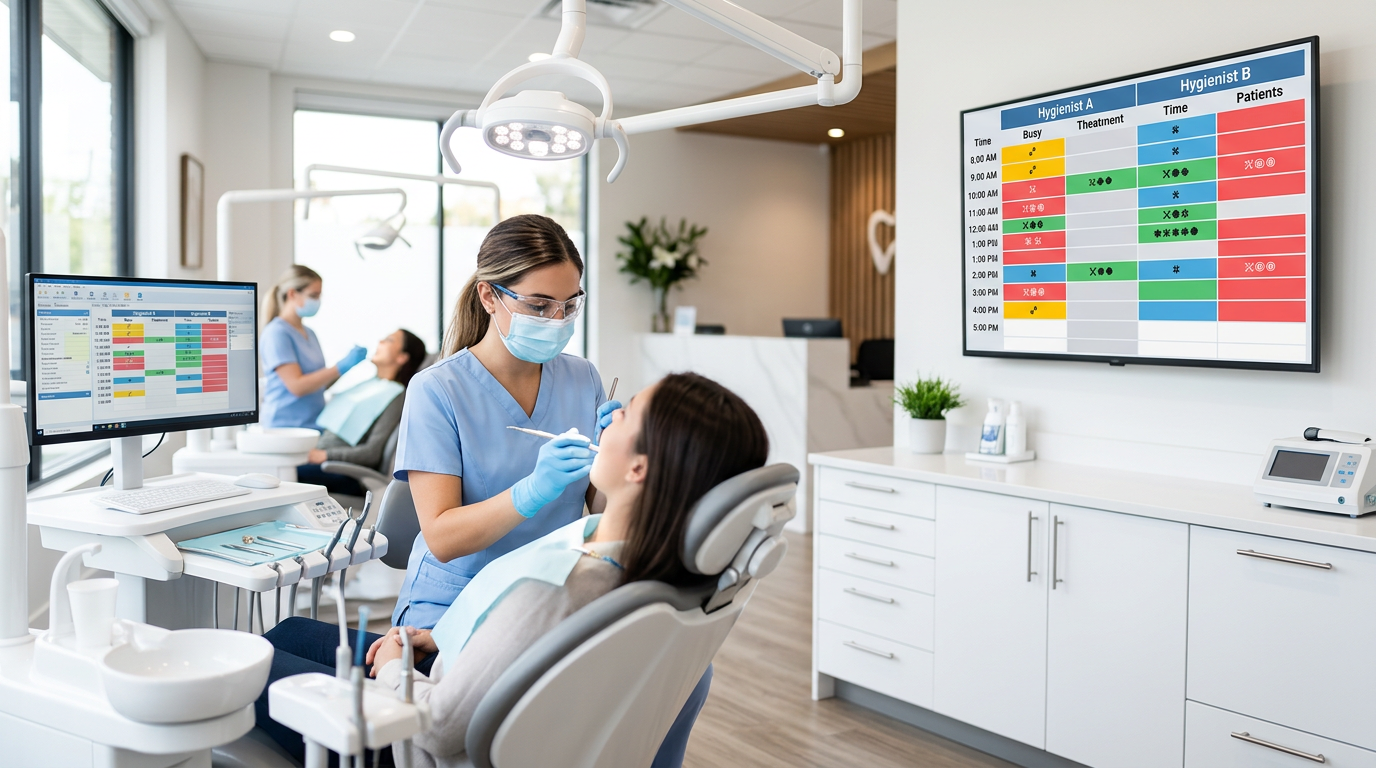

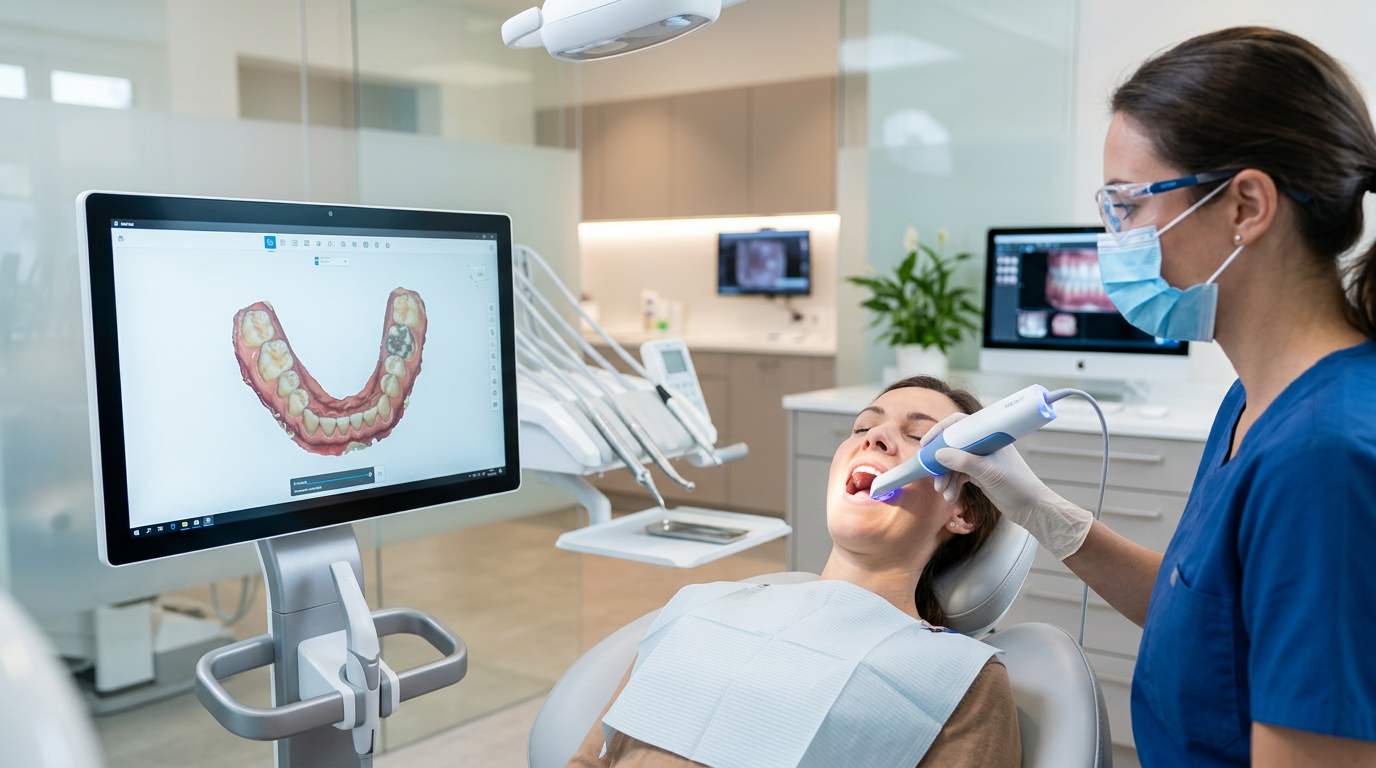
Dental practice in India is changing faster than at any point in the past two decades. Patients arrive with higher expectations — they research their conditions online, compare clinics, and notice the difference between a clinic that still takes film X-rays and one that shows them a 3D scan of their jaw on a large monitor. At the same time, the clinical tools available to dentists have become dramatically more capable, more affordable, and more interconnected. The digital transformation in dentistry is not a distant trend for large hospital chains. It is happening now, in single-chair clinics and mid-sized group practices across India, and the clinics that embrace it earliest are building a lasting competitive advantage.
Digital Imaging: The Foundation of Modern Dental Diagnosis
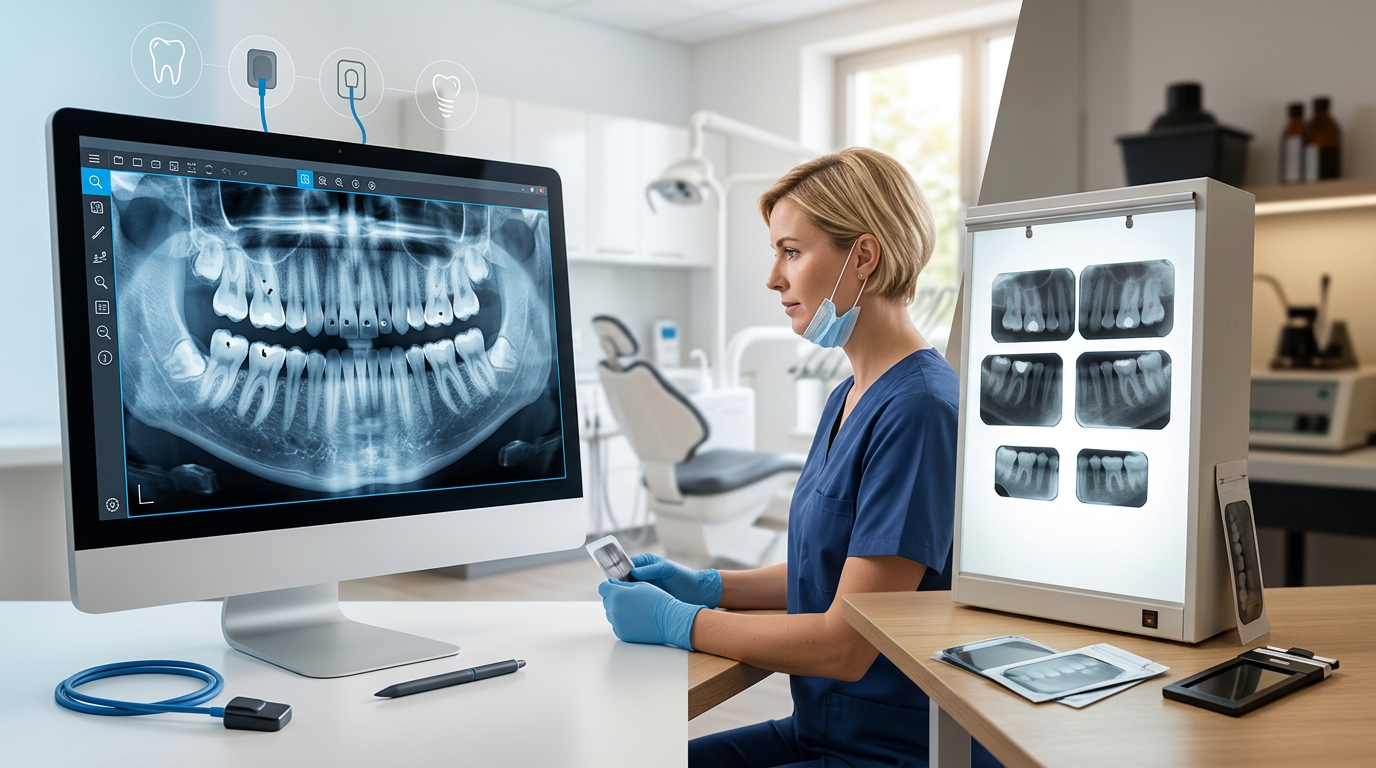
The shift from film X-rays to digital dental imaging is the most widely adopted element of digital dentistry, and for good reason. Digital intraoral sensors and panoramic units produce diagnostic-quality images in seconds, with a radiation dose typically 60–90% lower than conventional film. Images appear on a chairside monitor immediately, can be zoomed, contrast-adjusted, and annotated, and are stored electronically without the need for a darkroom or chemical processing.
For early caries detection, periodontal bone-level assessment, and endodontic length estimation, the ability to manipulate the image after capture is a genuine clinical advantage. A faint proximal lesion that might be missed or ambiguous on a static film becomes unambiguous when the contrast is adjusted and the area zoomed. Fewer missed early lesions means more conservative treatment, less patient cost over time, and a reputation for thoroughness that generates referrals.
Cone Beam Computed Tomography (CBCT) takes this further, producing volumetric 3D images of the craniofacial region. For implant planning, it allows the clinician to measure bone volume, identify the inferior alveolar canal, and plan implant position and angulation with precision before making a single incision. For complex endodontic cases, it reveals root canal anatomy that would be invisible on a periapical radiograph. CBCT was once the exclusive domain of large hospitals; today it is accessible to dental clinics of all sizes.
Intraoral Scanning: Better Impressions, Better Patient Experience
Intraoral scanners have been one of the most practice-transforming technologies of the last decade. Replacing polyvinylsiloxane or alginate impressions with a wand-shaped optical scanner that captures a precise 3D model of the dentition in minutes is not simply a convenience upgrade — it changes what is clinically possible.
Digital impression accuracy, particularly for single-unit restorations, now matches or exceeds the accuracy achievable with traditional impression materials in experienced hands — and without the distortion risk associated with impression removal, pouring, and stone model trimming. For patients with a strong gag reflex, severe dental anxiety, or anatomical challenges, the elimination of tray-and-material impressions alone significantly improves the clinical experience.
The digital file produced by an intraoral scanner can be sent electronically to a dental laboratory in minutes, eliminating courier delays and the risk of a model being damaged in transit. It can also feed directly into chairside CAD/CAM milling for same-day restorations, or into orthodontic aligner software for clear aligner treatment planning — all from a single scan taken at the initial appointment.
CAD/CAM and Same-Day Restorations
Computer-aided design and manufacturing (CAD/CAM) technology allows dental restorations to be designed digitally and milled from ceramic or composite blocks with sub-millimetre precision. In clinics equipped with a chairside milling unit, this means a patient can have a crown prepared, milled, glazed, and cemented in a single appointment — eliminating the temporary crown stage, the second appointment, and the two-to-three week wait for a laboratory-fabricated restoration.
For dental practice management purposes, same-day dentistry is a significant operational advantage. It reduces the number of appointments each case requires, frees up schedule slots for new patients, and eliminates the risk of temporaries coming off between appointments — a common source of emergency calls and unplanned appointments that disrupt the schedule.
For patients, the value is obvious: one appointment instead of three, no temporary to worry about, and a permanent, aesthetic ceramic restoration placed the same day the tooth is prepared.
Digital Workflow Integration: Where the Real Efficiency Lives
The individual technologies described above — digital imaging, intraoral scanning, CAD/CAM — each deliver value on their own. But the compounding benefit of digital dentistry comes from integrating them into a connected clinical and administrative workflow.
Consider a typical implant case managed digitally end to end. A CBCT scan and intraoral scan are taken at the planning appointment. The images are merged in planning software to produce a virtual surgical guide. The guide is fabricated in-house or by a lab. The implant is placed at a subsequent appointment through the guide with predictable positioning. A scan body is placed at the abutment stage and scanned intraorally. The resulting digital model goes to the lab for crown fabrication. At every step, the data flows forward — no re-measurement, no reinterpretation, no potential for cumulative error.
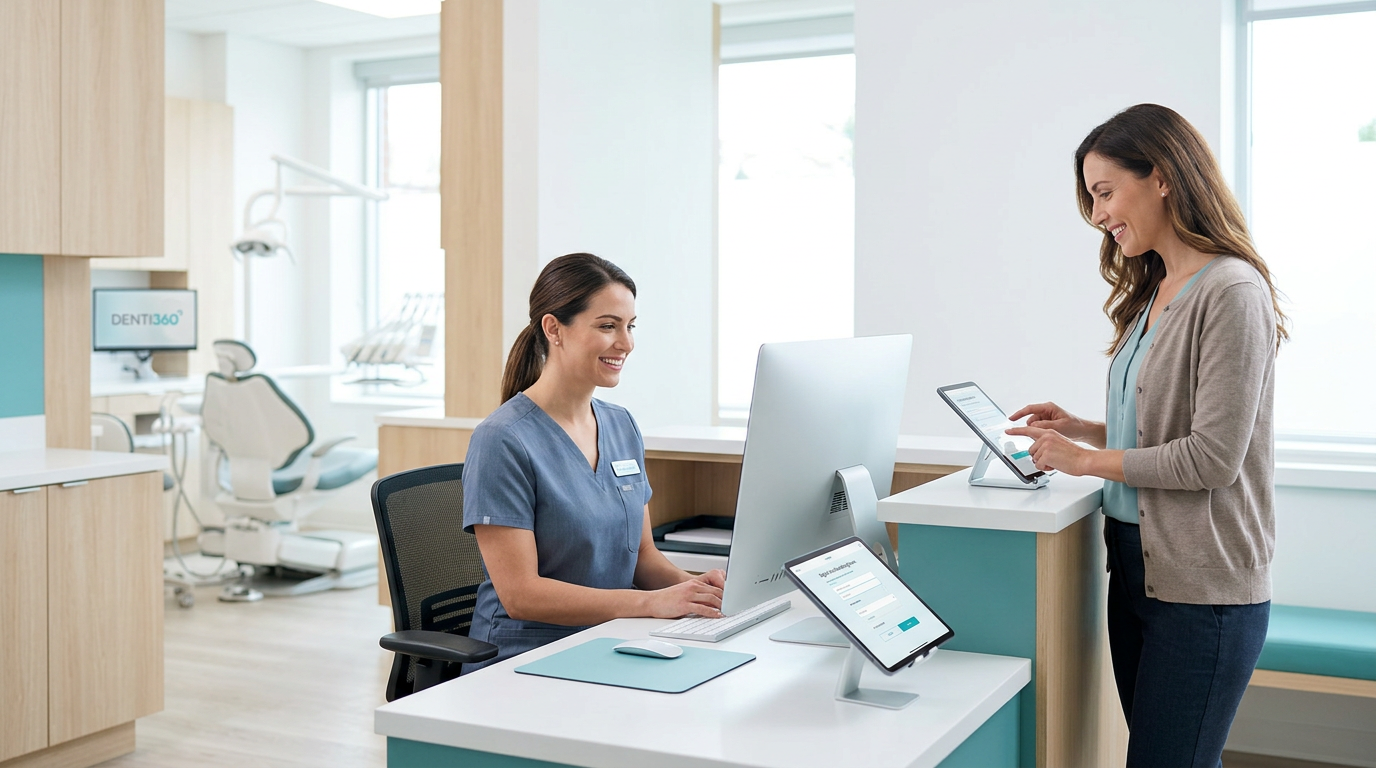
When this clinical workflow is integrated with dental software India clinics use for scheduling, billing, and patient records — like Denti360 — the administrative side of the same case is equally seamless. Appointments are linked to the treatment plan. Billing is generated from the recorded procedures. Insurance pre-authorisation documentation pulls from the same clinical record. The whole case, clinical and administrative, lives in one place.
Teledentistry and Remote Consultation
Teledentistry — the use of digital communication tools to deliver dental consultation and triage remotely — grew rapidly during the COVID-19 period and has retained a permanent place in the toolkit of progressive Indian clinics. Video consultations allow dentists to assess urgent patient concerns, provide post-operative guidance, and conduct initial consultations for patients who live far from the clinic or who cannot take time away from work for a preliminary visit.
For orthodontic patients on clear aligner therapy, remote monitoring tools allow periodic check-ins without requiring the patient to travel to the clinic every six weeks. For practices with multiple locations, teledentistry facilitates specialist consultations without requiring the patient to travel between branches. These capabilities expand the effective reach of a clinic's services without expanding its physical footprint.
What Digital Transformation Means for Practice Growth
The business case for investing in dental technology is not just about doing better dentistry — though that is the primary motivation for most clinicians. It is also about practice differentiation in an increasingly competitive urban market, improved operational efficiency, and the ability to attract and retain a team of dental professionals who want to work with modern tools.
Clinics that have embraced digital workflows consistently report shorter appointment times, higher case acceptance rates (because patients can see their condition and proposed treatment visually), fewer remakes and adjustments on restorations, and stronger patient loyalty driven by a noticeably superior experience. These are the outcomes that compound over time into a thriving, growing practice.
Conclusion
The digital transformation in dentistry is not a single technology decision — it is an ongoing commitment to using the best available tools at every stage of patient care, from the first diagnostic image to the final billing submission. The clinics that build this capability now, one technology at a time if needed, will be the ones best positioned to serve patients and grow their practices over the next decade.
Denti360 is the dental practice management platform designed to sit at the centre of a digitally transformed clinic — connecting clinical workflows, scheduling, billing, patient communication, and analytics in one integrated system built for Indian dental practice. Book a free Denti360 demo to see how digital dentistry and intelligent practice management work together to build a clinic that is faster, more profitable, and more enjoyable to run.