
In most dental clinics, the hygiene chair is the heartbeat of the practice. Regular recall appointments keep the patient base healthy, generate consistent revenue, and create the touchpoints that build long-term relationships. Yet the dental hygienist schedule is also one of the easiest parts of a clinic's operation to let drift into inefficiency — through gaps caused by no-shows, slots that run long, or a recall system that fails to refill cancelled appointments quickly enough.
Optimising the hygiene schedule for maximum patient capacity is not about rushing through appointments. It is about designing a system where the right appointment types are in the right slots, gaps are minimised proactively, and the dental team spends the bulk of their time doing clinical work rather than managing scheduling exceptions. Here is how to build that system.
Start with Data: Understand Your Current Schedule Performance
Before changing anything, measure what is actually happening. Pull three months of historical hygiene scheduling data and look at:
- No-show and late cancellation rates by day and time: Monday mornings and Friday afternoons often have higher no-show rates in many clinics. Knowing this lets you schedule strategically — for example, putting your highest-risk appointment types earlier in the week when replacement is easier.
- Actual appointment durations vs. booked durations: If adult prophylaxis appointments are routinely running 65 minutes but booked at 50, your schedule will accumulate delays through the day. Calibrate your slot lengths to reflect clinical reality, not optimistic targets.
- Chair utilisation rate: The percentage of available hygiene chair time that is occupied by a patient. A well-run hygiene schedule should target 85–92% utilisation after accounting for buffer time. Significantly below this indicates a capacity problem worth solving.
- Recall compliance rate: What percentage of patients due for a six-month recall actually book and attend within the target window? This is the single most important driver of long-term hygiene capacity.
Good dental scheduling software should surface these numbers automatically. If your current system requires a manual spreadsheet exercise to answer these questions, that is itself a sign that you are working with insufficient dental practice management tools.
Standardise Appointment Types and Time Allocations
One of the most effective structural improvements is creating clearly defined appointment types with realistic, standardised time allocations that your scheduling software enforces. A common framework for a hygiene schedule might include:
- Adult recall prophy: 50–60 minutes
- Child recall prophy: 30–45 minutes (depending on age and cooperation)
- New patient with comprehensive exam: 75–90 minutes, to allow full charting, radiographs, and time for the dentist to perform and discuss the examination
- Scaling and root planing (per quadrant): 50–60 minutes
- Periodontal maintenance: 45–55 minutes
When appointment types are clearly defined, your scheduling software can apply the correct duration automatically when the appointment is created, preventing the accidental under-booking that causes schedule compression later in the day.
Build a Recall System That Actually Works
The most reliable way to keep a hygiene schedule full is a robust, automated recall process. Many Indian dental clinics still rely on manual recall cards or informal WhatsApp reminders — systems that depend entirely on staff remembering to reach out and patients remembering to respond. This approach leaves recall compliance almost entirely to chance.
A well-designed recall system using dental scheduling software works differently:
- Pre-book before the patient leaves: The most effective recall strategy is scheduling the next hygiene appointment at checkout from the current one. Patients who leave with a confirmed future appointment are far more likely to return than those who receive a reminder months later.
- Automated multi-channel reminders: Patients who do not pre-book should enter an automated recall sequence — an SMS at the six-month mark, a follow-up a week later if no booking is made, and a final outreach two weeks after that. Automation ensures no patient falls through the cracks regardless of how busy the front desk is.
- Unconfirmed appointment alerts: As the appointment date approaches, automatically flag any confirmed appointment that has not been acknowledged by the patient. These are your highest no-show risks and deserve a direct phone call from your team.
Denti360's recall and communication tools automate this entire sequence, ensuring every patient receives timely, personalised outreach without adding to your front-desk team's manual workload.
Manage No-Shows and Cancellations Proactively
Even with a strong recall system, some cancellations are inevitable. The difference between a clinic that loses that revenue and one that recovers it lies in how quickly the gap gets filled.
Maintain an active same-week availability list — patients who have expressed interest in being called if an earlier appointment opens up, or patients on a short-notice waitlist for a specific hygienist. When a cancellation occurs, your front desk should be able to query this list in your practice management software and make a single phone call to fill the slot rather than scrolling through handwritten notes.
Also review your confirmation protocol. Sending a single reminder 24 hours before an appointment is a minimum, not a best practice. A three-touch approach — automated SMS or email at seven days, three days, and 24 hours — consistently produces higher confirmation rates and earlier notice of cancellations, giving your team more time to fill gaps.
Optimise the Dentist-Hygienist Exam Workflow
One of the most common sources of hygiene schedule delay is waiting for the dentist to perform the periodic examination during a recall appointment. If the dentist is busy with a procedure in another operatory, the hygienist finishes their clinical work and then sits idle while the patient waits. This idle time erodes daily capacity significantly.
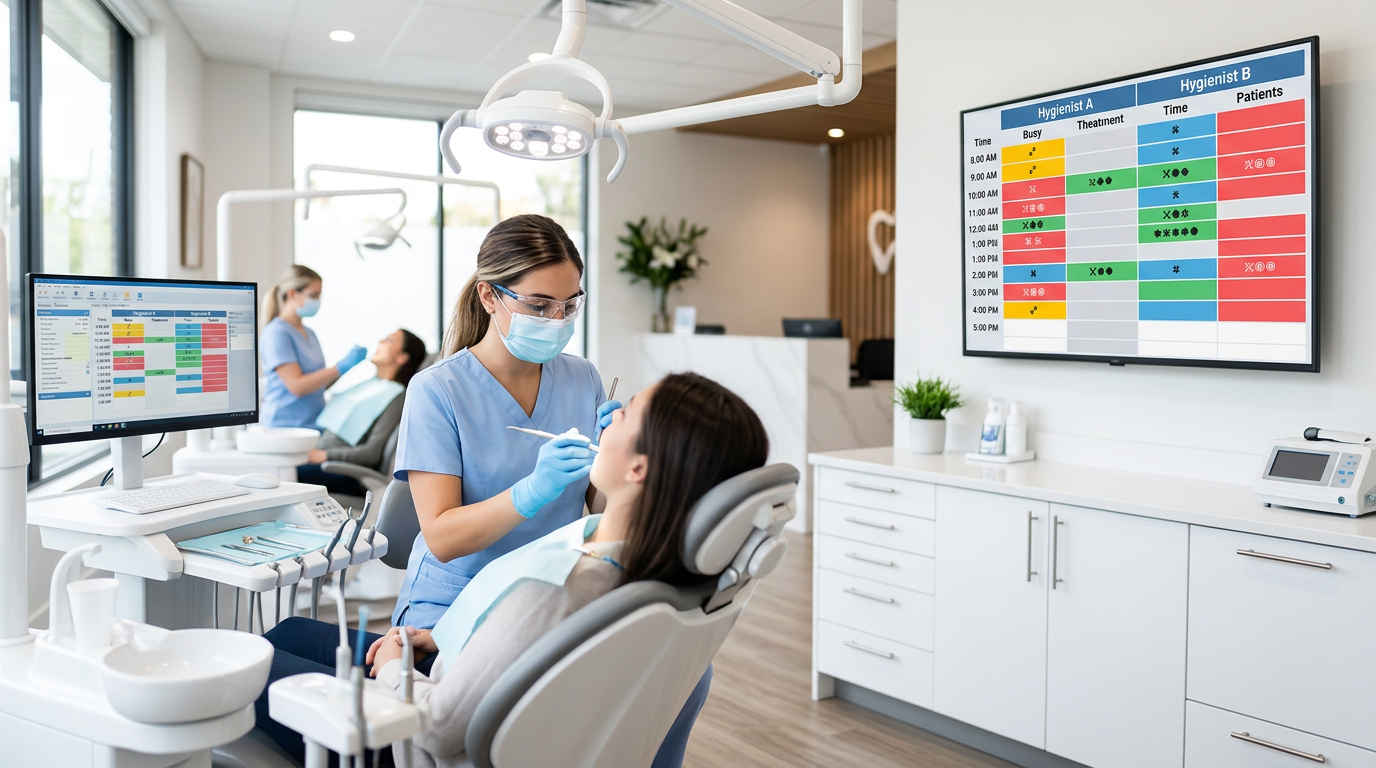
Solve this with deliberate scheduling design. Stagger hygiene appointments so that multiple patients are in different stages of their visit simultaneously. Flag appointments that require a dentist exam — which is most recall visits — and ensure the schedule shows the dentist a clear window for the exam within each hygiene appointment. Some clinics build a two-room hygiene model where the hygienist moves between rooms, keeping two patients progressing while the dentist moves through exams in sequence. Implemented well, this approach can increase the number of patients a single hygienist serves per day without any reduction in care quality.
Use Scheduling Analytics to Drive Continuous Improvement
Schedule optimisation is not a one-time project — it is an ongoing practice. The dental scheduling software tools within a platform like Denti360 give practice owners and managers access to scheduling analytics that make continuous improvement straightforward:
- Track chair utilisation week over week and identify which sessions are consistently underperforming
- Monitor no-show rates by hygienist, day of week, and appointment type to target interventions precisely
- Compare recall compliance rates before and after changing your reminder sequence to measure the impact
- Review average daily patient counts per hygienist to identify capacity benchmarks and realistic growth targets
When these numbers are visible and reviewed regularly, the hygiene schedule stops being a source of daily improvisation and becomes a managed, improving system.
Conclusion
A well-optimised hygiene schedule is one of the most reliable levers for growing a dental clinic's revenue and patient capacity without adding chairs or hiring additional dentists. The principles are straightforward: standardise appointment types, automate recall outreach, manage no-shows proactively, coordinate the dentist-hygienist workflow intentionally, and use data to refine the system continuously.
Denti360 brings all of these capabilities together in a single dental practice management platform built for Indian clinics — from automated recall and smart scheduling to analytics that surface exactly where your schedule is losing capacity. Book a free Denti360 demo today and see how a better-managed hygiene schedule can translate into measurable growth for your practice.