
Every unfilled hygiene appointment slot represents a double loss for a dental clinic: a gap in preventive care for the patient, and direct revenue forgone by the practice. In a typical busy clinic in India, even two or three no-shows per day across the hygiene schedule adds up to a meaningful impact on monthly revenue and chair utilisation. The question is not whether no-shows are a problem — they demonstrably are — but whether the solution lies in the same manual booking processes most clinics have been using for years, or in purpose-built dental scheduling software. The answer has become considerably clearer as digital tools have matured, and the evidence points decisively in one direction.
What Manual Booking Actually Costs Your Practice
Manual scheduling — whether in a physical appointment book, a shared spreadsheet, or a basic calendar tool — works well enough when a practice is small and the appointment volume is manageable. As the practice grows, the cracks appear. Front-desk staff spend a significant portion of their working day on outbound reminder calls, many of which go unanswered. Messages left on voicemail have low confirmation rates. Patients who need to reschedule must call during clinic hours, which is often inconvenient, so they procrastinate — and then simply do not show up.
The administrative overhead of manual booking is also substantial. Recording appointments, managing cancellations, filling gaps from a mental or physical waitlist, and tracking recall due dates for hygiene patients requires constant attention and is prone to error. Double-bookings happen. Recall reminders fall through the cracks when the front desk is occupied with patients. New staff take weeks to learn the scheduling system, during which errors increase.
For hygiene appointments specifically, the recall management component of manual booking is a persistent weak point. A patient who is due for their six-month clean requires a proactive outreach — the practice must initiate contact, not wait for the patient to remember. Manual recall systems rely on staff discipline and time, both of which are in short supply during a busy clinic day.
How Dental Scheduling Software Changes the No-Show Equation
Dental scheduling software addresses the no-show problem by automating the interventions that reduce it — and doing so consistently, at scale, without additional staff time.
Automated, Multi-Channel Appointment Reminders
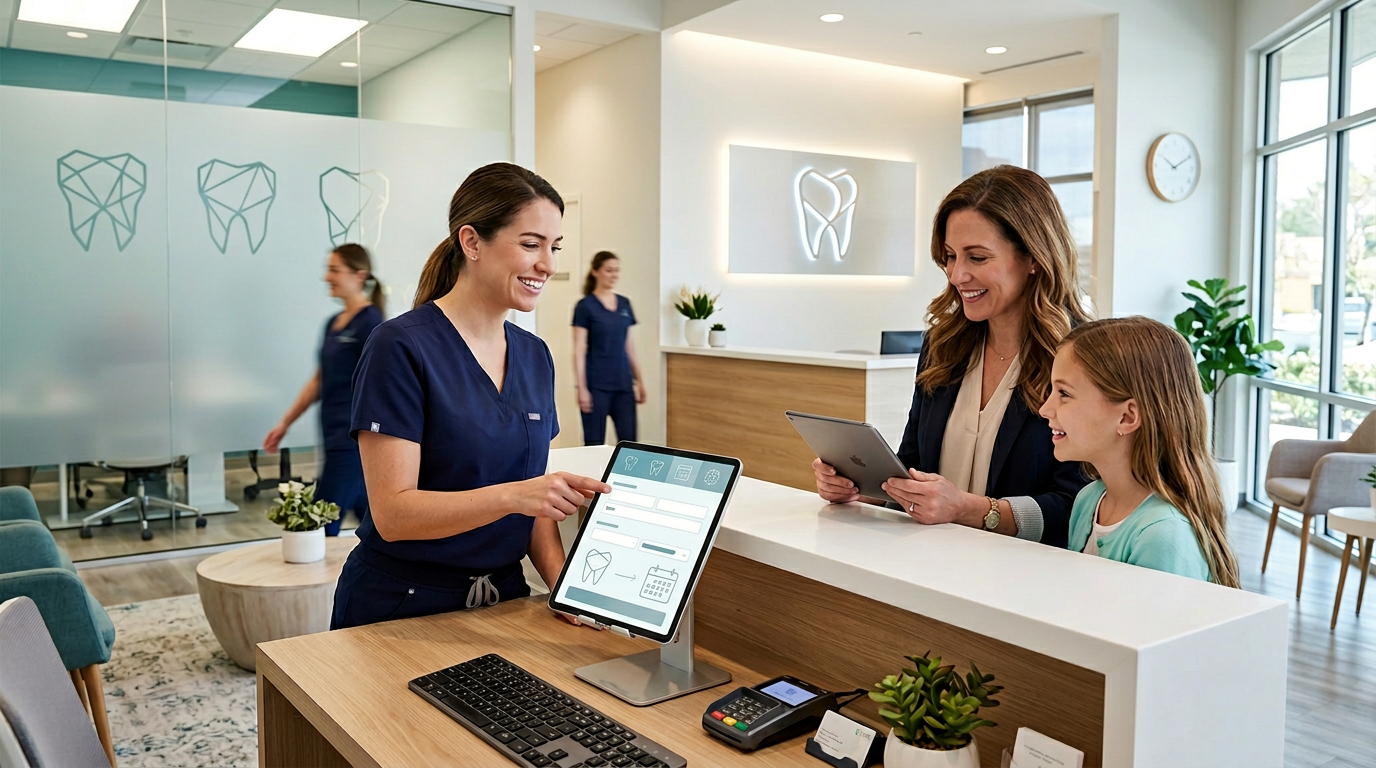
The single most effective intervention for reducing hygiene appointment no-shows is a well-timed reminder sent through a channel the patient actually uses. Dental scheduling software sends automated reminders via SMS, WhatsApp, and email at configurable intervals — typically three days before, one day before, and on the morning of the appointment. Patients can confirm directly from the message with a single tap, and that confirmation is recorded automatically in the system. The response rate for text-based reminders is dramatically higher than for phone calls, and the process requires zero staff time once configured.
For Indian dental practices, WhatsApp reminders are particularly effective given the platform's near-universal penetration. Modern dental practice management software like Denti360 supports WhatsApp as a reminder channel, meeting patients where they already communicate rather than asking them to engage on a channel they find intrusive or easy to ignore.
Online Booking and Self-Service Rescheduling
A patient who needs to move a hygiene appointment has two options in a manual system: call the clinic during business hours, or not call at all and hope for the best. The second option is what produces no-shows. Online booking, available through the practice's dental scheduling software, gives patients a third option: reschedule themselves, at any time, in 30 seconds on their phone. The cancelled slot is immediately released for another patient, and the system can automatically offer it to patients on a waitlist.
This self-service capability is not just a convenience for patients — it is a revenue protection mechanism for the practice. Slots that would previously be lost to no-shows or last-minute cancellations are filled automatically, without any front-desk intervention.
Intelligent Recall Management for Hygiene Patients
Recall management is where dental scheduling software delivers a benefit that manual systems simply cannot replicate at scale. When a patient's hygiene appointment is completed and documented in the practice management system, the software automatically schedules their next recall at the clinician-specified interval and sends them a reminder when that date approaches — with a link to book the appointment directly. Patients who do not respond to the first reminder receive a follow-up. The entire recall cycle is managed without any staff action after the initial appointment is closed.
For practices with hundreds of active hygiene patients, this automated recall cycle is the difference between a consistently full hygiene schedule and a schedule that empties progressively as patients drift out of regular attendance.
Waitlist Management and Real-Time Gap Filling
When a cancellation does occur — and some always will — dental scheduling software with waitlist management can automatically notify suitable patients that a slot has opened. Patients who opted into the waitlist receive a message with a link to claim the appointment; the first to respond gets the slot. This turns cancellations from a revenue loss into a filled appointment with minimal staff involvement.
For dental practices in India managing high patient volumes, the waitlist feature also provides useful data: consistent waitlist demand for certain time slots suggests scheduling adjustments that could improve overall utilisation.
Manual Booking vs. Dental Scheduling Software: The Direct Comparison
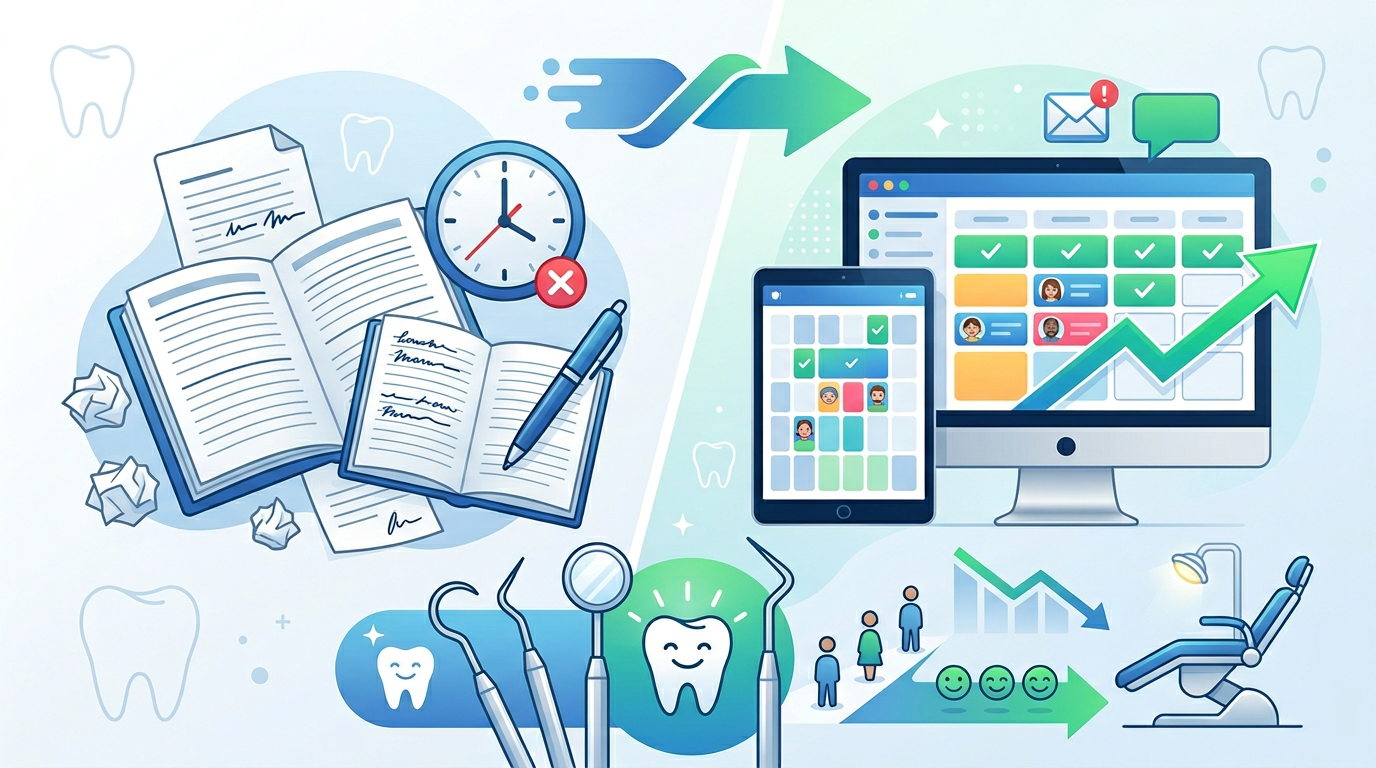
The operational differences between the two approaches are stark when placed side by side:
- Reminder execution: Manual systems rely on staff making outbound calls with low answer rates. Scheduling software sends automated SMS and WhatsApp messages with high open and response rates, requiring no staff time.
- Patient convenience: Manual booking requires patients to call during office hours to reschedule. Software provides 24/7 online self-service rescheduling and booking.
- Recall management: Manual recall requires staff to proactively identify and contact overdue patients. Software automates the entire recall cycle from appointment completion to rebooking.
- Gap filling: Manual cancellations create gaps that staff must scramble to fill, often unsuccessfully. Software waitlist management fills gaps automatically from a pre-qualified list.
- Data and reporting: Manual systems offer no systematic view of no-show rates, recall compliance, or scheduling patterns. Software provides analytics that enable continuous improvement in scheduling strategy.
On every dimension relevant to reducing hygiene appointment no-shows, dental scheduling software outperforms manual booking. The only meaningful argument for manual systems is cost — and for most practices, the revenue recovered from even a marginal reduction in no-shows covers the cost of dental software in the first month of use.
Choosing the Right Dental Scheduling Software for Your Practice
Not all scheduling software is equally suited to the Indian dental market. Look for a platform that integrates scheduling with clinical records, billing, and patient communications — rather than treating scheduling as a standalone module. Integration is essential: when a cancelled appointment is visible to the billing team, when the treating dentist can see the day's schedule from the clinical screen, and when recall data flows automatically from the clinical note, the whole practice operates more smoothly.
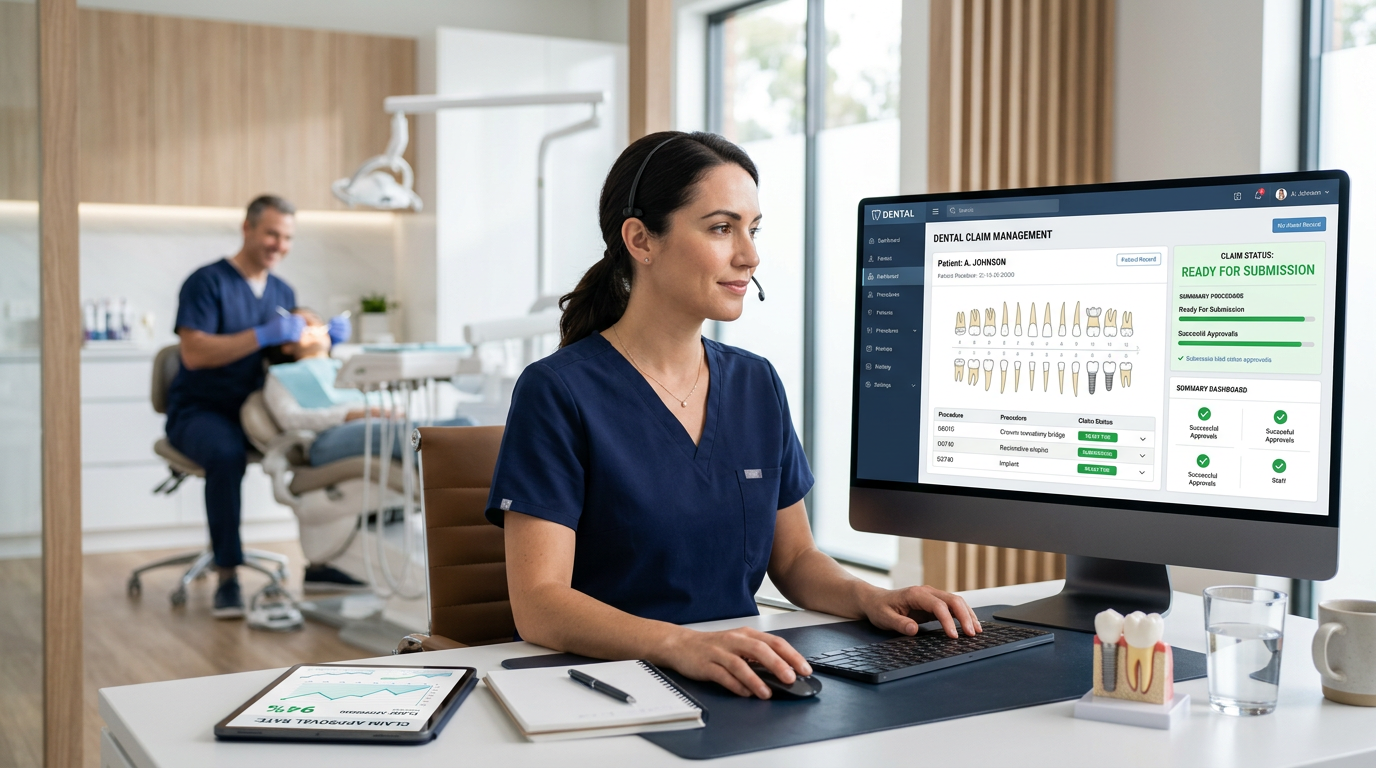
Denti360 is built as an integrated dental practice management platform for Indian clinics, with scheduling, automated patient communication, recall management, and clinical records in a single system. The WhatsApp and SMS reminder capabilities are configured for Indian patient communication norms, and the reporting tools give practice managers the data they need to track and continuously improve no-show rates across the hygiene schedule.
Conclusion
Reducing no-shows for hygiene appointments is not about working harder — it is about automating the interventions that work. Dental scheduling software provides automated reminders through the channels patients respond to, self-service rescheduling that removes the barriers to changing an appointment, intelligent recall management that keeps the hygiene schedule consistently full, and analytics that support ongoing improvement. Manual booking cannot compete on any of these dimensions, and the gap widens as a practice grows.
If you want to see exactly how dental scheduling software reduces no-shows and improves hygiene schedule utilisation at your clinic, book a free Denti360 demo today. We will show you the scheduling, recall, and reminder features in a live walkthrough tailored to your practice's size and workflow.