

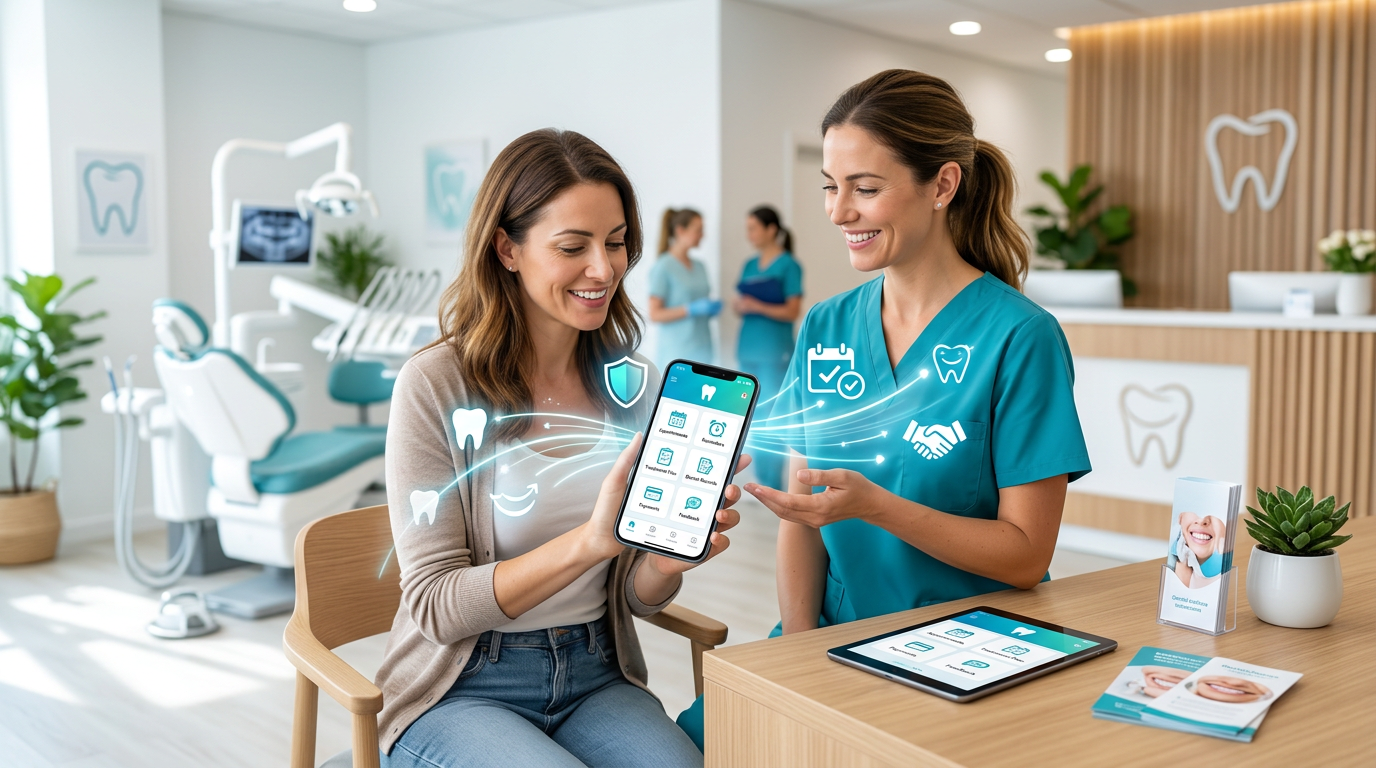
Turn Your Dental Patient Management App Into an Engagement Engine
A dental patient management app is the single most powerful tool a modern practice has for keeping patients engaged, yet most clinics use only a fraction of what it can do. The pain point is familiar: appointment books riddled with no-shows, patients who vanish for two years between cleanings, and treatment plans that stall because no one followed up. Patient interaction no longer ends at the dental chair or a quick phone call. Today's patients expect a seamless, personalized, and accessible experience, and the right app is the linchpin for delivering it. For practices running sophisticated platforms like Denti360, the chance to redefine patient relationships is enormous. This guide walks through seven practical strategies to unlock the full potential of your app and turn passive patients into active partners in their own oral health.
Patient engagement is far more than appointment reminders. It is a continuous dialogue that builds trust and gives people the information and tools to make informed decisions about their dental health. Engaged patients stick to treatment plans, return for regular check-ups, refer friends and family, and drive the long-term growth of your practice. A well-used patient management app is the catalyst, forming a digital bridge between your practice and your patients' daily lives. You can explore the full range of platform features that make this possible.
1. Streamlined Online Appointment Scheduling and Reminders
One of the simplest yet most powerful ways to lift engagement is to make booking effortless. The traditional phone call is a barrier for busy patients. A dental patient management app removes it with intuitive online scheduling.
The Power of Self-Service Scheduling
Letting patients book, reschedule, or cancel directly in the app, on their own time, transforms their experience. Self-service eases the load on your front desk and hands patients control over their schedules. Pull in real-time availability from your practice management system so patients see only genuinely open slots, which prevents double-bookings and frustration. Smart appointment scheduling is the backbone of every other engagement strategy here.
Automated and Personalized Reminders
No-shows are a major drain on dental practices, costing revenue and wrecking the schedule. Your app should send automated reminders through push notifications, SMS, and email. The key is personalization and choice. Let patients pick their preferred channel and frequency. Send an initial reminder a week out, a second 48 hours before, and a final confirmation 24 hours in advance. This multi-channel, multi-stage approach dramatically cuts no-show rates and signals your commitment to patient convenience.
2. Personalized Patient Communication and Education
Generic communication falls flat. Real engagement demands messages that are personal and relevant to each patient's needs and interests, and your app is a powerful tool for delivering targeted content.
Tailored Messages and Campaigns
Use the data in your app to segment your patient base. Send oral hygiene tips to patients who recently had scaling and root planing, or clear-aligner information to those interested in orthodontic treatment. Trigger birthday greetings, follow-ups after major procedures, and re-engagement campaigns for patients who have not visited in a while. Personalization shows patients you understand and care about their individual health journey.
Rich Educational Content Delivery
Empower patients with knowledge. Deliver engaging content in varied formats: articles, videos, infographics, and interactive guides. Cover pre-procedure instructions, post-operative care, specific conditions such as periodontitis or bruxism, and treatment options such as veneers or dental implants. When patients understand their condition and treatment, they are more likely to follow recommendations and feel confident in their decisions. Keep all of it easily searchable inside the app for deeper reading.
3. Secure Access to Patient Records and Treatment Plans
Transparency drives trust and engagement. Giving patients secure, convenient access to their personal health information through the app empowers them and builds a genuine sense of partnership in their care.
A Personal Health Dashboard
Build a dedicated space where patients can view their treatment history, upcoming appointments, billing statements, and even X-rays or intraoral photos if your app supports secure image sharing. This transparency helps patients track progress, understand their financial responsibilities, and feel in control of their health data. It works best when paired with strong patient record management behind the scenes, the kind of foundation that keeps every interaction accurate and current.
Understanding Treatment Plans
Go beyond past treatments and let patients review proposed treatment plans, with clear descriptions of procedures, estimated costs, and payment options. Presenting this in a digestible format, backed by supporting educational materials, lets patients discuss options with family, weigh their budget, and arrive at the next appointment well-informed and ready to proceed. That reduces chair-time spent on explanations and lifts treatment acceptance rates.
4. Facilitating Easy Feedback and Reviews
Patient feedback is invaluable for continuous improvement and for showing that your practice values patient opinions. Your app can streamline gathering and acting on that feedback.
In-App Surveys and Questionnaires
After an appointment, automatically send a brief in-app survey on wait times, staff friendliness, comfort during treatment, and overall satisfaction. Real-time feedback helps you spot problems and address concerns before they escalate, and it shows patients that their voice matters.
Streamlined Review Requests
Positive online reviews are crucial for attracting new patients. Build in functionality to politely request reviews on platforms like Google, Yelp, or Healthgrades after a good experience. Make it easy for satisfied patients to leave a review in a few clicks by directing them to your preferred sites. This proactive approach boosts your online reputation and delivers powerful social proof.
5. Telehealth Integration and Virtual Consultations
Telehealth has reshaped healthcare accessibility, and dentistry is no exception. Adding virtual consultation capabilities to your dental patient management app can meaningfully boost engagement and convenience.
Pre-Consultation and Follow-Up Virtual Visits
Offer virtual consultations for initial assessments of non-emergency issues, follow-up appointments, or treatment plan discussions. This saves travel time and adds flexibility. A patient with a minor concern can have a quick video call to decide whether an in-person visit is needed, streamlining their path to care.
Symptom Checker and Triage
Some advanced apps include a symptom checker or triage tool that lets patients enter symptoms and receive preliminary guidance on whether to seek immediate care or book a regular appointment. It is not a diagnostic tool, but it helps patients assess their situation and can reduce unnecessary emergency visits.
6. Gamification and Loyalty Programs
Adding gamification and loyalty programs makes oral health management more engaging and rewarding, especially for younger patients or anyone who needs extra motivation.
Tracking Oral Health Milestones
Create features that let patients track their progress, such as a streak for daily brushing and flossing or badges for a full year of recommended check-ups without cavities. Seeing progress is a powerful motivator.
Reward Systems and Loyalty Points
Run a loyalty program where patients earn points for keeping appointments, referring new patients, or engaging with educational content. Points could be redeemable for discounts on cosmetic procedures, hygiene products, or gift cards. This encourages the behaviors you want and deepens loyalty to your practice.
7. Seamless Payment Processing and Financial Transparency
Financial worry is a major barrier to dental care. Your app can demystify billing and make payment more convenient, building trust and engagement.
In-App Bill Pay
Let patients view statements and pay securely within the app. Offer multiple options, including credit and debit cards, ACH transfers, and integration with third-party financing. The convenience cuts administrative effort for your staff and makes paying hassle-free, while tighter financial tracking keeps your practice revenue picture clear.
Transparent Cost Estimates and Payment Plans
Clear cost estimates for proposed treatments are essential. Go further by integrating tools that let patients explore payment plan options right in the app, from flexible installments to links for third-party medical financing. Financial transparency and flexibility show your commitment to making quality dental care accessible to everyone.
Conclusion: Building Patient-Centric Dentistry With Denti360
In the competitive, patient-driven healthcare landscape of 2026 and beyond, a practice's ability to engage its patients is decisive. A comprehensive dental patient management app like Denti360 is no longer a luxury but a necessity for practices that want to deliver superior care, optimize operations, and build lasting relationships.
By putting these seven strategies to work, from streamlined scheduling and personalized communication to secure record access and innovative engagement tools, your practice can create a truly patient-centric experience. These digital touchpoints empower patients, build trust, and lead to better oral health outcomes. Fully using your patient management app is an investment in the future of your practice. Ready to see it in action? Request a Denti360 demo and put your patient engagement at the forefront of modern dental care.