

The Hidden Cost of Manual Insurance Claims in Indian Dental Practices
If you run a dental clinic in India, you already know how much time your team spends chasing insurance companies. Forms filled in triplicate, claim codes entered by hand, follow-up calls that never seem to end — it is a familiar cycle. And every hour your staff spends on paperwork is an hour they are not spending on patients. Automated dental billing software is changing that equation for clinics across the country, and the results are hard to ignore.
Whether you operate a solo practice in Pune or a multi-chair clinic in Bengaluru, dental insurance claims processing is one of the biggest operational drains you face. The good news is that modern dental practice management platforms have made automation genuinely accessible, even for smaller setups. This article breaks down exactly how the right software helps you accelerate claims, reduce rejections, and get paid faster.
Why Manual Billing Slows Everyone Down
Manual billing introduces errors at every stage. When a staff member copies a patient's policy number from a physical card, transposes a digit, or selects the wrong procedure code, the claim gets rejected — and the clock resets. In India, where cashless dental coverage is increasingly common through group health insurance and corporate tie-ups, the volume of claims many clinics handle has grown substantially over the last few years.
Common problems with manual processes include:
- Incorrect or outdated ICD and CDT codes leading to instant rejections
- Missing attachments such as X-rays or clinical notes that insurers require
- No systematic tracking of pending claims, causing some to fall through the cracks
- Delayed submissions that push reimbursement timelines out by weeks
- Staff time consumed by phone follow-ups that could be automated
Each rejection costs your clinic money twice: once in delayed revenue and once in the administrative effort required to correct and resubmit. Multiply that across dozens of claims per month and you are looking at a significant drag on your bottom line.
How Automated Dental Billing Software Changes the Picture
A good automated dental billing software solution integrates directly with your clinical workflow. When a dentist marks a procedure complete, the system automatically pulls the correct billing codes, attaches the relevant clinical documentation, verifies the patient's eligibility in real time, and queues the claim for electronic claims submission. The difference in speed is dramatic.
Here is what automation does concretely:
- Real-time eligibility checks — before the patient even sits in the chair, the software confirms their coverage limits, co-pay requirements, and any exclusions. No surprises at checkout.
- Smart code suggestions — the system recommends the most appropriate billing codes based on the procedure recorded, reducing the chance of under-coding or upcoding errors.
- Automatic attachment bundling — radiographs and clinical notes are attached to claims without any manual intervention.
- Electronic claims submission — claims go directly to the insurer's portal within minutes of the appointment ending, not days later.
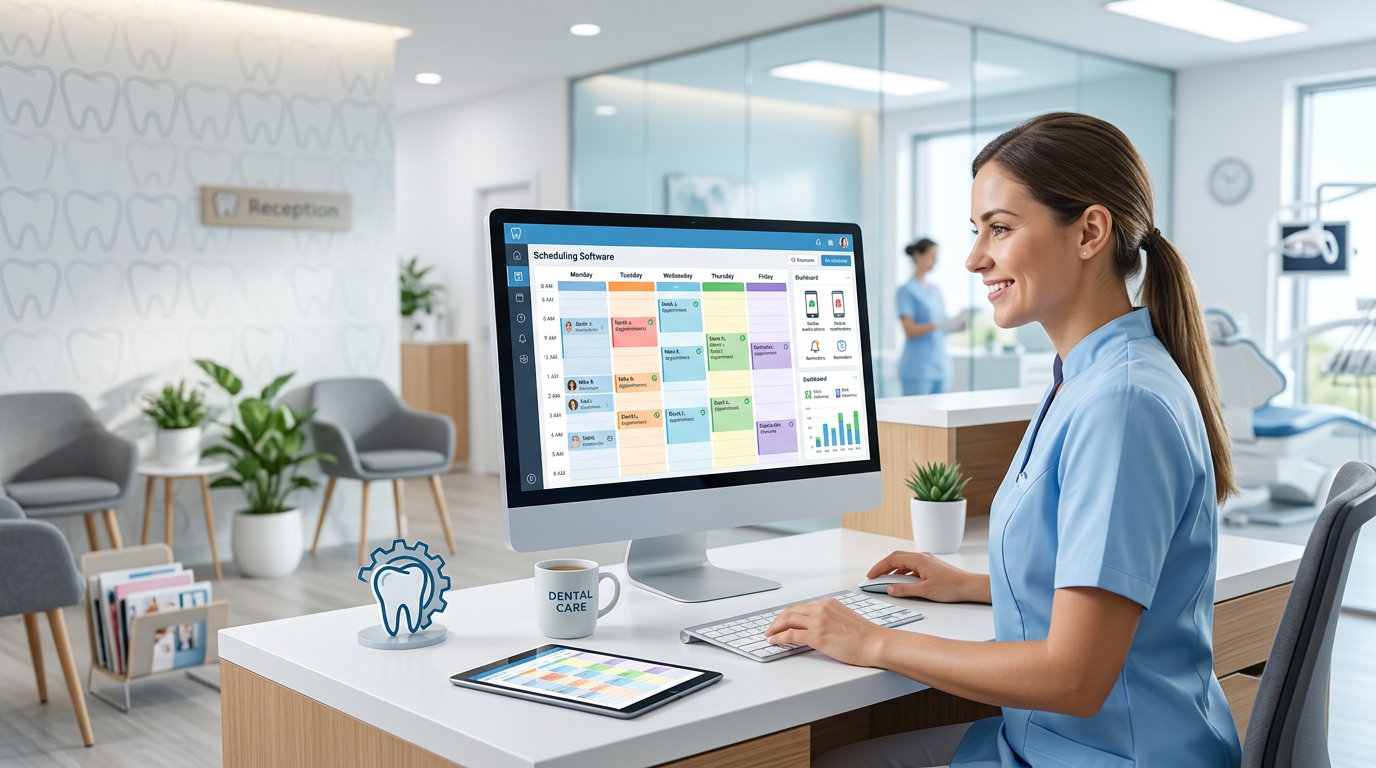
- Claim status tracking — your team can see at a glance which claims are pending, approved, or need attention, all in one dashboard.
The result is a much shorter revenue cycle. Clinics using automated billing typically see their average reimbursement time drop significantly, and rejection rates fall because the system catches errors before submission rather than after.
What to Look for in Dental Billing Software for Indian Clinics
Not every billing platform is built with the Indian market in mind. When evaluating your options, there are a few capabilities worth prioritising. First, look for software that supports the specific insurer networks your patients use — major TPAs operating in India, corporate health plans, and government schemes where applicable. Second, make sure the platform offers good support for GST-compliant invoicing alongside insurance billing, since you will need both. Third, check whether the system integrates with your existing dental software India setup or if it requires a full migration.
The ideal solution is one that handles the full cycle: eligibility verification, claim creation, submission, tracking, denial management, and reconciliation. When all of these steps live in a single platform, your team spends less time switching between systems and more time on high-value work.
The Broader Impact on Practice Efficiency
Faster dental insurance claims processing is not just a billing department win — it changes the feel of your entire practice. When your front desk is not buried in paperwork, they are more present for patients at check-in and checkout. When reimbursements arrive on a predictable schedule, cash flow planning becomes much easier. When denial rates drop, the financial pressure on your practice eases.
There is also a staff morale dimension that often goes unmentioned. Billing errors and claim rejections are stressful for the people who have to deal with them. Moving to automated workflows takes a significant mental load off your team and tends to reduce turnover in administrative roles — a real benefit given how hard good front-desk staff are to find and retain.
For multi-location dental groups, the advantages multiply. Centralised billing across all branches, consolidated reporting, and a single view of outstanding claims across your entire operation become possible in ways that manual processes simply cannot deliver.
Getting Started Without Disrupting Your Clinic
One concern many clinic owners raise is the disruption involved in switching systems. It is a fair concern — your team has routines, and changing them takes time. The best dental practice management platforms are designed for smooth onboarding, with data migration support, training resources, and responsive customer service to help your team get up to speed quickly.
Start by auditing your current rejection rate and average reimbursement time. These two numbers give you a baseline to measure improvement against. Then map out which insurers your patients most commonly use, so you can confirm that any platform you consider has solid integrations with those networks.
Even a modest reduction in your claim rejection rate — say, from 15 percent to 5 percent — translates into meaningful additional revenue over the course of a year, without seeing a single extra patient. That is the power of getting your billing infrastructure right.
Take Control of Your Revenue Cycle
Dental care in India is growing, and so is the complexity of insurance billing alongside it. Practices that invest in the right tools now will be better positioned to handle higher volumes without proportionally increasing their administrative overhead. Automated billing is not a luxury reserved for large hospital groups — it is increasingly accessible to independent clinics and small dental chains as well.
If you are ready to see how Denti360 can help your practice accelerate insurance claims and streamline your entire revenue cycle, book a free Denti360 demo today. Our team will walk you through exactly how the platform fits your specific setup — no pressure, no jargon, just a clear look at what is possible.