
Urgent Dental Pain Relief Scheduling: How Software Speeds Care
Urgent dental pain relief scheduling tests a practice harder than almost anything else: a patient in acute pain needs to be seen now, and the first phone call shapes how they judge your entire clinic. Traditional scheduling buckles under that pressure, leaving patients frustrated, staff overwhelmed, and care quality at risk, especially when you are trying to fit emergencies around a full day of routine appointments. Advanced dental scheduling software like Denti360 turns that chaos into a smooth, repeatable workflow.
By combining intelligent algorithms, integrated communication, and streamlined workflows, dental software transforms how practices manage urgent care slots. This guide shows how Denti360 helps you schedule urgent pain relief appointments quickly, deliver timely care, raise patient satisfaction, and optimize efficiency. We will cover the specific features, best practices, and benefits of a technology-driven approach to urgent care.
The Real Challenges of Urgent Dental Pain Scheduling
Before the solutions, it helps to name the complexities of urgent scheduling:
- Unpredictability: Unlike routine check-ups, urgent cases arise without warning, making it difficult to pre-allocate time slots.
- High patient anxiety: Patients in acute pain are often distressed and need empathy and quick action from staff.
- Limited availability: Squeezing urgent cases into a packed schedule disrupts the day's flow and delays other patients.
- Resource allocation: Having a dentist, hygienist, and operatory free at the same time for an unscheduled emergency is a logistical challenge.
- Communication bottlenecks: Manual communication between front desk, clinical staff, and patients invites misunderstandings and delays.
- Documentation challenges: Capturing patient information, symptoms, and treatment plans accurately under pressure is critical but often rushed.
Meeting these challenges takes more than a dedicated front desk; it demands a robust, intelligent system that adapts in real time.
Key Dental Software Features for Urgent Care Scheduling
Denti360 is designed with features built specifically to ease the strain of urgent scheduling:
1. Real-Time Visibility and Dynamic Slot Management
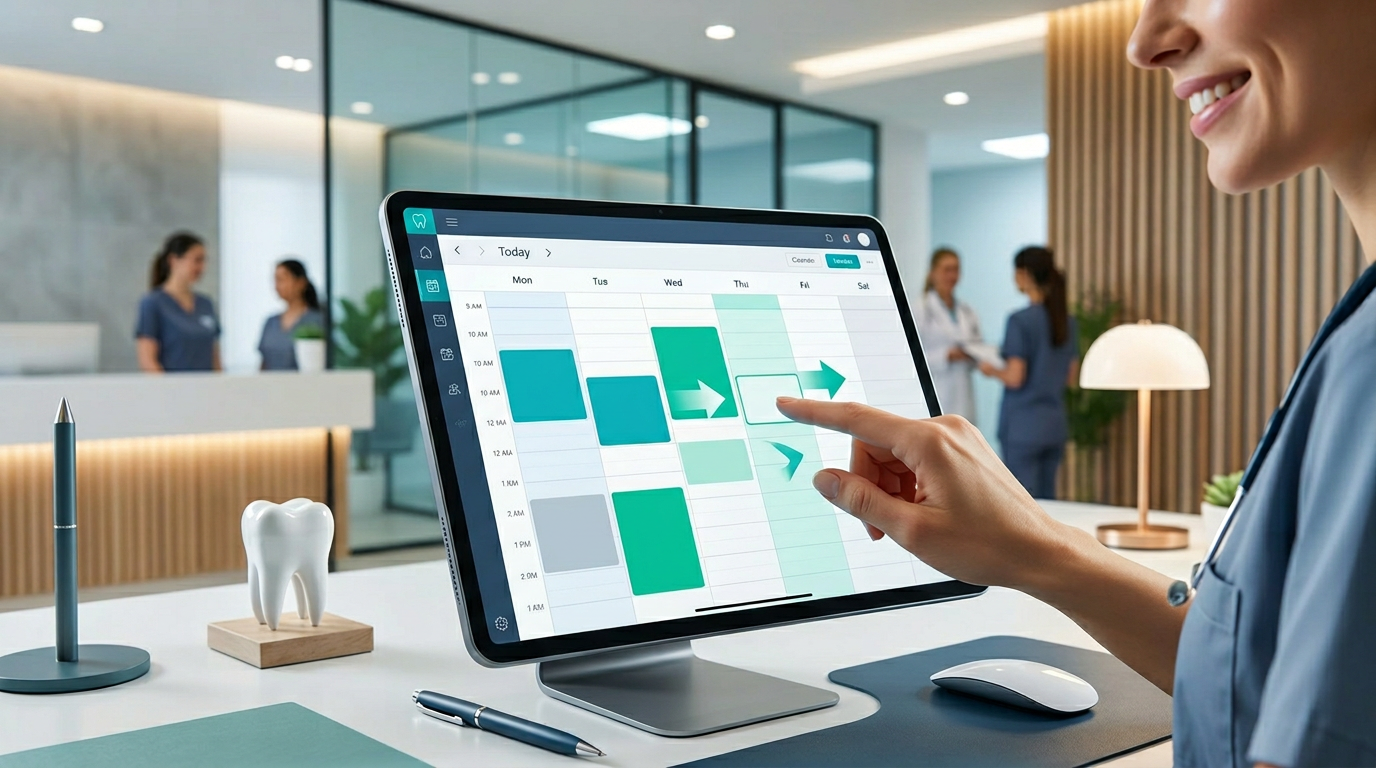
Efficient urgent care starts with seeing the whole schedule at once. Denti360's centralized dashboard displays all scheduled appointments, available operatories, and staff assignments, and it enables dynamic slot management:
- Identifiable "emergency slots": Pre-designate specific time blocks each day or week for urgent appointments that are easy to see and quickly assign.
- Automated "hold" or "buffer" times: The software creates small buffers between appointments that can absorb urgent cases without disrupting the next patient.
- Color-coded statuses: Visual cues help staff quickly spot available slots, pending appointments, confirmed bookings, and urgent care reservations.
2. Intelligent Triage and Prioritization
Not all urgent pain is equal. A broken tooth needing immediate attention differs from mild sensitivity. Denti360 can build basic triage questions into the initial contact or online submission to help staff prioritize:
- Guided questionnaires: Digital forms prompt patients or staff to gather essential details about the nature of the pain, onset, severity (using a pain scale), and associated symptoms.
- Automated prioritization flags: Based on responses, the software assigns a priority level (high, medium, or low urgency) to guide the front desk on which cases need the most immediate attention.
- Integration with clinical notes: Immediate access to a patient's history, such as prior root canals or periodontal disease, adds context that informs triage decisions.
3. Integrated Communication Channels
Communication is critical in urgent situations. Denti360 centralizes it so everyone stays informed:
- Two-way SMS and email: Quickly send confirmations, pre-arrival instructions, or updates, and let patients reply to confirm or ask questions.
- Internal chat and messaging: The front desk can instantly alert clinical staff about an incoming urgent case, its nature, and estimated arrival time.
- Automated reminders: Even for urgent appointments, a quick SMS reminder ensures the patient does not forget or miss directions, reducing no-shows.
4. Online Scheduling and a Patient Portal for Urgent Requests
Letting patients start the urgent care process reduces front-desk workload and speeds response times:
- Dedicated online "urgent request" forms: A section on your website, integrated with Denti360, lets patients submit urgent requests, including triage questions.
- Limited online slot visibility: For less critical cases, the software can expose a few pre-designated urgent care slots for direct online booking, reducing phone calls.
- Patient portal uploads: Patients can securely upload photos (such as a broken tooth) or describe symptoms before the visit, saving time at check-in.
5. Automated Recall and Follow-Up for Urgent Cases
Pain relief is often just the first step. Denti360 manages follow-up care efficiently:
- Automated follow-up reminders: After an urgent visit, the software schedules or prompts staff to schedule follow-up appointments, such as a crown after a temporary filling.
- Post-treatment check-ins: Send automated SMS or email to check on recovery and satisfaction a day or two after the visit.
- Recall system integration: Ensure urgent-care patients are folded into the regular recall system for preventive maintenance, preventing future emergencies.
Best Practices for Streamlined Urgent Scheduling
Denti360 provides the tools, but success requires strategic planning and consistent execution:
1. Designate Dedicated Urgent Care Slots
Proactively block 1-2 short slots (15-30 minutes) at the start, middle, or end of each day for urgent cases. These act as safety nets that minimize disruption, and Denti360's calendar management tools make them easy to identify and assign.
2. Establish Clear Triage Protocols
Develop a written protocol for how the front desk handles incoming urgent calls and online requests. Train your team to use Denti360's triage features to ask the right questions and prioritize cases, ensuring consistency and preventing misjudgment.
3. Leverage Communication Automation
Configure Denti360 to send automated confirmations, pre-appointment instructions (for example, "arrive 15 minutes early for paperwork"), and post-appointment follow-ups. This reduces manual tasks and ensures patients feel supported.
4. Optimize Staff Coordination
Use Denti360's internal messaging for quick communication between front desk and clinical team. For instance, the front desk can notify the dentist that an urgent patient is on the way and specify the chief complaint, so the clinical team can prepare the operatory and instruments in advance.
5. Use Waitlist Functionality
If all urgent slots are filled, Denti360's waitlist feature is invaluable. Patients added to a digital waitlist are automatically notified via SMS when an earlier slot opens due to a cancellation, reducing lost opportunities and improving access.
6. Review and Adjust Regularly
Periodically review urgent care data in Denti360. Analyze average wait times for urgent patients, no-show rates, and the number of urgent cases per day or week, then refine your protocols and slots. You may need more slots on Mondays or fewer on Fridays.
7. Train and Empower Staff
Ensure all staff are proficient with Denti360's urgent care features. Regular training keeps them current on new functionality and best practices and empowers the front desk to make informed decisions based on the software's data and your protocols.
8. Communicate Transparently With Patients
When an urgent patient calls, clearly explain the process, expected wait times, and what information they need to provide. Use Denti360's communication tools to keep them informed of any delays. Managing expectations is key to satisfaction, especially when a patient is in pain.
The Benefits of Denti360 for Urgent Care Scheduling
Adopting Denti360 for urgent dental pain relief appointments delivers benefits for your practice and your patients:
1. A Better Patient Experience
Patients in pain value quick, empathetic responses. Denti360 enables faster scheduling, clearer communication, and more organized visits, reducing anxiety and improving the overall experience. A positive urgent care visit often translates into loyalty and positive word-of-mouth referrals.
2. Increased Efficiency and Productivity
By automating triage, communication, and scheduling, Denti360 frees the front desk from manual tasks so they can focus on patients rather than administrative bottlenecks. The result is smoother operations, less stress, and a more productive, efficient practice. Less time on phone tag means more time assisting patients.
3. Optimized Resource Utilization
With real-time visibility into operatory and staff availability, Denti360 helps allocate resources optimally, reducing instances of a dentist waiting for an operatory or an operatory sitting empty while a patient is in urgent need, and maximizing the use of your assets.
4. Reduced Staff Stress
The unpredictability of urgent cases is a major stressor. Denti360 provides a structured, supportive framework that lets staff handle these situations with confidence, knowing they have the tools to manage the influx efficiently.
5. Improved Clinical Outcomes
Timely intervention for urgent pain can prevent conditions from worsening, potentially saving teeth and reducing the need for more complex, costly procedures later. Denti360 helps ensure patients receive care when they need it most.
6. Better Data and Analytics
Denti360 collects data on urgent care appointments so practices can analyze trends, identify peak emergency times, and understand common urgent issues. This is invaluable for strategic planning, resource allocation, and continuous improvement. If data shows a Monday spike, for example, you can allocate more emergency slots that day.
7. Compliance and Documentation
Robust dental software ensures every interaction, symptom, treatment plan, and communication is accurately recorded and easily retrievable, which is crucial for compliance, legal protection, and ongoing care.
The Future of Urgent Dental Care With Denti360
As dental technology evolves, systems like Denti360 will only grow more capable. Expect more sophisticated AI-driven triage, predictive analytics that forecast urgent care spikes from historical data and local events, and seamless integration with telehealth for initial remote consultations. Imagine a patient describing pain to an AI chatbot integrated with Denti360, which assesses urgency, suggests next steps, and even books an available urgent slot automatically.
The focus will stay on a frictionless, empathetic, and highly efficient pathway for dental emergencies, turning a once-chaotic process into a smooth, patient-centric workflow. Practices that embrace these advances will stand out for superior care and build more resilient, profitable operations.
Streamline Urgent Care With Denti360 Today
Urgent dental pain relief appointments are crucial yet challenging, and responding quickly, compassionately, and efficiently is the hallmark of an exceptional office. Manual scheduling simply cannot meet the demands of 2025 and beyond.
With Denti360, practices move from reactive scheduling to proactive, intelligent management of urgent care, from real-time visibility and intelligent triage to automated communication and robust follow-up. Patients receive faster, more compassionate care while your practice gains efficiency, less staff stress, and a stronger reputation. Schedule a Denti360 demo and see how it streamlines your urgent care workflow from the first phone call to follow-up.