
Dental Scheduling Software That Reduces Urgent Care Wait Times
Dental scheduling software is what stands between an emergency patient in acute pain and a long, trust-eroding wait in your reception area. Patients with sudden dental emergencies need immediate attention, and prolonged waits worsen their discomfort, diminish their trust, and can lead to negative health outcomes. For practices, inefficient urgent care scheduling means chaotic workflows, overworked staff, and missed revenue. Balancing emergencies against a structured daily schedule is a challenge many offices face, and the right scheduling technology resolves it.
Patient-centric healthcare demands that practices prioritize not only quality of care but the overall patient experience, and wait time is a major component. Long waits generate frustration, anxiety, and a perception of disorganization. A smooth, swift urgent care process does the opposite, enhancing satisfaction, fostering loyalty, and bolstering reputation.
This is where sophisticated dental scheduling software like Denti360 becomes indispensable. Denti360 is designed not just to manage appointments but to revolutionize how practices handle urgent care. By integrating intelligent algorithms, real-time communication tools, and a user-friendly interface, it offers a comprehensive solution to the perennial problem of patient wait times, transforming the urgent care experience for patients and providers alike.
In this guide, we'll explore the challenges of urgent dental care scheduling and how Denti360 addresses them head-on. We'll cover its key features, the tangible benefits it delivers, and practical strategies for implementation so your practice can provide prompt, efficient, compassionate urgent care.
The Challenges of Urgent Dental Care Scheduling
Before the solutions, it's important to acknowledge the inherent complexity of urgent dental care scheduling. Unlike routine check-ups or planned procedures, urgent appointments are unpredictable and disrupt an already packed schedule. Several factors drive these challenges.
1. Unpredictability of Emergencies
Dental emergencies cannot be scheduled in advance. A patient might call with severe pain from a fractured tooth, an abscess, or a lost filling at any moment, requiring immediate attention. This unpredictability makes it hard to allocate specific time slots without affecting existing appointments.
2. Limited Available Slots
Many practices run a tight schedule, with hygienists and dentists booked weeks or months ahead. Squeezing in an urgent case often means extending clinic hours, disrupting another patient's appointment, or significantly increasing the emergency patient's wait.
3. Resource Allocation and Staffing
Urgent care often requires specific resources: a particular operatory, specialized instruments, and the immediate availability of a dentist or hygienist. Ensuring these are ready without prior notice strains staff and operational efficiency.
4. Patient Distress and Communication
Patients in pain are often anxious and less patient. Effective communication is vital to manage expectations about wait times, but manual processes are slow and inconsistent, leading to further frustration.
5. Administrative Burden
Manually identifying available slots, communicating with patients, updating schedules, and managing follow-ups for urgent cases is incredibly time-consuming, diverting administrative staff from other critical tasks.
6. Impact on Regular Appointments
Accommodating an urgent patient often creates a ripple effect, pushing back subsequent appointments and delaying other patients, compromising the entire day's schedule.
Addressing these challenges requires more than traditional scheduling. It demands a dynamic, intelligent system that adapts to real-time changes while optimizing resource use. Denti360's dental scheduling software rises to that challenge.
Denti360's Approach to Revolutionizing Urgent Care Scheduling
Denti360 is engineered with a deep understanding of dental practice dynamics, offering features designed to tackle the complexity of urgent care and drastically reduce wait times. Its core strength is real-time visibility, intelligent automation, and seamless communication.
1. Dynamic Schedule Optimization and Real-Time Slot Identification
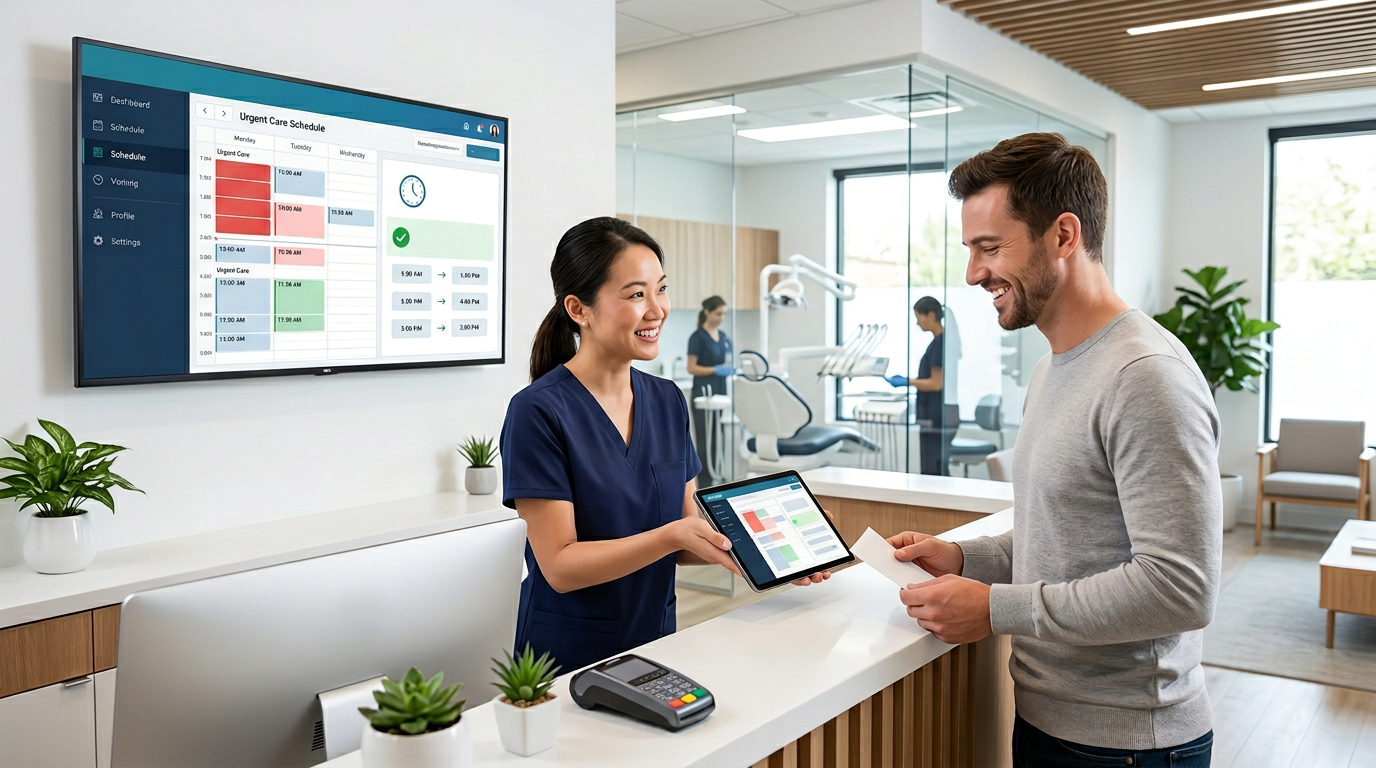
Unlike static paper-based or basic digital calendars, Denti360 uses advanced algorithms to dynamically analyze the practice's schedule. When an urgent request comes in, the software instantly identifies the most suitable available slots, considering factors such as:
- Dentist and hygienist availability: Pinpointing which providers are free or could be freed with minimal disruption.
- Operatory availability: Identifying an open operatory equipped for the type of emergency.
- Treatment duration estimates: Based on the reported emergency (for example, toothache vs. fractured tooth), the system suggests appropriate time blocks.
- Buffer zones: Denti360 can be configured to incorporate buffer times between appointments, creating inherent flexibility for unexpected urgent cases.
This dynamic optimization lets staff quickly offer an immediate appointment, significantly cutting the initial waiting period.
2. Intelligent Triage and Prioritization
Denti360 can be integrated with or prompt for basic triage questions during the initial call or online inquiry, allowing the system to:
- Assess urgency levels: Categorize emergencies (for example, severe pain, trauma, swelling) to prioritize critical cases.
- Allocate appropriate resources: Direct more severe cases to dentists with immediate availability while offering less urgent cases slightly later slots.
This intelligent prioritization ensures patients who need care most urgently are seen first, while still managing other urgent but less critical cases efficiently.
3. Automated Patient Communication and Updates
One of the biggest sources of patient frustration is poor communication. Denti360 automates vital touchpoints:
- Instant appointment confirmation: Patients receive immediate confirmation of their urgent care slot via SMS or email.
- Real-time status updates: If an unavoidable delay arises from another emergency or unforeseen circumstance, Denti360 automatically sends discreet, professional updates with the revised estimated wait time. This proactive communication manages expectations and reduces anxiety.
- Pre-appointment instructions: Automated messages provide crucial information such as directions, what to bring, or pre-visit forms to complete, streamlining check-in on arrival.
This level of automated communication keeps patients informed, respected, and valued, even during stressful emergencies.
4. Online Self-Scheduling for Urgent Care
For non-life-threatening but urgent issues (for example, a lost crown or mild toothache), Denti360 offers a secure online portal where patients view and book available urgent care slots. This empowers patients, reduces the administrative burden on staff, and ensures immediate booking without phone tag. The system can be configured to show only specific types of urgent slots or require a quick questionnaire to guide patients appropriately.
5. Integrated Resource Management
Beyond time slots, Denti360 helps manage other critical resources. It can track operatory status, instrument availability (if integrated with inventory management), and the typical duration of various emergency procedures. This holistic view enables staff to prepare proactively, ensuring everything is ready the moment the patient arrives.
6. Performance Analytics and Reporting
Denti360 provides invaluable data on urgent care trends. Practices can analyze:
- Average wait times: Track how quickly urgent patients are seen.
- Peak emergency hours: Identify patterns to better staff during high-demand periods.
- Types of emergencies: Understand common urgent issues to prepare resources accordingly.
These insights help practices continuously refine urgent care protocols and further reduce wait times through evidence-based adjustments.
Key Benefits of Denti360 for Reducing Wait Times
Implementing Denti360's dental scheduling software yields benefits that directly impact patient wait times and overall practice efficiency.
1. Drastically Reduced Patient Wait Times
This is the most direct and significant benefit. By streamlining slot identification, optimizing scheduling logic, and automating communication, Denti360 ensures urgent patients are seen much faster, often within minutes of arrival or their initial call.
2. Enhanced Patient Experience and Satisfaction
Reduced wait time directly improves the patient experience. Patients in pain are relieved knowing they'll be attended to promptly, and proactive communication further alleviates anxiety, leading to higher satisfaction scores and positive reviews.
3. Improved Staff Efficiency and Reduced Stress
Manual urgent care scheduling is a major source of stress for administrative and clinical staff. Denti360 automates many of these tasks, freeing staff to focus on patient care and other critical duties. The clarity the system provides reduces confusion and enables a more organized workflow.
4. Optimized Clinic Flow and Minimized Disruptions
By intelligently integrating urgent appointments, Denti360 minimizes the ripple effect on scheduled appointments. The system seeks the least disruptive slot, maintaining the integrity of the day's existing schedule as much as possible.
5. Increased Revenue Potential
Faster accommodation of urgent patients means more patients seen. A positive urgent care experience can also convert emergency patients into loyal, long-term patients for routine care, contributing to sustained revenue growth.
6. Better Resource Utilization
Denti360 ensures operatories, equipment, and staff are utilized optimally, reducing idle time and preventing bottlenecks to maximize operational capacity.
7. Data-Driven Decision Making
The analytics Denti360 provides offer insight into urgent care patterns, letting managers make informed decisions about staffing, resource allocation, and workflow improvements, ensuring continuous improvement in wait time reduction.
Implementing Denti360 for Optimal Urgent Care Management
To maximize the benefits of Denti360 and achieve significant reductions in urgent care wait times, consider the following implementation strategies.
1. Customize Buffer Slots and Emergency Templates
Configure Denti360 to automatically reserve specific buffer slots each day or week for urgent care. Create 'emergency templates' for common urgent procedures (for example, 'Emergency Exam and X-ray', 'Root Canal Emergency') with pre-defined time blocks and required resources for rapid booking.
2. Train Staff Thoroughly
Ensure all staff, especially front desk personnel, are fully proficient in Denti360's urgent care features. Conduct regular training sessions covering dynamic scheduling, communication automation, and reporting. Pairing this with role-based access keeps each team member focused on the tools they need.
3. Integrate Online Urgent Care Requests
Promote the online urgent care request feature on your website and patient communications. Guide patients on using it for non-critical emergencies. This offloads phone calls and lets patients self-serve.
4. Establish Clear Triage Protocols
While Denti360 can assist, develop clear internal triage protocols for urgent calls. Train staff to ask specific questions to assess urgency and input this information accurately, allowing Denti360 to suggest the most appropriate slot.
5. Leverage Automated Communication
Fully utilize Denti360's automated SMS and email features for urgent care patients. Set up confirmations, pre-appointment instructions, and especially wait time updates. Transparency is key to satisfaction, even when a wait is unavoidable.
6. Monitor and Analyze Performance
Regularly review the urgent care analytics Denti360 provides. Look for patterns in wait times, types of emergencies, and peak times, then use those insights to adjust staffing, refine scheduling templates, and continuously improve your workflow. If Mondays consistently show higher urgent care volume, consider scheduling an extra staff member or reserving more buffer time that day.
7. Implement a Waitlist for Urgent Care
Denti360 can manage a dynamic waitlist. If immediate slots are unavailable, patients can be added to an urgent care waitlist and automatically notified if an earlier slot opens from a cancellation or rescheduling. This minimizes lost opportunities and further reduces overall wait times.
The Future of Dental Urgent Care with Denti360
The dental landscape is continually evolving, with technology playing an increasingly pivotal role in optimizing patient care and operations. Looking toward 2025 and beyond, demand for efficient, accessible, patient-centric urgent dental care will only intensify. Practices that embrace advanced solutions like Denti360's dental scheduling software will be best positioned to meet that demand.
Denti360 is not merely a scheduling tool; it's a strategic asset that transforms the entire urgent care ecosystem within a practice. By providing the power to dynamically manage unforeseen emergencies, automate critical communication, and offer unparalleled insight into performance, Denti360 empowers professionals to deliver prompt, high-quality care when patients need it most, leading to healthier patients, happier staff, and a more robust, reputable practice.
Manage Urgent Dental Needs the Smarter Way
Reducing patient wait times for urgent care is no longer a luxury but a necessity for modern dental practices. The challenges are complex, from unpredictability and resource constraints to communication gaps and administrative burden, but Denti360's advanced dental scheduling software overcomes them. It optimizes schedules in real time, automates communication, and provides crucial analytics, all contributing to significantly shorter wait times and a superior patient experience. To see how Denti360 can streamline your urgent care workflow and prepare your practice for the demands of 2025 and beyond, contact our team for a demo and make urgent dental care synonymous with efficiency, empathy, and excellence.