

Dental Billing Software That Expedites Insurance Claims Processing
Dental billing software is the fastest way to fix the administrative bottleneck that quietly drains most practices: slow, error-prone insurance claims. When claims stall, your cash flow stalls, your front desk burns hours on rework, and patients feel the friction. The fix is integrated dental billing software. This guide shows how an integrated system can dramatically expedite your insurance claims, optimize your revenue cycle, and free your team to focus on patient care instead of paperwork.
Why Traditional Dental Insurance Claims Workflows Stall
To fix the problem, you first need to understand the complexities that plague traditional claim workflows. These hurdles drive delays, denials, and heavy administrative overhead:
- Manual data entry: Transcribing patient, procedure, and insurance information between systems is slow and error-prone. A single typo can trigger a denial.
- Disjointed systems: Many practices run separate tools for practice management, electronic health records (EHR), and billing. This siloed setup forces redundant data entry and creates gaps that make it hard to track a claim end-to-end.
- Coding inaccuracies: Incorrect CDT codes, missing modifiers, or thin documentation are leading causes of rejections, and keeping up with evolving guidelines is a constant battle.
- No real-time eligibility verification: Submitting claims for lapsed coverage or non-covered procedures is a common, costly mistake that leads to immediate denials.
- Slow follow-up and appeals: Manually tracking submitted claims, spotting denials, and launching appeals is overwhelming, and it ages your accounts receivable.
- Paper-based processes: Practices still relying on paper forms and mail introduce significant delays compared to electronic submission.
Together, these challenges lengthen your revenue cycle, raise administrative costs, and cost you revenue. Integrated dental billing software targets each pain point directly, turning a cumbersome process into a streamlined operation.
What Integrated Dental Billing Software Actually Does
Integrated dental billing software combines the functionality essential for practice and revenue cycle management into a single, cohesive platform. Unlike standalone billing modules, an integrated system connects seamlessly with your EHR, scheduling, charting, and patient communication tools. That unification creates a central hub for all patient and practice data, ensuring consistency and accuracy across every operation. You can see how this connected approach plays out across Denti360's full feature set.
Key components typically include:
- Practice management system (PMS): Manages appointments, patient demographics, and administrative tasks.
- Electronic health records (EHR): Stores patient charts, treatment plans, and clinical notes.
- Insurance claim management: Handles electronic claim submission (EDI), tracking, and denial management.
- Patient billing: Manages statements, payment processing, and ledgers.
- Reporting and analytics: Surfaces financial performance, claim statuses, and practice trends.
The core benefit of integration is the elimination of data silos, creating a unified workflow that cuts manual effort and error.
How Integrated Software Accelerates Insurance Claims Processing
An integrated dental billing software system like Denti360's speeds up claims at every stage, from initial patient intake to final payment.
1. Automated Eligibility Verification
One of the most immediate wins is real-time insurance eligibility verification. Before a patient sits in the chair, the system automatically checks coverage details, deductibles, co-pays, and remaining benefits. This proactive step prevents claims for ineligible patients, cutting front-end denials and unpleasant surprises. Staff can resolve coverage issues upfront, rescheduling or discussing payment options before treatment begins.
2. Seamless Data Flow and Fewer Errors
With an integrated system, patient demographics, treatment codes, and clinical notes flow automatically from the EHR and practice management modules into the billing module. This eliminates manual re-entry and drastically reduces transcription errors, incorrect patient IDs, and mismatched procedure codes. The data on the claim form stays consistent with the patient's chart, a critical factor in avoiding denials due to discrepancies.
3. Intelligent Coding and Pre-Authorization Support
Many integrated solutions suggest appropriate CDT codes based on documented procedures, minimizing coding errors so claims go out clean. For complex or costly procedures, the software streamlines pre-authorization: it helps generate the necessary documentation, attaches relevant clinical notes and X-rays, and submits them electronically, securing approval before treatment and speeding final payment.
4. Electronic Claim Submission (EDI) and Attachment Management
Integrated software enables electronic data interchange (EDI) for claims. Instead of mailing paper forms, claims go electronically in a standardized format directly to the clearinghouse or payer. This immediate transmission cuts mailing time and speeds processing. Many systems also let you submit electronic attachments (X-rays, perio charts, narratives) alongside the claim, providing supporting documentation without delay.
5. Real-Time Claim Tracking and Status Updates
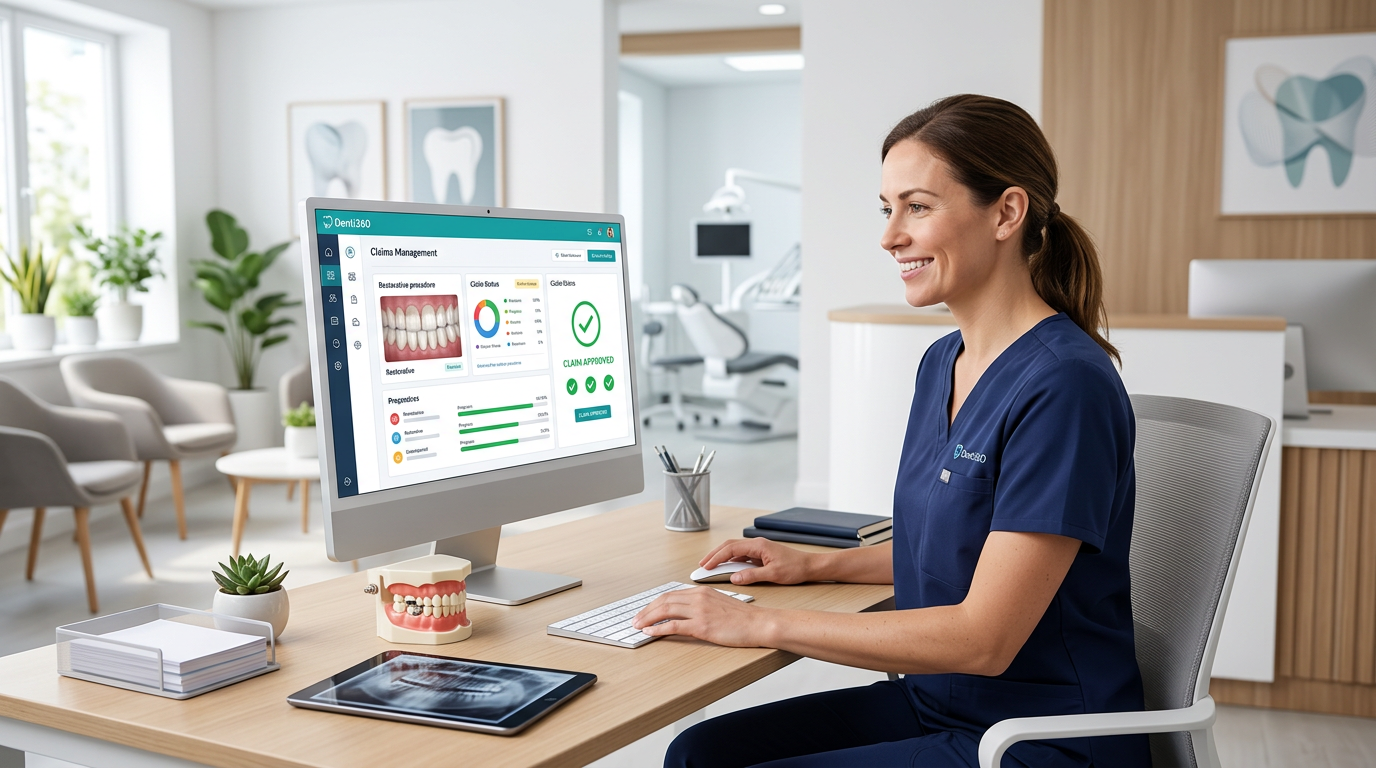
You can track every submitted claim in real time. A centralized dashboard shows when a claim was submitted, received, processed, denied, or pended. This transparency enables proactive follow-up, surfacing delays before they become problems. No more calling insurers for status, the information is at your fingertips.
6. Robust Denial Management and Appeals
When a claim is denied, the integrated software categorizes the reason and gives you tools to fix it fast. It highlights common denial patterns so your team can learn and adapt. For appeals, the system helps generate documentation and resubmit corrected claims, streamlining an otherwise lengthy, frustrating process. Efficient denial management recovers revenue faster and prevents balances from piling up.
7. Automated Reminders and Follow-Ups
Integrated systems can send automated reminders for claims nearing their processing window, claims needing follow-up, or denials requiring immediate attention. This automation ensures no claim falls through the cracks, keeping resolution and payment moving at a consistent pace.
8. Improved Reporting and Analytics
Beyond individual claims, integrated software delivers powerful reporting and analytics. Practices can generate reports on:
- Average claim processing times.
- Denial rates by payer, procedure, or provider.
- Accounts receivable aging.
- Payment trends and outstanding balances.
These insights are invaluable for identifying bottlenecks, optimizing workflows, and making data-driven decisions to strengthen revenue cycle and financial tracking. If a specific payer consistently denies a certain procedure, your team can adjust documentation or pre-authorization strategy for that payer.
Key Benefits for Denti360 and Other Dental Practices
Implementing integrated dental billing software like Denti360's expedites claims and delivers benefits across the entire practice:
- Enhanced cash flow: Faster processing means quicker payments and stronger financial liquidity.
- Reduced administrative burden: Automating repetitive tasks frees staff for higher-value work and patient interaction.
- Lower operating costs: Less manual effort, fewer errors, and fewer denied claims cut overhead and re-submission costs.
- Increased revenue capture: Efficient denial management and proactive follow-up mean fewer lost claims and more collected revenue.
- Greater accuracy: Seamless data flow and built-in checks produce cleaner claims and fewer rejections.
- Improved patient satisfaction: Fewer billing surprises and faster resolution create a better patient experience built on transparency and efficiency.
- Better compliance: Integrated systems often include built-in features to help meet HIPAA and other industry standards.
- Scalability: As your practice grows, the system scales to more patients, providers, and claims without added administrative strain.
- Data-driven decision making: Comprehensive reporting helps managers spot trends, optimize processes, and plan strategically.
Choosing the Right Integrated Software for Your Practice
When evaluating an integrated dental billing software solution, look for systems that offer:
- True integration: Not just bundled modules, but a genuinely integrated platform where data flows across all functions.
- User-friendly interface: Staff adoption is critical, so the software should be intuitive and easy to navigate.
- Robust features: Comprehensive eligibility verification, electronic claims submission, denial management, reporting, and patient payment options.
- Cloud-based accessibility: Flexibility, remote access, automatic updates, and strong security without expensive on-premise servers.
- Excellent customer support: Reliable technical support and training resources for smooth implementation and ongoing use.
- Security and compliance: Confirm the software meets all necessary data security and HIPAA standards.
- Customization options: The ability to tailor workflows and reports to your practice's needs.
Investing in high-quality integrated dental billing software is an investment in your practice's future, moving you from simply processing claims to strategically managing your revenue cycle. Explore the broader operational benefits a connected platform delivers.
Preparing for Implementation in 2025
The transition to an integrated system in 2025 should involve careful planning:
- Assess current workflow: Identify bottlenecks and areas causing delays in your existing claims process.
- Team training: Dedicate time to staff training, since a well-trained team is crucial to maximizing the system's benefits.
- Data migration: Work closely with the vendor to ensure smooth, accurate migration of historical patient and financial data.
- Phased rollout (if applicable): For larger practices, consider a phased rollout to minimize disruption.
- Regular review: Once live, review reports and metrics regularly to continuously improve claims processing.
Start Expediting Your Claims with Denti360
Manual, error-prone, time-consuming claims processing is becoming a relic of the past. For any practice pursuing operational excellence and financial stability, integrated dental billing software is a necessity. By automating eligibility verification, streamlining data flow, enabling electronic submissions, and powering robust denial management, Denti360 dramatically expedites claim processing, improving cash flow, reducing administrative burden, and lifting revenue capture. To see how Denti360 can transform your revenue cycle in 2025 and beyond, book a demo with our team and put faster, cleaner claims to work in your practice.