
Dental Scheduling Software: The Fastest Way to Cut No-Shows and Protect Revenue
Dental scheduling software is the most direct fix for the empty chairs draining your practice, because every no-show is lost revenue, wasted chair time, and an underutilized team. If you are still chasing confirmations by phone and scrambling to fill last-minute gaps, your appointment book is costing you money it should be making. For Denti360, a leader in dental healthcare technology, scheduling efficiency is paramount. The challenge is not just filling slots but filling them strategically and getting patients to keep their commitments, and that is exactly where cutting-edge scheduling software turns a chaotic manual process into a streamlined system built to drastically reduce no-shows.
No-shows are a persistent problem for dental practices worldwide. They disrupt workflows, create financial instability, and frustrate clinicians. The average dental practice sees a no-show rate ranging from 5% to as high as 20%, translating into significant financial losses and operational inefficiency. Beyond the immediate cost, frequent no-shows erode patient trust, strain staff filling last-minute openings, and diminish the overall experience. With patient expectations for convenience and communication at an all-time high, outdated scheduling methods no longer suffice. The answer is technology that not only manages appointments but actively prevents their disruption.
This guide explores how modern scheduling software helps practices reclaim control of the appointment book, from intelligent automated reminders and two-way communication to predictive analytics and waitlist management. Implement these strategies and your Denti360-powered practice can significantly reduce no-shows, optimize chair time, boost patient engagement, and build a more profitable, less stressful environment for everyone. It is one piece of broader appointment scheduling that keeps your day running smoothly.
Why Dental Patients Miss Appointments: The Root Causes
To combat no-shows, you first need to understand why patients miss appointments. The reasons are varied and often overlapping, and identifying them lets you tailor your strategy and use scheduling software most effectively.
- Forgetfulness: The most common culprit. Life gets busy, and even important appointments slip the mind, especially when booked weeks or months ahead.
- Logistical Challenges: Transportation, childcare, conflicting work schedules, or trouble getting time off all contribute, as can parking or navigating a new location.
- Anxiety and Fear: Dental anxiety is significant for many patients. Anticipating an uncomfortable procedure leads some to postpone or simply not show, even when they need treatment.
- Lack of Perceived Value: Patients who do not fully grasp the importance of their treatment or preventive care may not prioritize it.
- Cost Concerns: Unexpected expenses or worry about treatment cost can prompt patients to avoid the appointment and delay the financial commitment.
- Poor Communication: Unclear details, preparation instructions, or consequences of missing an appointment create confusion and no-shows.
- Inconvenient Scheduling: Appointments at difficult times, or long waits between booking and the visit, raise the odds of a no-show.
- Emergency or Illness: Personal emergencies or sudden illness can force a cancellation. While unavoidable, prompt communication can prevent a fully missed slot.
Comprehensive scheduling software addresses many of these head-on, not just by reminding patients but by giving them better communication, flexibility, and a clearer understanding of their care journey. Recognizing these pitfalls lets practices proactively transform scheduling efficiency.
How Dental Scheduling Software Prevents No-Shows
Modern scheduling software is far more than a digital calendar. It is a robust platform that integrates into your practice and proactively combats no-shows while optimizing your entire workflow. Here are the key features that make it indispensable.
1. Automated Appointment Reminders: The First Line of Defense
Since forgetfulness leads the list, automated reminders are the most effective countermeasure. Advanced software sends reminders through multiple channels:
- SMS/Text Messages: Highly effective thanks to immediacy and high open rates. Patients can confirm, reschedule, or cancel right from the text.
- Email Reminders: Useful for detailed information such as preparation instructions, patient form links, or directions to the clinic.
- Automated Voice Calls: For patients who prefer voice, these personalized reminders offer confirmation or rescheduling options.
Customization is key. The best systems let you tailor reminder frequency (for example, 2 weeks out, 3 days out, 24 hours out), content, and preferred channel per patient. This personalized approach significantly increases adherence.
2. Two-Way Communication and Confirmation
Beyond reminding, modern software enables genuine two-way communication. Patients can:
- Confirm Appointments: Often with a simple reply like 'Y' for Yes, streamlining confirmation for both sides.
- Reschedule or Cancel: Patients initiate rescheduling or cancellation directly, reducing the front office burden and freeing open slots promptly.
- Ask Questions: Some platforms add secure messaging so patients can ask quick questions, further reducing anxiety and confusion.
This open dialogue fosters partnership, making patients feel engaged and responsible for their appointments.
3. Online Scheduling and Patient Portals
Empowering patients to manage their own appointments is a powerful tool against no-shows, and it pairs naturally with strong patient management. Online scheduling lets patients:
- Book Appointments 24/7: No need to call during business hours, ideal for busy individuals.
- View Available Slots: Patients choose times that genuinely work, reducing logistical conflicts.
- Update Information: Secure portals let patients update contact details, insurance, and medical history for accurate communication.
This convenience lowers barriers and gives patients a sense of control, making them more likely to commit and attend.
4. Intelligent Waitlist Management
Even with great reminders, cancellations and last-minute openings happen. Intelligent waitlist management turns potential losses into opportunities:
- Automated Notifications: When a cancellation occurs, the system automatically notifies waitlisted patients seeking earlier appointments or specific slots.
- Patient Self-Service: Waitlisted patients often claim open slots directly via a link, filling gaps without staff intervention.
- Prioritization: The software can prioritize waitlist patients by urgency, treatment type, or wait time.
This dramatically reduces lost revenue from empty chairs and helps patients get seen sooner.
5. Predictive Analytics and Reporting
The real power of advanced software lies in actionable insight. By analyzing historical data, practices can:
- Identify No-Show Patterns: Pinpoint specific days, times, or demographics more prone to no-shows.
- Optimize Overbooking Strategies: Suggest strategic overbooking for certain appointment types or times to offset expected no-shows without excessive wait times.
- Measure Effectiveness: Track which reminder strategies and channels perform best for continuous optimization.
- Predict Demand: Forecast busy periods and allocate resources accordingly.
These insights move practices from reactive problem-solving to proactive strategy.
6. Streamlined Patient Intake and Pre-Appointment Information
Reducing anxiety and ensuring patients are prepared also lowers no-shows. Scheduling software integrates with intake forms so patients complete paperwork online before the visit, including:
- Digital Forms: Health histories, consent forms, and insurance details filled from home, saving time and reducing arrival stress.
- Pre-Appointment Instructions: Automated emails with procedure-specific instructions (for example, fasting or medication adjustments) reduce confusion and prepare patients.
A well-prepared patient is a more confident and committed patient.
Implementing and Maximizing Your Dental Scheduling Software
Buying scheduling software is not enough. Successful implementation and continuous optimization unlock its full potential. Here is how your Denti360 practice can maximize the investment.
1. Customize Reminder Settings for Optimal Engagement
Skip the one-size-fits-all approach and experiment with:
- Timing: Test different intervals. A complex procedure may warrant a reminder a week out, while a routine cleaning is fine at 48 hours.
- Channels: Let patients pick their preferred method (SMS, email, call). Some software integrates with secure patient apps for notifications.
- Content: Keep reminders concise, clear, and action-oriented. Include date, time, location, and a clear call to action (confirm, reschedule, cancel), personalized with the patient's name.
Continuously monitor engagement rates to refine your strategy.
2. Integrate With Your Practice Management System
For seamless operation, ensure your scheduling software fully integrates with your existing practice management system. This prevents data silos and ensures that:
- Patient demographics stay up to date across all platforms.
- Appointment statuses appear in the patient's chart.
- Billing and insurance information are readily accessible.
Denti360 solutions are designed for comprehensive integration, delivering a unified, efficient workflow.
3. Train Your Staff Thoroughly
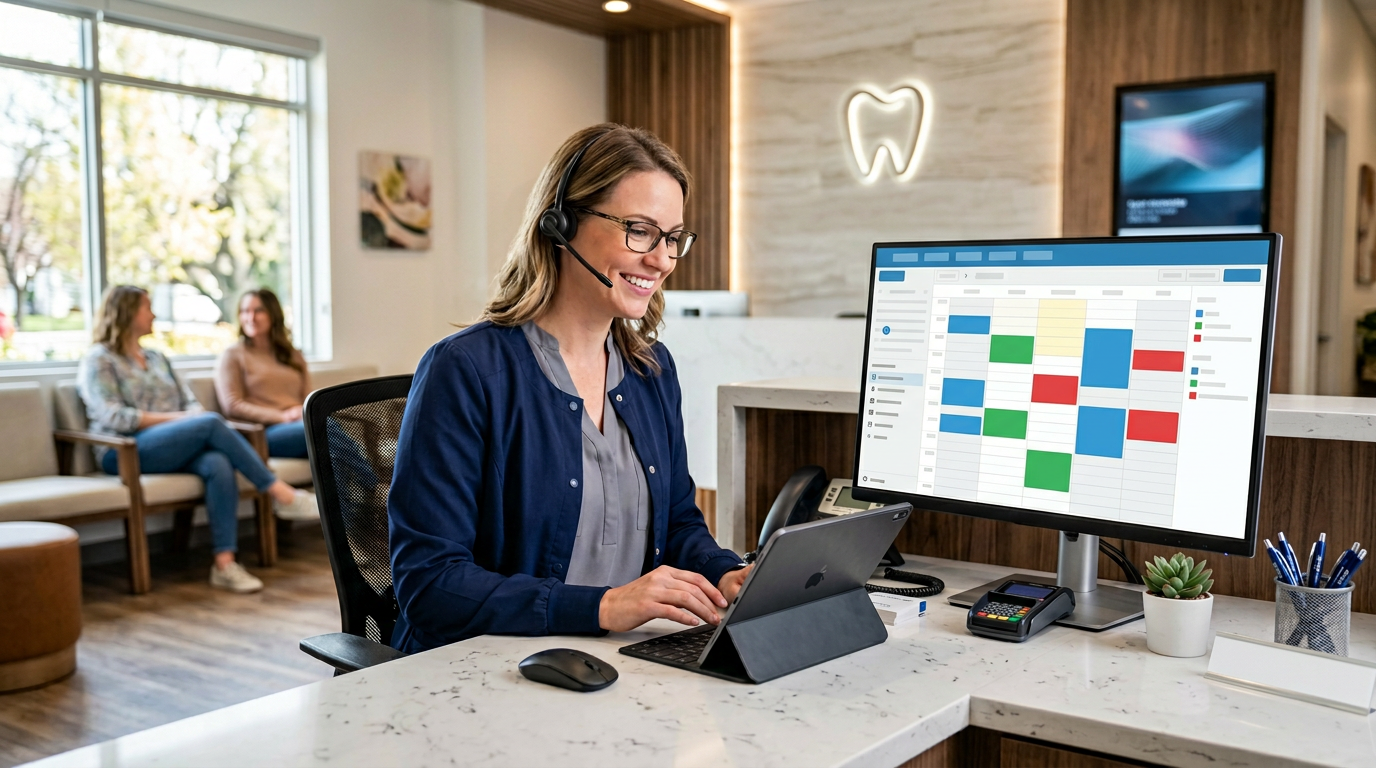
Your front desk staff are the primary users and crucial to success. Provide comprehensive training on:
- Software Features: Booking, rescheduling, canceling, managing waitlists, and sending manual communications.
- Troubleshooting: Common issues and how to resolve them.
- Patient Communication: Explaining the new system, encouraging online portal use, and answering questions about automated reminders.
Empowered staff leverage the software fully, reducing their workload and improving patient satisfaction.
4. Encourage Online Booking and Portal Use
Actively promote the convenience of online scheduling and patient portals:
- Website Integration: Place clear, prominent links on your website.
- In-Office Signage: Display information in your waiting room.
- Staff Promotion: Have the front desk mention the option during calls and check-ins.
- Email Signatures: Include links in all outgoing practice emails.
The more patients use these features, the more control they have and the less likely they are to miss appointments.
5. Implement a Clear No-Show and Cancellation Policy
Software helps prevent no-shows, but a clear policy is still essential. The software can enforce it by:
- Communicating the Policy: Include it in confirmation emails and reminders.
- Tracking No-Shows: Flag repeat offenders so staff can address concerns or take specific action.
Keep your policy fair, clearly communicated, and consistently applied.
6. Monitor and Analyze Performance Data
Regularly review the reports your scheduling software generates:
- No-Show Rates: Track overall rates and identify trends.
- Cancellation Rates: Understand when and why cancellations occur.
- Reminder Effectiveness: See which reminder types and timings yield the best confirmation rates.
- Waitlist Efficiency: Measure how quickly open slots are filled by waitlist patients.
Use this data to make informed adjustments for continuous improvement. You might find certain appointment types have higher no-show rates, prompting an extra reminder or more pre-appointment information. Or you might discover Friday afternoon appointments consistently have lower attendance, leading you to adjust booking for those slots.
7. Leverage Software for Proactive Patient Engagement
Think beyond preventing no-shows and use scheduling software for positive engagement:
- Recare Reminders: Automate notifications for routine check-ups and cleanings to ensure continuous care.
- Post-Appointment Follow-ups: Send automated messages to check on patients after procedures, building trust and loyalty.
- Birthday Greetings: A small, personalized touch meaningfully enhances the patient experience.
These proactive measures strengthen relationships, making patients more likely to prioritize their dental health and keep future appointments.
The Denti360 Advantage: Transforming Your Practice for 2025 and Beyond
As we look toward 2025 and the future of dental care, advanced technology is no longer optional for competitive, patient-centric practices. Denti360 provides solutions that address immediate challenges like no-shows while laying the groundwork for long-term growth. Our dental scheduling software recognizes that every practice is unique, offering flexibility, scalability, and robust features to empower your team and delight your patients.
By harnessing automated reminders, two-way communication, online booking, intelligent waitlists, and comprehensive analytics, Denti360 helps you build an appointment book that is efficient, resilient, and optimized for productivity. That means less wasted chair time, increased revenue, reduced staff stress, and a more consistent, positive patient experience, where last-minute cancellations are swiftly filled and patients arrive prepared and on time.
Start Reducing No-Shows With Denti360 Today
An optimized appointment book and significantly fewer no-shows begin with a strategic investment in the right technology. Dental scheduling software moves practices beyond manual processes into an era of automation, intelligence, and stronger patient engagement, transforming operational efficiency and financial health. For your Denti360 practice, this is not just solving a problem but unlocking new productivity and patient satisfaction. If you are ready to fill more chairs and spend less time chasing confirmations, request a Denti360 demo and see how our scheduling tools fit your workflow. Invest in a solution that helps your practice thrive in 2025 and beyond.