
Stop Losing Revenue on Periodontal Insurance Claims
Periodontal insurance claims are among the easiest places for a practice to leak revenue, and integrated dental billing software is the most direct way to plug the gap. Periodontal disease affects millions of adults and requires treatment ranging from scaling and root planing to advanced surgery, yet intricate coding, varying plan coverage, and manual processing quietly drain efficiency and revenue. By streamlining the entire claims process from registration to reimbursement, integrated software helps practices maximize periodontal claims, improve patient access to vital care, and strengthen profitability.
Excellent clinical care alone is no longer enough; practices must also excel at administrative and financial management. Periodontal treatments are more extensive and costly than routine preventive care, so they pose unique billing and insurance challenges. Misunderstood CPT codes, inadequate documentation, and inefficient submission lead to denied claims, delayed payments, and rising overhead. Denti360 understands these challenges and champions technology to transform dental billing. This guide explains how integrated software addresses these pain points and offers strategies for maximizing periodontal claims.
Periodontal Treatments and Insurance Coverage: Understanding the Landscape
Periodontal treatments span a broad range of services for gum disease, from preventive measures to corrective surgery. Common procedures include:
- Scaling and Root Planing (SRP): Deep cleaning to remove plaque and calculus below the gumline.
- Periodontal maintenance: Ongoing care after active periodontal treatment.
- Gingivectomy and gingivoplasty: Surgical removal or reshaping of gum tissue.
- Osseous surgery: Reshaping of the bone surrounding the teeth.
- Bone grafts: Procedures to regenerate lost bone.
- Soft tissue grafts: Procedures to cover exposed roots or increase gum tissue thickness.
Coverage varies significantly across plans. Many cover a percentage of scaling and root planing, while extensive surgery often requires pre-authorization and may carry higher deductibles or lower coverage percentages. Understanding each patient's plan is critical for accurate financial planning and successful submission. Manual verification of these details is time-consuming and error-prone, which is why a robust software solution matters.
The Role of Integrated Dental Billing Software in Periodontal Claims
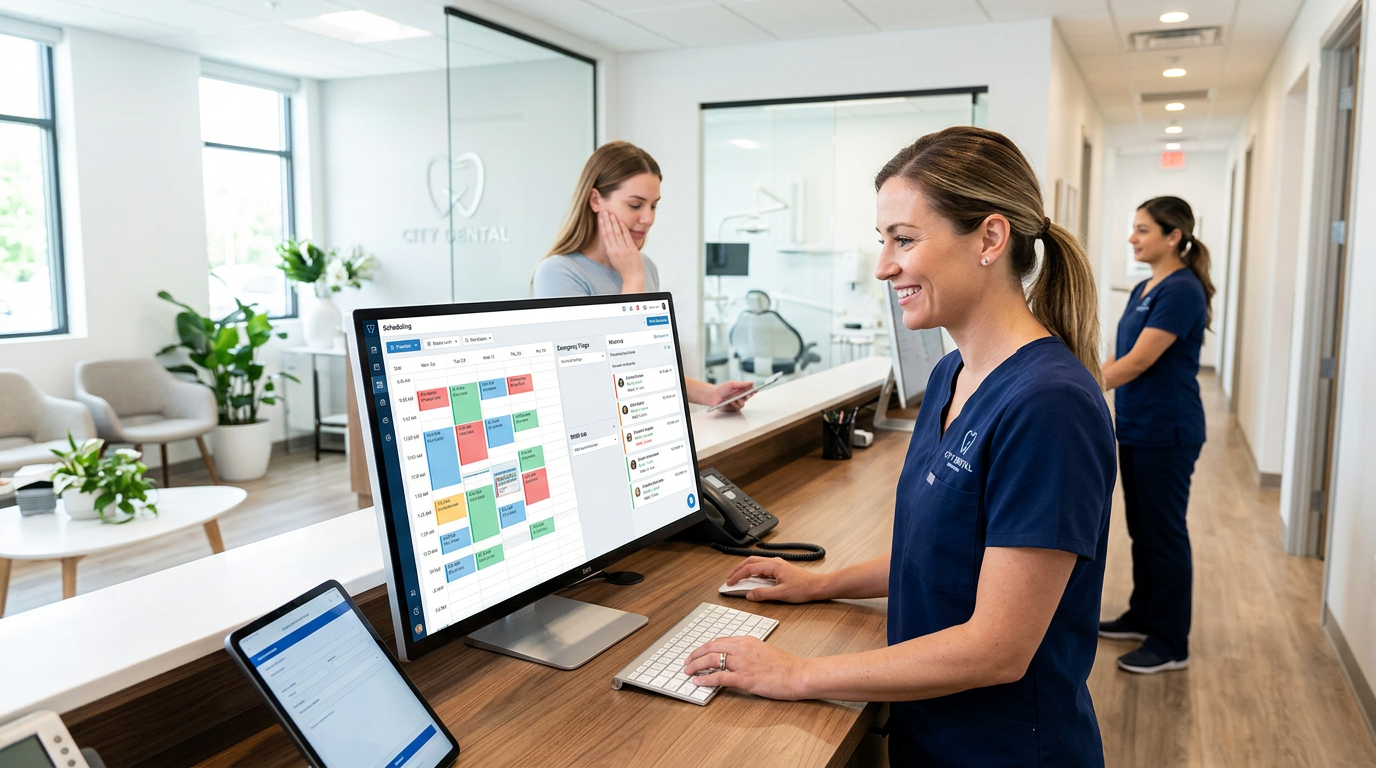
Integrated dental billing software does more than submit claims; it connects scheduling, charting, and financial management across the practice. For periodontal treatments, its impact is especially strong.
1. Enhanced Patient Eligibility and Benefits Verification
Inaccurate or incomplete eligibility information is one of the most frequent causes of denials. Integrated software instantly verifies a patient's eligibility, coverage details, deductibles, co-pays, and remaining benefits before treatment begins. For periodontal procedures, this surfaces specific limitations, waiting periods, or pre-authorization requirements, minimizing surprises for patient and practice and reducing denials. Linking verification to streamlined patient management keeps every detail in one place.
2. Accurate Coding and Documentation for Periodontal Procedures
Correct coding is paramount for maximizing periodontal claims. These procedures use specific CDT (Current Dental Terminology) codes that must be applied precisely. Integrated software often offers:
- Built-in code libraries: Up-to-date CDT codes with descriptions so the latest codes are always used.
- Coding assistants: Intelligent suggestions based on charted procedures, helping avoid common errors.
- Automated documentation prompts: Reminders to capture clinical notes, X-rays, and periodontal charting that support medical necessity. When billing for SRP, the software can prompt for pocket depths, bleeding points, and bone loss percentages that justify the procedure.
Proper documentation is the backbone of a successful claim. Insurers frequently request additional information for periodontal claims to assess medical necessity, and software that integrates charting with billing keeps all supporting documents available and easy to attach, sharply reducing back-and-forth with carriers.
3. Streamlined Pre-Authorization and Pre-Determination Processes
Many extensive periodontal treatments require pre-authorization or pre-determination. Handled manually, this is a major administrative burden that delays treatment and cash flow. Integrated software simplifies it by:
- Automating submission: Electronically submitting pre-authorization requests directly from the patient's chart with all necessary clinical documentation.
- Tracking status: Providing real-time updates so practices can manage expectations and schedule treatment efficiently.
- Alerts for expiration: Notifying staff when a pre-authorization nears expiration, preventing lost reimbursement.
Streamlining this complex step helps patients get timely approval and reduces post-treatment denials.
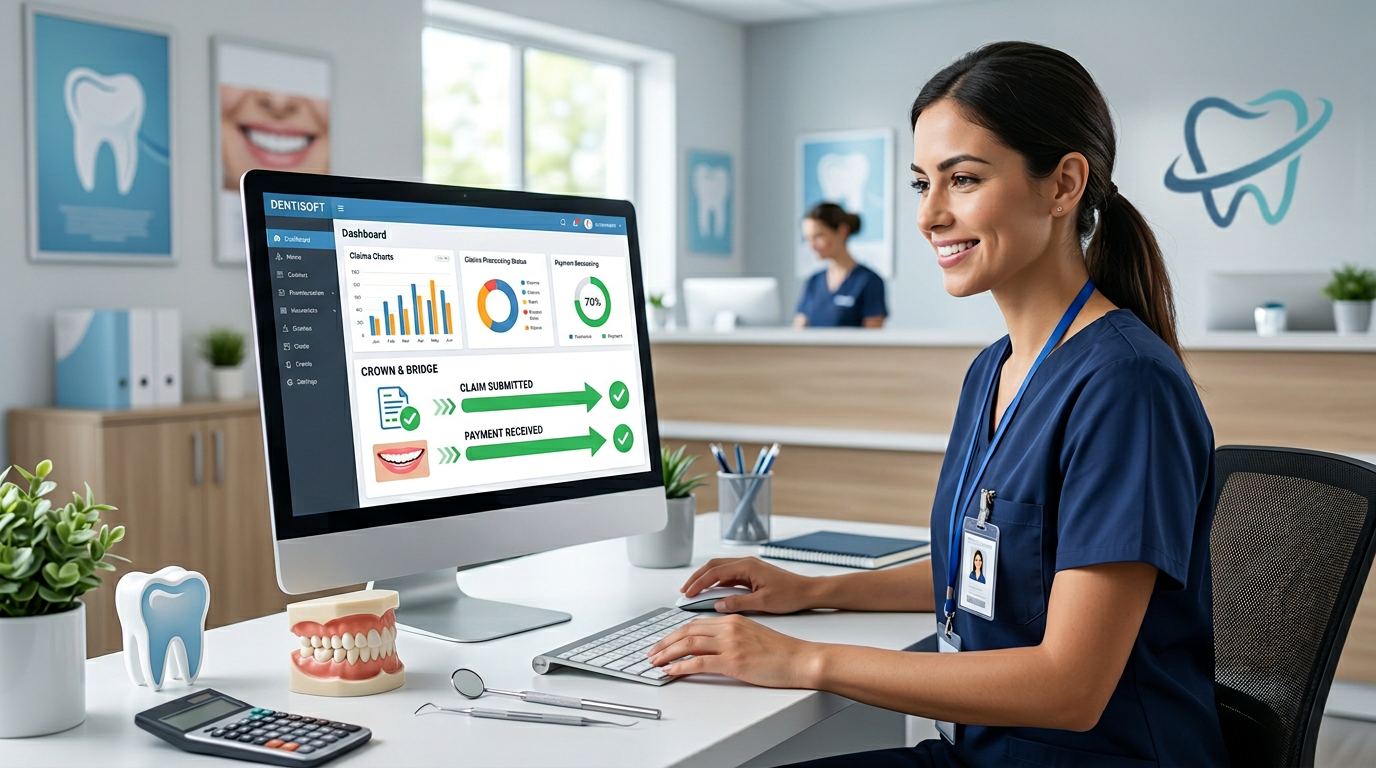
4. Efficient Electronic Claim Submission and Tracking
Manual submission is inefficient and error-prone. Integrated software enables electronic claim submission (EDI), which offers:
- Faster submission: Claims reach payers in minutes, not days.
- Reduced errors: Built-in scrubbers catch common errors before submission, preventing rejections.
- Real-time tracking: Monitor every claim from submission to payment, spotting bottlenecks quickly.
- Automated reminders: Alerts for overdue claims or those needing follow-up so none falls through the cracks.
This efficiency translates into faster reimbursement and improved cash flow, which is especially important for high-cost periodontal procedures.
5. Robust Reporting and Analytics for Performance Optimization
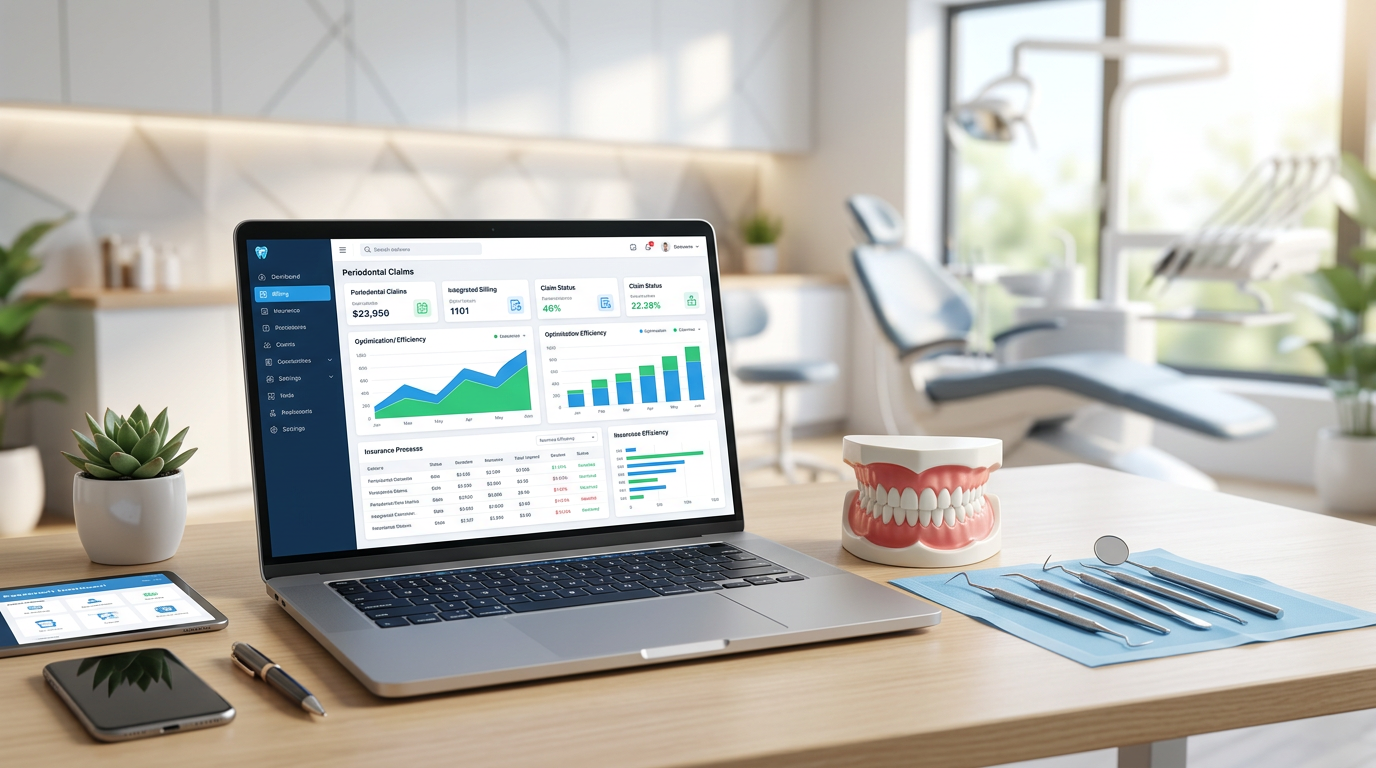
Beyond individual claims, integrated software provides powerful reporting and analytics for long-term financial health. Practices can generate reports on:
- Claim acceptance rates: Trends in denied or rejected claims by procedure or carrier.
- Reimbursement trends: Payment patterns and underpaid claims.
- Accounts receivable (AR) aging: Outstanding payments and follow-up priorities.
- Provider performance: Financial productivity by practitioner.
These insights help refine billing processes, fine-tune coding, and negotiate with payers. For periodontal claims, this clarifies which procedures are consistently reimbursed, which need stronger documentation, and which payers are most challenging. Pairing these reports with disciplined financial tracking turns billing data into a strategic advantage.
Strategic Implementation: Best Practices for Maximizing Periodontal Claims
Implementing the software is only the first step. To truly maximize periodontal claims, adopt these best practices:
1. Comprehensive Staff Training and Education
The best software is only as effective as its users. Train all relevant staff, from front desk to clinical assistants and billing specialists, on the software's features and how they apply to periodontal billing. Regular training and updates on new CDT codes or insurance regulations are crucial. Denti360 offers comprehensive training and support to ensure seamless adoption and proficiency.
2. Meticulous Documentation of Medical Necessity
For periodontal treatments, medical necessity is paramount to insurers, and every claim must be backed by thorough, objective clinical evidence, including:
- Detailed periodontal charting: Pocket depths, recession, furcation involvement, mobility, and bleeding points.
- Radiographs: Current, diagnostic-quality X-rays showing bone loss.
- Intraoral photographs: Visual evidence of inflammation, calculus, and other findings.
- Narratives: Clear, concise explanations of diagnosis, prognosis, and treatment plan linked to clinical findings.
- Diagnosis codes: Accurate ICD-10 codes, when applicable, to support the medical nature of the condition.
Integrated software organizes the collection and attachment of these documents, making it easier to present a compelling case to insurers.
3. Proactive Insurance Communication and Follow-up
Do not wait for denials to act. Use tracking features to proactively follow up on pending or delayed claims. Establish a regular schedule for reviewing claim statuses and addressing carrier inquiries promptly. Integrated communication tools facilitate quick, documented exchanges with payers.
4. Leveraging Bundling and Unbundling Strategically
Understand each plan's rules on bundling and unbundling. Some plans treat certain procedures as components of a larger treatment (bundled), while others allow separate billing (unbundling), and misunderstanding these rules leads to denials or underpayments. Integrated software can flag potential bundling conflicts based on payer rules, guiding the billing specialist to the most appropriate coding strategy.
5. Regular Audits and Performance Reviews
Conduct regular internal audits of billing processes, particularly for periodontal claims. Review a sample of submitted and reimbursed claims to find recurring errors, missed opportunities, or documentation gaps. The software's reporting features make data-driven performance reviews straightforward, helping you adjust strategy for 2025 and beyond.
Looking Ahead: The Future of Periodontal Billing with Denti360
As dental healthcare evolves, so will the complexities of insurance billing. With growing emphasis on value-based care and more nuanced coverage models for chronic conditions like periodontal disease, integrated billing software will become even more critical. Denti360 is committed to staying at the forefront of dental technology, continually enhancing its platform to meet practices' future needs.
Our software aims not only to process claims efficiently but to provide predictive analytics, AI-powered coding assistance, and seamless integration with other practice management tools. Imagine a system that predicts the likelihood of a denial based on historical data, or one that automatically suggests the most financially advantageous coding combination for a complex periodontal case. This is the future Denti360 is building, freeing practices to focus more on patient care and less on administration.
Unlock Your Periodontal Billing Potential with Denti360
Maximizing periodontal insurance claims is central to a financially healthy, patient-centric practice. The complexity of coding, documentation, and diverse policies demands a sophisticated approach, and integrated dental billing software delivers it. By enhancing eligibility verification, ensuring accurate coding and documentation, streamlining pre-authorizations, enabling efficient electronic submissions, and providing insightful analytics, these systems help practices reduce denials, accelerate reimbursement, and improve financial performance. Adopting a solution like Denti360 is an investment in efficiency, accuracy, and profitability that frees staff time, reduces stress, and ensures patients get the periodontal care they need without unnecessary financial hurdles. Get in touch with Denti360 and make 2025 the year your practice optimizes periodontal billing for unparalleled success.