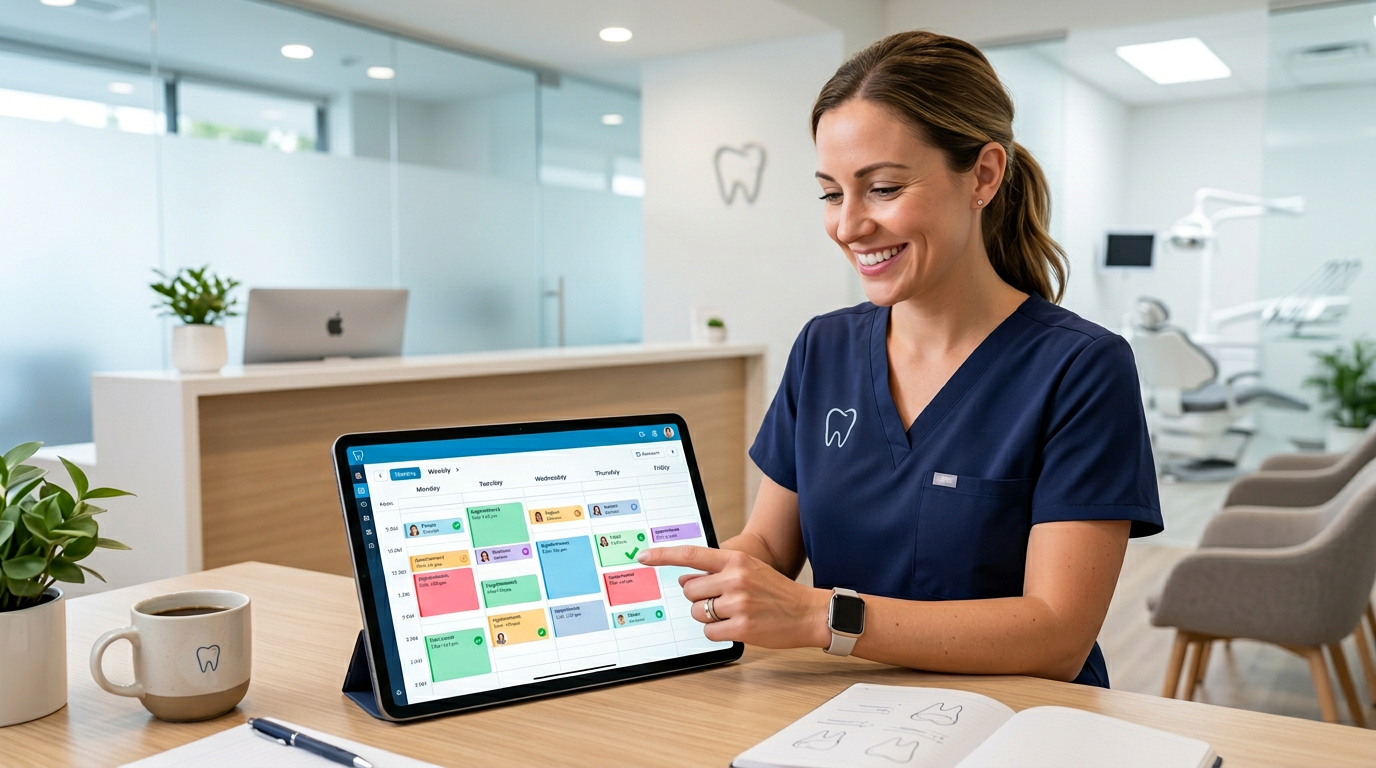


Boost Post-Procedure Patient Engagement With a Dental Patient Management App
A dental patient management app solves the moment your practice has the least control: the hours after a patient leaves the chair. That window is when patients are most vulnerable, most reliant on clear guidance, and most likely to forget critical instructions. Printed sheets, hurried verbal explanations, and after-hours phone calls routinely fall short, leading to confusion, non-adherence, and suboptimal results. A dedicated app bridges the gap between in-office care and at-home recovery, turning post-procedure instructions into an engaging, trackable experience.
For Denti360, a leader in dental healthcare technology, leveraging these advancements is paramount. This post shows how dental practices can use these applications to dramatically improve patient engagement with post-procedure care instructions, driving better health outcomes, fewer complications, and stronger patient loyalty.
Why Traditional Post-Procedure Instructions Fail Patients
Before exploring solutions, recognize the limits of conventional methods:
- Information Overload: Patients receive a deluge of information during their visit, making it hard to absorb and retain critical post-operative instructions.
- Forgetting and Misremembering: Stress, anxiety, or lingering anesthesia impairs memory, leading to forgotten or misinterpreted instructions.
- Inconvenience of Paper Handouts: Paper instructions are easily lost, damaged, or misplaced. They lack interactivity and cannot be updated easily.
- Lack of Personalization: Generic handouts don't address individual patient needs, questions, or procedure variations.
- Limited Accessibility: Patients struggle to reach the practice after hours, or hesitate to call over minor queries.
- Poor Compliance: A lack of clear, accessible, engaging instructions correlates directly with lower patient compliance.
- Increased Chair Time for Explanations: Extensive verbal explanations consume chair time that could serve other patients or procedures.
These challenges call for a patient-centric approach to instruction delivery, exactly what dental patient management apps provide.
What a Dental Patient Management App Does
At its core, a dental patient management app is a digital platform that streamlines patient interaction and care coordination within a practice. Its functionalities span scheduling, appointment reminders, and billing, but its role in post-procedure care is especially impactful. These apps typically integrate with existing practice management software for a seamless flow of information, much like a system built around streamlined patient management.
For post-procedure care, these apps offer:
- Digital Care Plans: Customizable, procedure-specific care instructions delivered directly to the patient's mobile device.
- Multimedia Content: Videos, images, and diagrams that visually demonstrate care steps, such as cleaning an extraction site or applying cold compresses.
- Interactive Checklists: Letting patients track progress and confirm adherence.
- Medication Reminders: Automated alerts for prescription timings and dosages.
- Symptom Trackers: Letting patients log and report symptoms to the practice for early intervention.
- Direct Communication Channels: Secure in-app messaging for questions or concerns.
- Educational Resources: A library of relevant articles and FAQs about their procedure.
- Feedback Mechanisms: Opportunities to provide feedback on recovery and instructions.
Key Strategies to Improve Post-Procedure Engagement
Installing the app is only the first step. Maximizing engagement requires strategic integration. Here are the key strategies.
1. Personalize and Customize Care Plans
Tailoring content is one of the most powerful features. Move beyond generic templates and create procedure-specific care plans that reflect each treatment and patient. Post-implant care for a smoker, for example, might include different instructions or warnings than for a non-smoker. Ensure the app lets you:
- Select relevant instructions: Based on the exact procedure, such as simple extraction versus wisdom tooth removal.
- Add personalized notes: Including specific advice given during the consultation.
- Adjust duration and frequency: For medications or specific care steps.
Personalized content feels more relevant and valuable, significantly increasing engagement and adherence.
2. Use Multimedia for Clearer Understanding
A picture is worth a thousand words, and a video can be priceless in post-operative care. Text-heavy instructions can overwhelm. Integrate rich multimedia into your care plans:
- Instructional Videos: Demonstrate proper post-surgery oral hygiene, swelling management, or signs of complications.
- High-Quality Images and Diagrams: Visually explain wound care, oral appliance placement, or areas to avoid brushing.
- Infographics: Simplify complex information such as dietary restrictions or medication schedules.
Visual aids serve different learning styles and dramatically improve comprehension, especially for complex procedures or patients with lower literacy levels.
3. Automate Reminders and Notifications
Human memory is fallible, especially during recovery. Automated reminders keep patients on track without being intrusive:
- Medication Reminders: Prompt patients to take antibiotics or pain relievers at the correct times.
- Care Task Reminders: Notify patients when to apply a cold compress or perform gentle rinses.
- Follow-Up Appointment Reminders: Ensure patients don't miss crucial post-operative check-ups, reinforced by reliable appointment scheduling.
These reminders reduce the mental load on patients, letting them focus on recovery while staying adherent.
4. Enable Secure Two-Way Communication
One of the biggest post-procedure anxieties is not knowing who to ask or when. Secure in-app messaging changes that:
- Direct Messaging With the Practice: Patients send non-urgent questions straight to the dental team.
- Photo and Video Sharing: Patients securely share images of recovery or concerns such as swelling or redness, enabling remote assessment.
- Timely Responses: Practices set response-time expectations so patients feel heard and supported.
This open line reduces unnecessary phone calls, gives patients peace of mind, and lets the team address issues proactively.
5. Add Interactive Features and Progress Tracking
Engagement thrives on interactivity. Turn passive instruction-reading into an active process:
- Checklists: Let patients tick off completed tasks, creating accomplishment and ensuring every step is followed.
- Symptom Trackers: Let patients log pain levels, swelling, or other symptoms over time, giving the team invaluable follow-up data and helping patients self-monitor.
- Educational Quizzes: Short, engaging quizzes reinforce understanding of key instructions.
These elements make patients active participants in recovery rather than passive recipients of information.
6. Provide a Comprehensive Resource Library
Anticipate common questions and answer them instantly. An in-app library reduces the burden on administrative staff:
- FAQ Section: Curate common questions for various procedures.
- Informative Articles: Offer digestible articles on diet after oral surgery, managing dry socket, or proper flossing techniques.
- Emergency Contact Information: Clearly list emergency numbers and what counts as an emergency versus a routine query.
Patients appreciate a centralized hub for all post-procedure information, available 24/7.
7. Collect Patient Feedback and Satisfaction Data
The post-procedure period is an ideal time to gather feedback. Use the app to deploy short surveys:
- Satisfaction With Instructions: Ask whether instructions were clear, easy to follow, and comprehensive.
- Recovery Experience: Gather insights into the overall recovery journey.
- App Usability: Understand how patients perceive the app's functionality and value.
This feedback loop drives continuous improvement, letting practices refine instructions and app strategy.
8. Train Staff and Promote App Adoption
No technology works without adoption. Ensure your team is proficient and understands the benefits:
- Comprehensive Staff Training: Train front desk, hygienists, and dentists on navigating the app and assisting patients.
- Patient Onboarding: Spend a few minutes during the post-procedure consultation helping patients download, log in, and learn the basics.
- Highlight Benefits: Communicate the advantages clearly, for example, "Your instructions will be right here on your phone, with helpful videos!"
Active promotion and team support are vital for high adoption rates.
Benefits Beyond Engagement: The Ripple Effect
While better post-procedure engagement is the primary goal, a robust dental patient management app delivers far more:
- Improved Clinical Outcomes: Better adherence means fewer complications, faster healing, and higher procedure success rates.
- Reduced Chair Time and Staff Workload: Automated reminders and self-service resources free staff for other critical tasks.
- Enhanced Patient Safety: Clear, accessible instructions reduce medication errors and improper wound care.
- Increased Patient Satisfaction and Loyalty: Patients feel more cared for and confident, strengthening their relationship with the practice.
- Reduced Malpractice Risk: Documented digital delivery provides an auditable trail that mitigates liability.
- Competitive Advantage: Cutting-edge technology positions your practice as forward-thinking and patient-centric.
- Data-Driven Insights: The app tracks engagement metrics, revealing which instructions are most accessed or most confusing.
Looking Ahead to 2025 and Beyond
As dental technology evolves, patient management apps will grow more capable. Expect AI-powered chatbots for instant query resolution, integration with wearable health trackers for continuous monitoring, and adaptive care plans that adjust to real-time patient input. Practices that embrace these tools now will be well-positioned to deliver an unparalleled patient experience.
Turn Recovery Into a Partnership With Denti360
Effective post-procedure care is not merely about handing out instructions; it is about ensuring they are understood, remembered, and followed. A dental patient management app transforms post-operative care from a passive experience into an engaging, interactive partnership between practice and patient. Denti360 brings personalization, multimedia, automation, and secure communication together so your team can deliver healthier outcomes and stronger loyalty. Explore the full feature set or contact our team to see how Denti360 can elevate your post-procedure care.