
How a Dental Patient Management App Boosts Post-Periodontal Adherence
A dental patient management app closes the gap that costs you periodontal results: patients leave with detailed home-care instructions, then forget them within days. Periodontal disease, a chronic inflammatory condition affecting the gums and supporting structures of the teeth, remains a major public health challenge. In-office treatment matters, but long-term success hinges on meticulous patient adherence to post-treatment instructions. When patients don't follow through, you see disease recurrence, progression, and ultimately tooth loss. Comprehensive apps like Denti360 bridge the divide between clinical treatment and sustained engagement. This post explores three ways a dental patient management app dramatically improves adherence to post-periodontal care, driving better outcomes and a more proactive approach to oral health.
1. Streamlined, Personalized Communication Channels
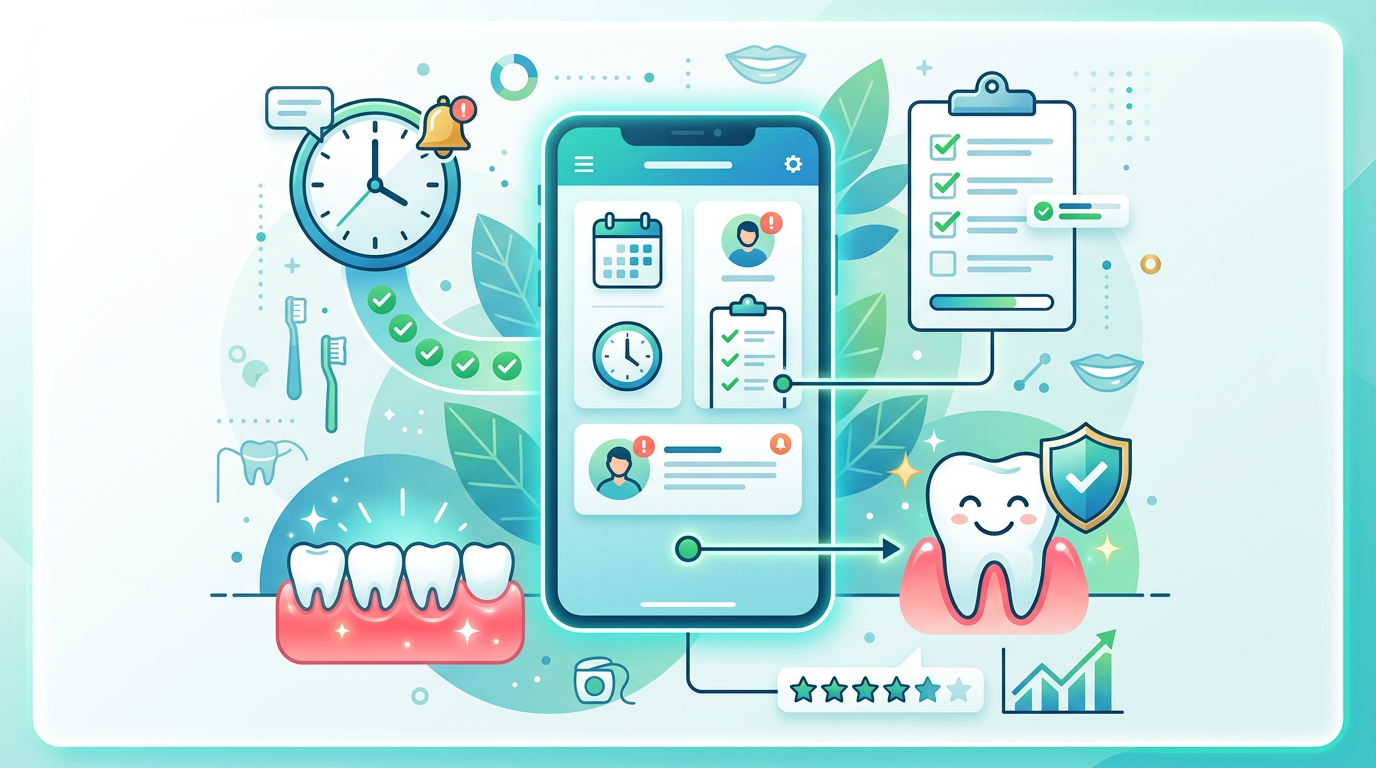
Communication is the cornerstone of successful healthcare, and never more so than in post-periodontal care. Patients leave the office with a flood of information: oral hygiene techniques, medication schedules, dietary restrictions, and follow-up details. Without a structured, accessible way to revisit it, recall fades, and confusion and non-adherence follow. A robust app fixes this by centralizing communication. It also supports streamlined patient management across your whole recall list.
Instant Access to Post-Treatment Instructions
Rather than relying solely on printed handouts that get misplaced or forgotten, the app digitally delivers all post-treatment instructions straight to the patient's mobile device. That includes detailed guidelines on proper brushing and flossing techniques tailored for post-surgical sites, instructions for using interdental brushes or water flossers, and advice on temporary dietary modifications, presented in an easily digestible format that incorporates text, images, and even short video demonstrations. A patient who has undergone a gingivectomy can pull up a video showing gentle brushing around the surgical site, reinforcing the verbal instructions given during the appointment. This readily available, on-demand information empowers patients to review crucial steps at their convenience, reducing ambiguity and fostering confidence in their self-care routine.
Secure Direct Messaging With the Dental Team
Post-periodontal care involves a healing phase where patients might encounter questions or minor concerns. Traditional methods such as phone calls are inconvenient for both patients and staff, causing delays and unanswered queries. A dedicated patient messaging feature within the app provides a secure, HIPAA-compliant channel for direct communication with the dental team. Patients can send messages and ask questions about symptoms ('Is this level of swelling normal?'), medication side effects, or clarifications on instructions, and the team can respond promptly, providing reassurance, advice, or directing the patient to call if the concern warrants immediate attention. This real-time, bidirectional communication fosters a sense of support and reduces patient anxiety, making patients more likely to adhere to instructions knowing professional guidance is just a tap away. It transforms the patient-provider relationship from transactional to collaborative, a vital factor in chronic disease management like periodontitis.
Push Notifications for Updates and Reminders
Push notifications keep adherence consistent. The app can confirm upcoming appointments, alert patients to new educational content, or remind them to reorder prescription mouthwash before it runs out. These timely nudges keep post-periodontal care top of mind without being intrusive. A notification such as 'Remember your antimicrobial rinse tonight!' can significantly improve compliance with medication regimens, reinforcing positive habits.
2. Personalized Reminders and Automated Schedule Management
Post-periodontal care involves many moving parts: oral hygiene routines, medication schedules, dietary restrictions, and follow-up appointments. Juggling these alongside daily life is hard, and forgetfulness is the primary barrier to adherence. An app excels at personalized reminders and automated appointment scheduling, offloading the cognitive burden from the patient.
Tailored Medication Reminders
Many periodontal treatments involve prescription medications such as antibiotics or antimicrobial rinses that demand strict dosage and timing. The app sends personalized reminders for each medication. If a patient takes an antibiotic twice a day for seven days, it sends distinct morning and evening notifications. Reminders adapt to the individual's regimen, preventing missed doses and ensuring efficacy. The app can also track medication adherence, offering valuable insight to both patient and provider.
Customized Oral Hygiene Prompts
Post-periodontal oral hygiene differs sharply from routine brushing and flossing. Patients may need a specific brush, must avoid certain areas, or adopt new tools like interdental cleaners or irrigators. The app schedules and delivers customized prompts for these routines. A patient might be reminded to gently brush the surgical site three times a day for the first week, then transition to normal brushing plus interdental cleaning twice daily. These prompts reinforce the precise techniques learned in the clinic, helping patients build effective new habits. Setting reminders around each patient's healing progress and treatment plan makes them remarkably effective.
Automated Appointment Scheduling and Reminders
Follow-up appointments are vital for monitoring healing, assessing success, and performing maintenance. Missed appointments break the continuum of care and jeopardize prognosis. The app streamlines this with automated scheduling and reminders. Patients view available slots, request appointments in-app, and receive automated confirmations and multiple reminders (a week before, a day before, an hour before) via push notification, SMS, and email. This multi-channel approach significantly reduces no-show rates. In 2025, many apps integrate AI-powered scheduling suggestions based on patient availability and clinic capacity, further optimizing appointment adherence.
Task Lists and Progress Tracking
For more complex cases, the app generates a personalized task list outlining every necessary post-treatment action. Patients can check off items as they complete them, fostering a sense of accomplishment and accountability. The app can also let patients track and log their daily adherence to specific protocols, such as recording when they have used a prescribed mouthwash or performed interdental cleaning. This data can then be shared securely with the dental team, providing practitioners with valuable insights into patient compliance between visits. This objective data helps clinicians tailor future advice and interventions, moving beyond subjective patient recall.
3. Accessible Educational Resources and Self-Management Tools
Empowering patients with knowledge is fundamental to improving adherence and promoting long-term oral health. When patients understand the 'why' behind their post-periodontal care instructions, they are far more motivated to comply. The app serves as a rich, accessible repository of educational resources and self-management tools, transforming passive recipients of care into active partners in their oral health journey.
Comprehensive Library of Educational Content
The app hosts a curated library of high-quality materials on periodontal disease and its management: articles, infographics, and short videos explaining the disease, the importance of each step in post-treatment care, the proper use of oral hygiene aids, and signs of complications. Content can be organized by treatment type ('Post-Scaling and Root Planing Care,' 'Post-Gum Graft Care') or topic ('Understanding Periodontal Maintenance,' 'Nutrition for Gum Health'). This on-demand access lets patients explore topics at their own pace, reinforcing learning and addressing concerns they might not have raised in the chair.
Visual Learning and Interactive Guides
Many individuals are visual learners. The app leverages this by incorporating interactive 3D models of the mouth illustrating healthy versus diseased gums, animations demonstrating the progression of periodontitis, and guided tours of proper brushing and flossing techniques. Interactive quizzes can also be integrated to test patient understanding and reinforce key concepts in an engaging way. For instance, a patient could complete a short quiz on the importance of interdental cleaning, instantly receiving feedback and clarification on incorrect answers. This gamified approach to learning enhances retention and engagement, making the often-complex world of periodontal health more approachable.
Progress Tracking and Goal Setting Features
Motivation is significantly boosted when patients can see tangible progress. The app can include features that let patients track their oral health metrics over time. While this might involve manual input from the patient, such as noting bleeding points during brushing, future iterations in 2025 might integrate with smart oral hygiene devices to automatically log data. Visual representations of progress, such as charts showing reduced inflammation or improved probing depths if provided by the clinician, can be powerful motivators. The app can also assist patients in setting personalized oral health goals, such as 'floss every day for a month' or 'reduce sugar intake by 50%.' Achieving these mini-goals reinforces positive behaviors and builds confidence in their ability to manage their periodontal health effectively.
Integration With Telehealth and Virtual Consultations
For certain follow-up needs, virtual consultations via the app improve adherence and convenience. A patient hesitant to come in for a minor query can get reassurance from a quick telehealth check-in. This lowers barriers to care, especially for patients with mobility issues or those in remote areas, maintaining continuity even outside the clinic. The app acts as a portal connecting patients with their providers for virtual support.
Conclusion: Turn Instructions Into Lasting Adherence
Improving post-periodontal adherence is not just about handing out instructions; it is about creating support, empowerment, and consistent engagement. Traditional methods rarely bridge the gap between clinical intervention and sustained self-care. Dental patient management apps like Denti360 transform this landscape, combining personalized communication, automated reminders and scheduling, and accessible education and self-management tools to tackle the multifactorial challenges of adherence head-on. The result is better outcomes, less recurrence, higher satisfaction, and a more efficient, patient-centric practice. Ready to keep your periodontal patients on track in 2025 and beyond? Talk to the Denti360 team to see how the platform supports comprehensive periodontal care.