
Dentistry in India is changing faster than at almost any point in its history. A decade ago, digital imaging and CAD/CAM restorations were luxuries found only in a handful of corporate chains in metro cities. Today, intraoral scanners, digital X-ray systems, and cloud-based dental practice management software are within reach of independent single-chair clinics in Tier 2 and Tier 3 towns. The question for most dental professionals is no longer whether to embrace digital dentistry, but how to do it strategically — adopting technologies that genuinely improve patient care and practice efficiency without chasing every new gadget that crosses the market.
This article explores the core pillars of digital dentistry, the clinical and operational benefits they deliver, and how a platform like Denti360 ties the digital practice together from the front desk to the operatory.
Digital Imaging: Better Diagnosis, Lower Radiation, Faster Workflow
The shift from conventional film radiography to digital X-ray sensors is perhaps the most widespread digital transition in Indian dentistry, and for good reason. Digital sensors produce images in seconds, with radiation doses estimated to be significantly lower than traditional film — an important consideration when Indian dental councils and patients alike are increasingly aware of cumulative radiation exposure.
Beyond speed and safety, digital images offer diagnostic advantages that film simply cannot match. Contrast, brightness, and zoom can be adjusted post-capture, revealing details that might be missed on a static film. Images can be annotated and shared instantly — with a patient sitting chairside, with a specialist for referral, or stored permanently in the patient's digital record accessible through your dental management software.
For clinics undertaking implant placement, orthodontic treatment planning, or complex oral surgery, Cone Beam Computed Tomography (CBCT) takes digital imaging further still, providing three-dimensional views of bone density, root anatomy, and nerve pathways. The precision this enables is not just clinically valuable — it demonstrably reduces complications and the need for corrective interventions, which matters enormously for patient trust and the clinic's reputation.
Intraoral Scanners and CAD/CAM: From Impression to Restoration in One Visit
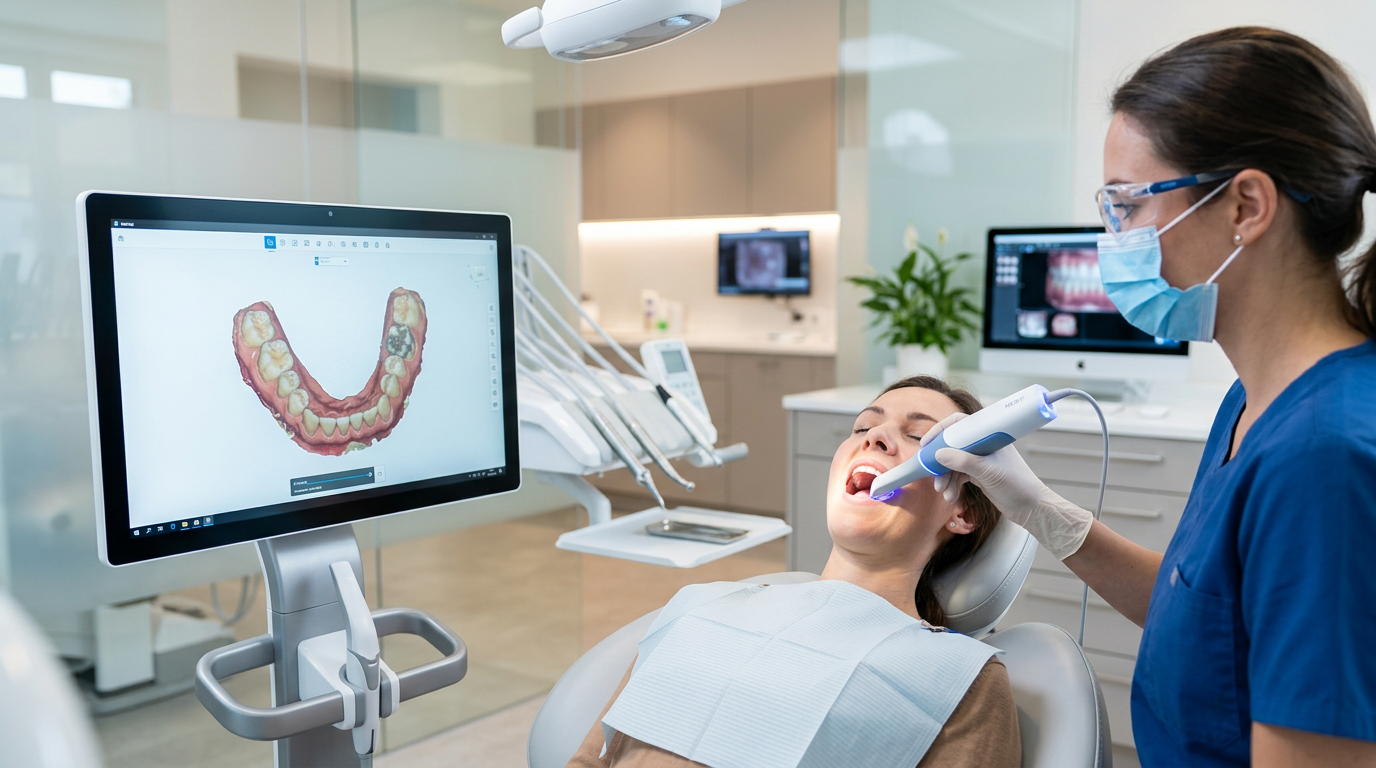
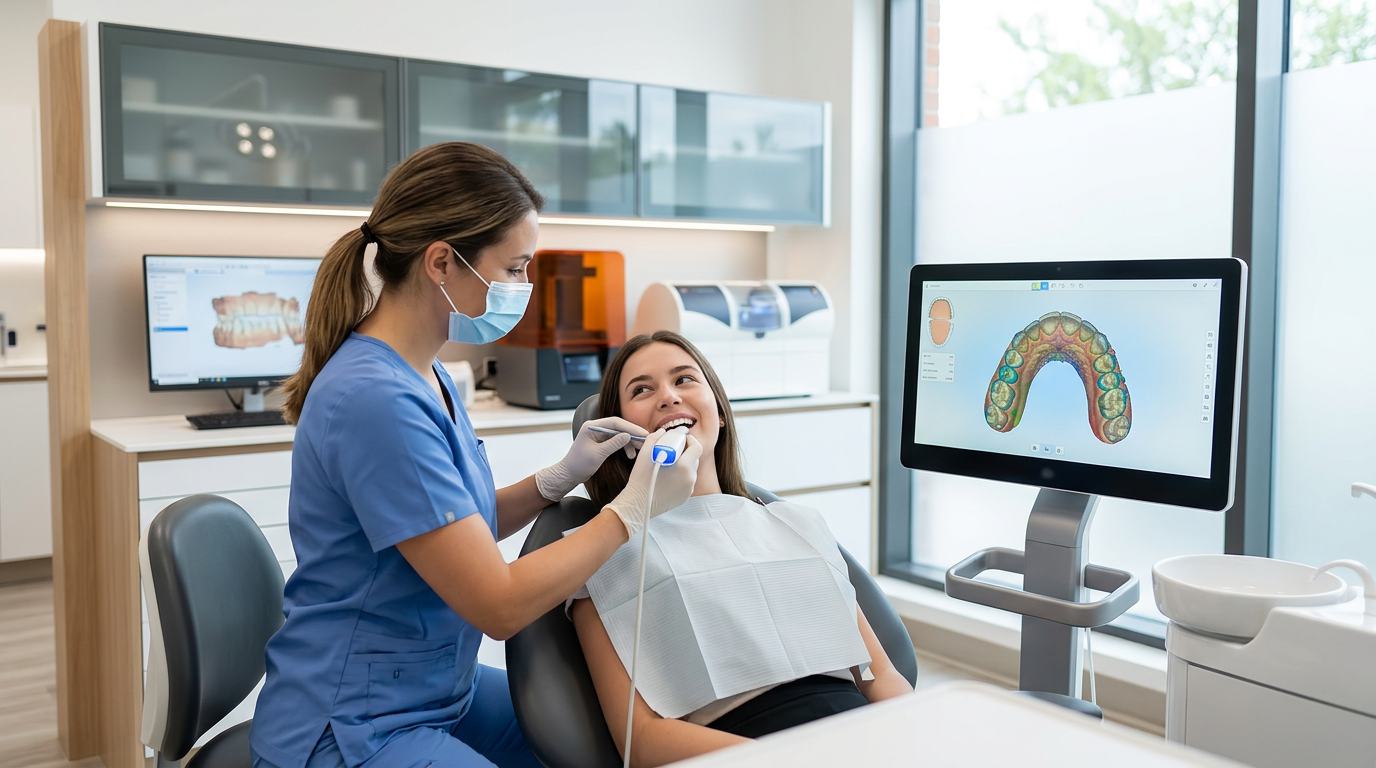
If there is one technology that most dramatically improves both the patient experience and the dentist's workflow, it is the intraoral scanner. The traditional impression — uncomfortable, prone to distortion, time-consuming, and dependent on laboratory turnaround times that can stretch to ten days or more — is increasingly being replaced by a digital scan completed in a few minutes with a small handheld wand.
The benefits compound across the entire restorative workflow:
- Patient comfort: No tray loaded with impression material, no gag reflex, no waiting for the material to set.
- Accuracy: Digital impressions eliminate the dimensional changes that occur when PVS or alginate materials are removed from the mouth, poured, and transported. The fit of digitally designed restorations is consistently tighter.
- Speed: Scan data is transmitted to a dental laboratory electronically within minutes, or fed directly into an in-house milling unit for same-day crown fabrication.
- Patient communication: The 3D scan can be rotated and shown to the patient on screen, making treatment planning discussions far more engaging and comprehensible than a description alone.
Paired with CAD/CAM software, intraoral scanning enables the design and fabrication of crowns, inlays, onlays, veneers, and bridges from high-strength ceramics or zirconia. For practices with in-house milling units, this means a patient can receive a permanent ceramic crown in a single appointment — a genuine competitive differentiator in any Indian city.
Digital Practice Management: The Backbone of the Modern Dental Clinic
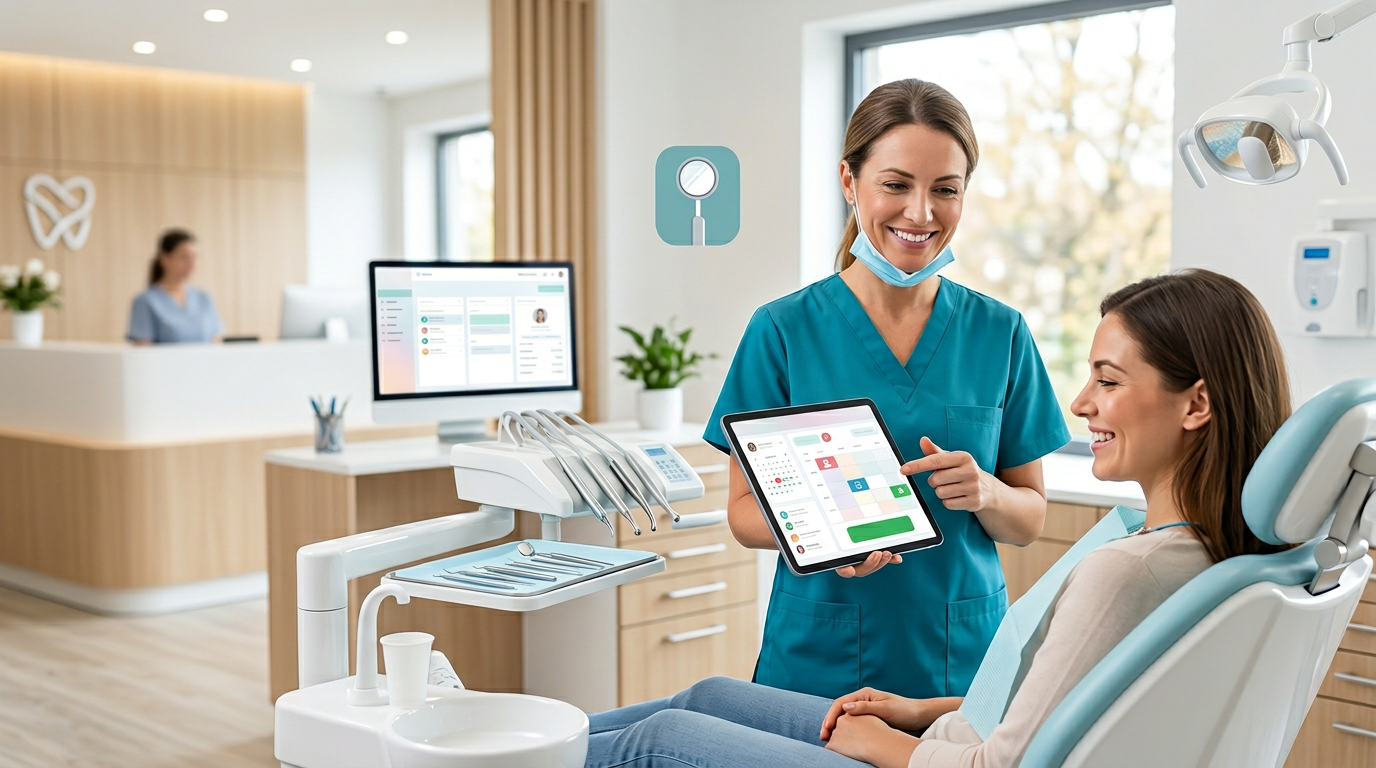
Clinical technologies get the attention, but the operational infrastructure that supports them is equally critical to a successful digital practice. A clinic might invest in the best imaging equipment available, yet still lose patients to poor appointment management, missing records, or billing errors. This is where dental software India practices rely on — like Denti360 — becomes the connective tissue that makes every other technology investment perform better.
Denti360 integrates the administrative and clinical dimensions of practice management into a single cloud-based platform:
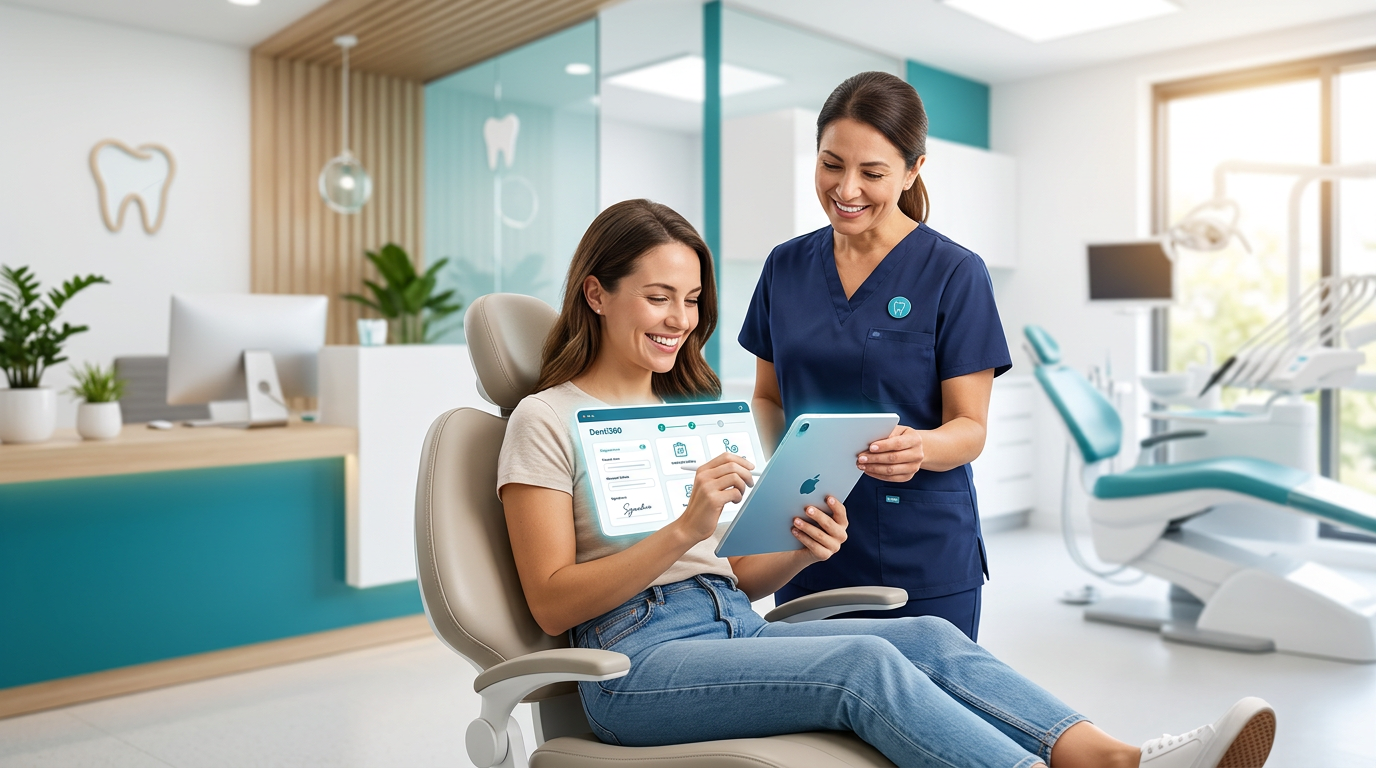
- Digital patient records store radiographs, photographs, clinical notes, treatment plans, and consent forms in one place, accessible from any device.
- Online appointment booking and automated reminders reduce no-shows and keep the schedule full without demanding constant attention from the front desk.
- Digital treatment planning tools allow dentists to document proposed treatment, link it to the patient record, and share it with the patient through the portal — improving case acceptance and treatment completion rates.
- Billing and payment tracking are integrated with patient records, so the financial picture of each treatment is always clear.
In a clinic that has embraced digital dentistry on the clinical side, Denti360 ensures the management side keeps pace — delivering the operational efficiency needed to actually realise the return on investment from expensive clinical equipment.
Artificial Intelligence: Early Detection and Smarter Decision Support
AI-assisted dental diagnostics is no longer science fiction. Software that analyses digital radiographs and flags potential caries, bone loss, or periapical pathology has been validated in peer-reviewed research and is being adopted by forward-thinking practices globally. For Indian dentists managing high patient volumes — sometimes 30 to 50 patients per day — AI serves as a reliable second opinion that ensures nothing is overlooked in a busy schedule.
The value of AI in dentistry is not that it replaces clinical judgment; it is that it makes consistent, evidence-based screening available at every appointment regardless of the dentist's fatigue level or the time pressure of a full waiting room. Early detection of caries or periodontal bone loss that might otherwise be missed at one visit does not remain undetected until it has become a far more complex and expensive problem to treat.
Beyond diagnostics, AI is beginning to inform practice management as well — predicting which patients are at risk of not attending, suggesting optimal scheduling configurations, and identifying treatment gaps in patient populations that can be addressed through targeted recall campaigns.
Digital Dentistry and the Patient Experience: Why It Matters for Retention
Indian dental patients are becoming more discerning. Urban patients in particular compare their clinic experience against the frictionless digital services they use in every other area of their lives. When a practice offers online booking, digital forms completed before the visit, WhatsApp reminders, same-day restorations, and a digital treatment plan they can review at home, the cumulative impression is of a clinic that is modern, organised, and trustworthy.
Patient retention is the most undervalued metric in dental practice growth. Acquiring a new patient costs significantly more than retaining an existing one. Practices that deliver a consistently smooth, professional digital experience — from the first reminder message to the post-treatment follow-up — retain patients at markedly higher rates. Over a three-to-five year horizon, this difference in retention compounds into a meaningful revenue gap between digitally enabled practices and those still operating on paper.
Denti360's patient portal gives established patients access to their records, upcoming appointments, and treatment plans. This transparency builds the kind of trust that makes patients refer family members and colleagues — the highest-quality source of new patient acquisition for Indian dental practices.
Start Your Digital Journey with the Right Foundation
Embracing digital dentistry does not require replacing everything at once. Most successful transitions begin with the practice management layer — digital records, online scheduling, automated communications — because these changes deliver immediate operational benefits and create the digital infrastructure on which clinical technologies can be added progressively.
Denti360 is designed to be that foundation. Whether your clinic is just beginning its digital journey or is ready to integrate clinical imaging and CAD/CAM workflows with a central management platform, Denti360 adapts to where you are and where you are going.
To see how Denti360 can support your clinic's transition to digital dentistry, book a free Denti360 demo — and take the first step toward a more efficient, more modern practice.