

Revenue cycle management is one of the most consequential — and most overlooked — aspects of running an orthodontic practice in India. Treatment plans span twelve to thirty months, insurance benefits for orthodontics come with their own maze of conditions and lifetime caps, and a single coding error can delay payment by weeks or result in an outright denial. Against this backdrop, the choice between dental billing software and manual claim processing is not a matter of preference — it is a decision with a direct and measurable impact on how much money your practice actually collects.
The Real Cost of Manual Claim Processing
Manual claim processing looks deceptively low-cost on paper. There are no software licences to pay for, no implementation fees, no training costs. But the true cost only becomes visible when you track what it actually consumes: staff time, error rates, denial volumes, and average days to payment.
In a typical orthodontic practice handling fifty to eighty active cases at any given time, the billing co-ordinator spends a significant portion of each day on tasks that generate no revenue — verifying that paper forms are filled in completely, correcting codes that were transcribed incorrectly, calling insurance companies to check claim status, and resubmitting denials. Each of these activities represents a cost in labour that adds up to tens of thousands of rupees per month. Add to this the claims that are never successfully collected — the ones that fall through the cracks because follow-up was missed or the timely filing deadline was not caught in time — and the financial picture becomes even starker.
Denial rates for manually submitted dental claims are consistently higher than for electronically submitted claims. The reasons are predictable: handwriting errors, transposed numbers, missing attachments, and incorrect or outdated CDT codes. Each denial triggers a correction and resubmission cycle that can take weeks, during which the practice's accounts receivable grows without generating cash flow.
What Dental Billing Software Actually Does
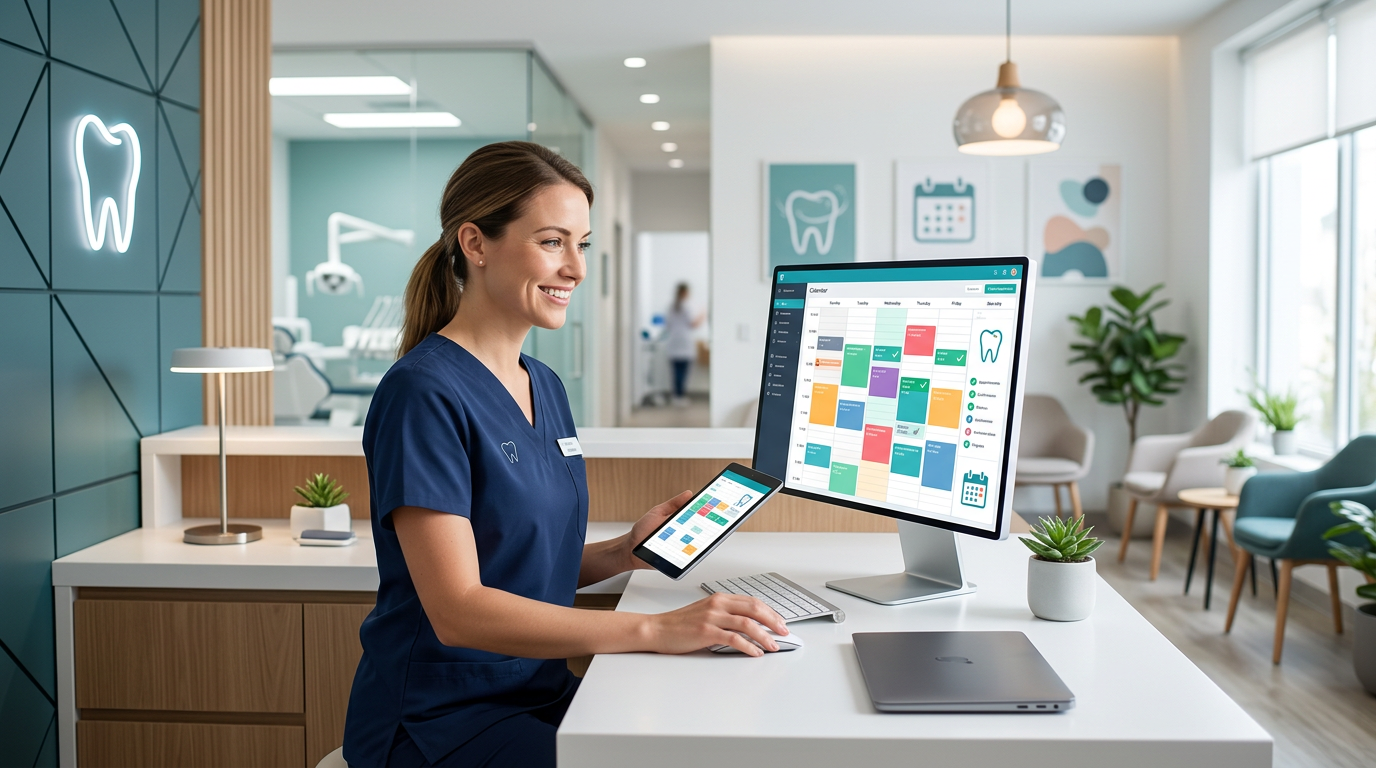
Dental billing software, when it is properly integrated into a dental practice management platform like Denti360, transforms the claims process from a series of manual steps into an automated, validated, and trackable workflow.
- Real-time eligibility verification: Before the patient's first appointment, the system checks their insurance coverage, benefit limits, and orthodontic-specific conditions. The practice knows in advance what will be covered and what the patient's out-of-pocket responsibility is — eliminating the unpleasant surprise conversations that damage patient relationships and reduce treatment acceptance.
- Automated coding assistance: The software cross-references treatment plan entries with appropriate CDT codes and flags combinations that commonly trigger denials with specific payers. The billing co-ordinator reviews and approves rather than researching from scratch.
- Electronic claim submission: Claims are transmitted directly to the clearinghouse or insurer. Electronic submissions are processed days faster than paper claims and are subject to pre-submission error checks that catch problems before the claim leaves the practice.
- Claim status tracking: A centralised dashboard shows every submitted claim's current status — received, in review, paid, or denied — without requiring a single phone call to an insurer. Staff see immediately which claims need attention and which are on track.
- Denial management workflows: When a claim is denied, the software categorises the denial reason, surfaces the relevant clinical documentation, and in many cases suggests the corrective action. Resubmission is faster and more consistent.
- Electronic remittance processing: Payments are automatically posted to patient accounts when the electronic remittance advice arrives, eliminating a further category of manual entry errors.
Orthodontic-Specific Billing Challenges and How Software Addresses Them
Orthodontic billing has unique characteristics that make the case for software even stronger than in general dentistry. Treatment is delivered over an extended period, and insurance benefits are typically structured as a lump-sum lifetime maximum rather than an annual benefit. This means that tracking cumulative payments against lifetime maximums — across multiple insurers, across years of treatment — is a genuine complexity that manual systems handle poorly and software handles well.
Pre-authorisation is another area where orthodontic practices frequently lose revenue unnecessarily. When a pre-authorisation request is submitted incorrectly, delayed, or simply not tracked through to approval, the practice faces the risk of providing treatment that the insurer subsequently refuses to cover. Denti360's dental practice management module automates pre-authorisation tracking, alerting staff when a response is due or when approval has been received and treatment can proceed.
The integration between clinical records and billing is also particularly important in orthodontics, where progress records — photographs, models, interim radiographs — are frequently required as attachments to support claims. When clinical documentation and billing exist in the same platform, assembling and attaching these records is fast and reliable rather than a time-consuming manual exercise.
The Reporting Advantage: Knowing Where Your Revenue Actually Stands
One of the most underappreciated differences between dental billing software and manual processing is what happens after the claim is submitted. Manual systems provide almost no visibility into aggregate performance. A practice manager might have a general sense that claims are taking a long time or that a particular insurer is difficult, but quantifying the problem — and identifying its exact source — is nearly impossible without systematic data.
Denti360's reporting tools give orthodontic practices a clear picture of their revenue cycle performance: average days to payment by insurer, denial rates by procedure code, outstanding claims ageing, and collection rates relative to billed amounts. This data is not just interesting — it is actionable. A practice that identifies a pattern of denials for a specific code with a specific insurer can investigate the payer's documentation requirements, update its submission process, and eliminate that denial category entirely. That kind of continuous improvement is only possible with software that captures and surfaces the relevant data.
Making the Transition: What Indian Orthodontic Practices Should Know
The most common hesitation among practices considering a switch to dental billing software is the transition itself — the concern that moving from a familiar (if inefficient) manual process to a new system will cause disruption. In practice, the transition is manageable when approached with clear milestones and proper training support.
The key is to run the new system in parallel with the existing process for a defined period — typically four to six weeks — rather than switching over all at once. This allows the billing team to build confidence in the software while maintaining a safety net. Denti360's onboarding process includes dedicated support through this parallel-run phase, ensuring that questions are answered quickly and that any practice-specific configuration requirements are addressed before full cutover.
Within two to three months of full adoption, most orthodontic practices see measurable improvements in days-to-payment, denial rates, and staff time spent on billing administration. The software pays for itself relatively quickly when these gains are set against its cost.
Conclusion
The comparison between dental billing software and manual claim processing ultimately comes down to a simple question: how much revenue is your current process leaving on the table? For most orthodontic practices in India, the answer is more than they realise — in delayed payments, uncollected denials, and administrative time that could be directed toward growth. Denti360's integrated dental practice management and billing tools are designed to close that gap, giving orthodontic teams the automation, visibility, and analytical capability they need to maximise collection on every case they treat. Book a free Denti360 demo to see how the billing module works in the context of your practice's specific workflows.