
Every dental practice in India knows the feeling: a hygiene chair sits empty at 11 a.m. because a patient simply did not show up. No call, no message, no warning. That empty chair represents lost revenue, wasted clinical time, and a small but real morale dip for the team. Multiply it across a week — or a month — and the financial impact becomes impossible to ignore. The good news is that patient no-shows for dental cleanings are one of the most preventable problems in practice management, and automated scheduling software is the tool that solves them.
Understanding Why Patients Skip Their Cleaning Appointments
Before investing in a solution, it helps to understand the problem clearly. Most patients who miss a prophylaxis appointment do not do so because they do not value their oral health. The more common reasons are mundane: they forgot, something came up and rescheduling felt complicated, or they did not receive a timely reminder through a channel they actually pay attention to.
Traditional reminder systems — a phone call from the front desk a day before the appointment — are poorly matched to the way most working professionals in India now live. People are on calls during the day, messages get missed, and a voicemail is rarely returned. By contrast, a well-timed WhatsApp or SMS reminder with a one-tap confirmation option fits naturally into a busy person's day. The technology exists to deliver these reminders automatically, consistently, and at exactly the right moments to keep your schedule full.
How Automated Scheduling Works in a Dental Context
Automated scheduling software for dental practices does much more than send a single reminder. When integrated with a full dental practice management platform like Denti360, it creates a layered communication system around every appointment.
- Immediate booking confirmation: The moment a patient books a cleaning appointment — whether through the practice website, a phone call entered by staff, or the patient portal — an automated confirmation goes out via SMS and email. This sets the expectation and gives the patient a reference they can return to.
- Advance reminder: Several days before the appointment, a detailed reminder goes out with the date, time, clinic address, and any pre-appointment instructions. For a prophylaxis appointment this might include a note to avoid eating immediately beforehand or to bring their last X-ray if visiting a new dentist.
- Confirmation prompt: The reminder includes a simple reply mechanism — the patient responds YES to confirm or requests rescheduling. This two-way communication tells the practice team well in advance which chairs are genuinely filled and which need attention.
- Same-day reminder: A morning message on the day of the appointment serves as a final nudge and is particularly effective at reducing the category of no-shows caused by patients simply losing track of what day it is.
- Waitlist activation: If a patient cancels, automated scheduling software with waitlist functionality immediately alerts patients who have expressed interest in an earlier appointment, often filling the slot within minutes rather than leaving it empty.
The Revenue and Efficiency Impact
The financial logic of reducing no-shows is straightforward. A prophylaxis appointment in most Indian clinics generates between ₹800 and ₹2,500 in revenue depending on the city and patient profile. A practice with five no-shows per week is losing somewhere between ₹20,000 and ₹60,000 every month from that category alone — and that is before accounting for the secondary revenue lost when a cleaning visit would have led to identification of a restoration or periodontal treatment.
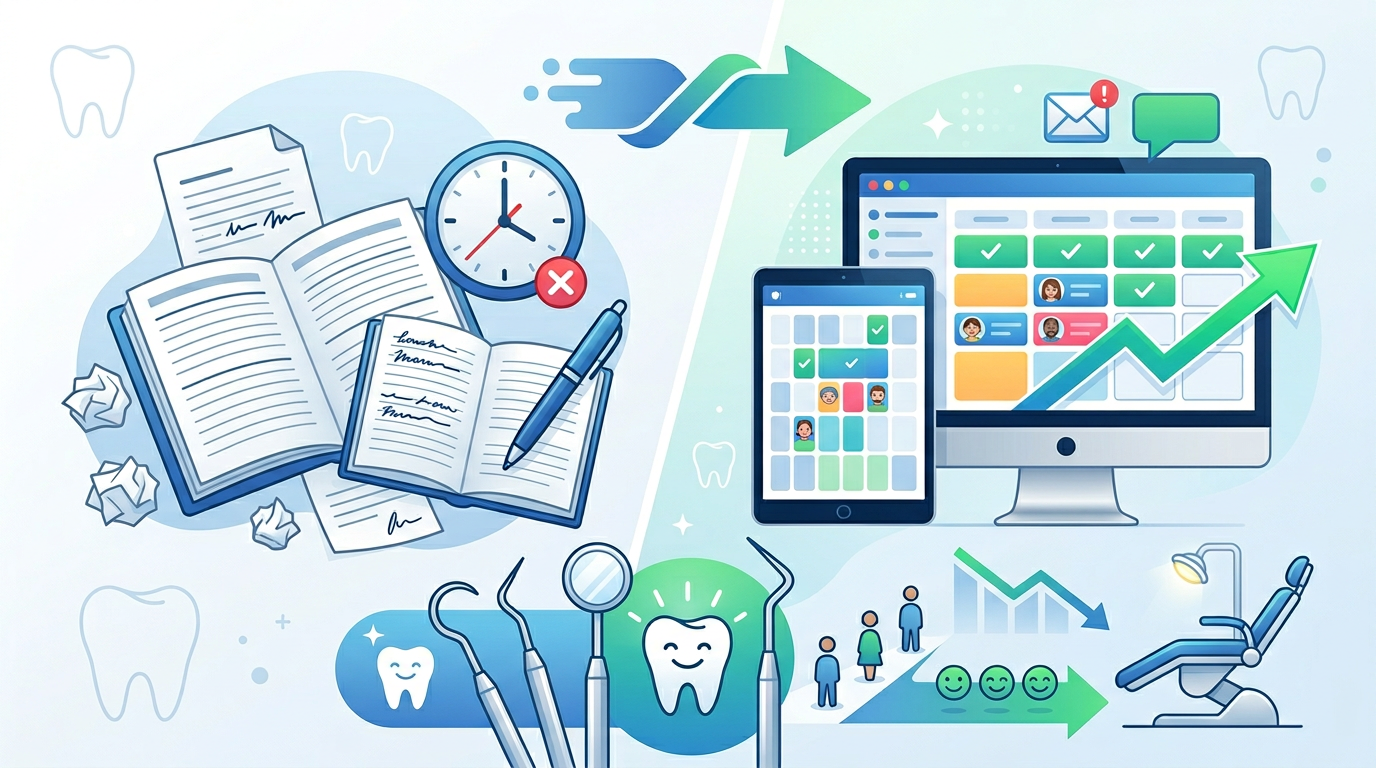
Dental practice management data consistently shows that practices using automated reminders and confirmation systems reduce their no-show rates by 30 to 50 percent. On the operational side, the impact is equally significant. Front-desk staff who previously spent two hours a day making reminder calls can redirect that time to patient check-in, treatment plan discussions, insurance co-ordination, or active recall outreach. The practice does not need to hire an additional team member to handle growth — the automation absorbs the extra volume.
Online Self-Scheduling: Meeting Patients Where They Are
One of the most powerful features in modern dental scheduling software is giving patients the ability to book and reschedule appointments themselves, at any hour, without needing to call the clinic. For dental cleanings — which are routine and patient-initiated — this is particularly valuable.
When a patient realises on a Tuesday evening that they have a conflict with their Thursday cleaning, and they can simply open a link, see available slots, and move the appointment in under a minute, they will almost certainly reschedule rather than simply not showing up. The friction of calling during business hours, navigating hold times, and negotiating a new slot with a receptionist is, for many patients, enough to tip the balance toward avoidance. Removing that friction directly reduces no-shows.
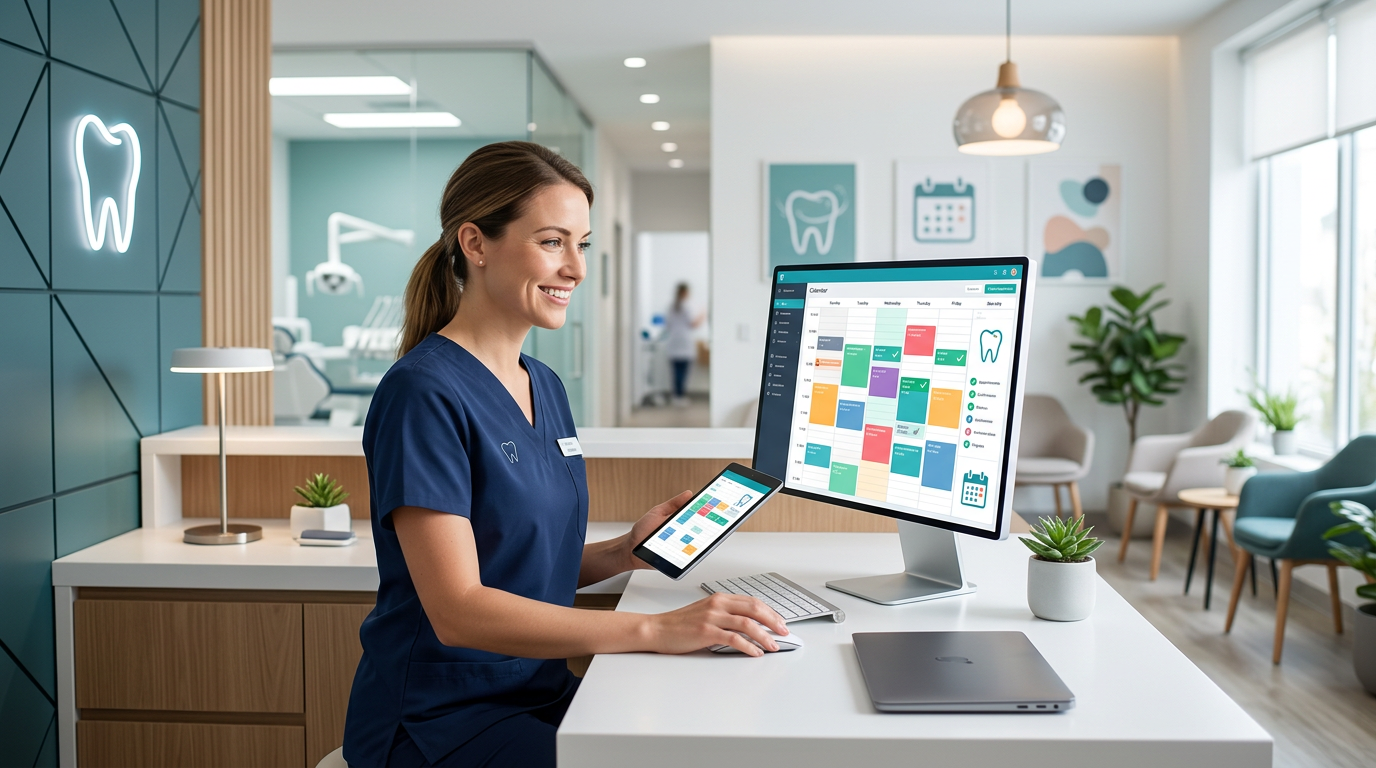
Denti360's patient-facing scheduling portal integrates in real time with the practice schedule, so patients only see genuine availability. Staff see the updated schedule instantly, and the automated confirmation sequence kicks off immediately for the new appointment. No manual steps, no double bookings.
Implementing Automated Scheduling: Practical Steps for Indian Practices
Getting started with automated scheduling does not require a complete overhaul of how your practice operates. The key decisions are about configuration rather than about changing clinical workflows.
First, map out your current reminder sequence and identify where patients most commonly drop off. Is the problem primarily forgotten appointments, or is it patients who cancel without rescheduling? The answer shapes which automated touchpoints to prioritise. Second, decide on the communication channels that suit your patient demographic — SMS and WhatsApp are almost universally effective in India, while email works better for corporate patients with health benefits. Denti360 supports all of these channels and allows channel preferences to be set at the individual patient level.
Third, activate the waitlist feature and brief your team on how it works. The automated system handles the outreach, but staff need to know what to expect when a previously empty slot suddenly fills. Finally, use the reporting dashboard to track your no-show rate month on month. Most practices see measurable improvement within the first four to six weeks of going live.
Conclusion
Reducing dental cleaning no-shows is one of the highest-return, lowest-risk improvements a dental practice can make. The investment is in smart dental practice management software; the return is a fuller schedule, more consistent revenue, and a front-desk team freed from repetitive phone calls. Denti360's automated scheduling tools are built specifically for the needs of Indian dental practices — handling the communication, confirmation, and waitlist management that turn a leaky appointment book into a reliable engine for preventive care revenue. Book a free Denti360 demo to see the scheduling and reminder system in action for your clinic.