
No-shows are one of the most persistent and costly problems in dental practice management. Unlike a cancellation, which at least gives you some warning, a no-show leaves you with an empty chair, a prepared operatory, and a clinical team with nothing to do — often with no time to fill the slot. For practices in India where profit margins are closely tied to daily chair utilisation, even a modest reduction in no-show rates can translate into a meaningful improvement in monthly revenue and team morale.
The encouraging reality is that most dental appointment no-shows are preventable. They are not primarily caused by patients who don't care about their oral health; they are caused by patients who forgot, who found rescheduling too difficult, who felt disconnected from the practice, or who were never properly reminded in the first place. Address those root causes systematically, and your no-show rate will fall. Here are five strategies that dental practices using Denti360's dental software are implementing effectively right now.
1. Build a Layered Reminder System That Works Across Channels
The most common reason patients miss dental appointments is simple forgetfulness. A single reminder call the afternoon before is not enough for patients managing busy schedules, childcare responsibilities, and the constant distraction of modern life. A layered, multi-channel reminder system dramatically increases the probability that a patient will remember, confirm, and attend.
Denti360 automates a sequence of reminders that can be configured to match your clinic's preferences and patient demographics. A typical effective sequence looks like this: a booking confirmation immediately after the appointment is made, a reminder message five to seven days before the visit, a second reminder 48 hours out with a confirmation prompt, and a final message on the morning of the appointment. Each message is personalised — the patient's name, their dentist's name, the appointment time, and any specific pre-visit instructions are included automatically.
Crucially, reminders sent through Denti360 include an interactive confirmation option. When a patient confirms via WhatsApp reply, the system logs the confirmation instantly in your schedule. If a patient indicates they cannot attend, they are immediately prompted to reschedule — converting a potential no-show into a managed cancellation and keeping the door open to refilling that slot. This single feature often produces the largest measurable drop in no-show rates when clinics first adopt it.
2. Make Rescheduling Genuinely Easy for Patients
A significant proportion of no-shows happen because patients who know they cannot attend their appointment find it easier to simply not show up than to go through the process of calling, waiting on hold, explaining the situation, and negotiating a new time during office hours. The friction of rescheduling is a well-documented driver of missed appointments across healthcare settings.
Denti360's online patient portal eliminates that friction. Patients can reschedule their appointment at any time — 11pm on a Sunday if that is when it occurs to them — by selecting a new slot from your live availability calendar. No phone call required. No waiting. No apology to a receptionist. The new appointment is confirmed instantly, and the vacated slot is released back into the available pool immediately.
- Patients on your waitlist are notified automatically when a sought-after slot opens up, allowing you to fill gaps without any manual effort from your front desk team.
- The entire rescheduling transaction is visible in Denti360's schedule in real time, so your team always has an accurate view of the day's appointments.
- The system can be configured to prevent last-minute cancellations (e.g., within 24 hours) for high-value appointment types, encouraging patients to give adequate notice.
When rescheduling is easy, patients use it. And a rescheduled patient is infinitely better for your practice than a no-show patient.
3. Use Patient History Data to Identify and Manage High-Risk Appointments
Not every appointment carries the same no-show risk, and treating all patients identically in your communication strategy means you are spending effort on low-risk appointments and under-investing in high-risk ones. Dental practice management becomes far more efficient when you can segment by risk and respond accordingly.
Denti360 tracks appointment history for every patient in your system. A patient who has previously no-showed twice is objectively higher risk than a patient with a three-year record of perfect attendance. Your front desk team can be alerted to high-risk appointments in the schedule view, prompting a personal phone call in addition to the automated reminders — a small additional investment that yields disproportionate returns.
The reporting tools within Denti360 surface broader patterns as well. If Monday morning appointments have a consistently higher no-show rate than other slots, or if a particular appointment type is disproportionately missed, those insights allow you to adjust your scheduling strategy rather than simply absorbing the losses. Data-driven scheduling decisions are a hallmark of well-managed practices and are difficult to implement without the kind of structured record-keeping that dental software provides.
4. Keep Patients Engaged Between Visits
Patient loyalty is built between appointments, not just during them. A patient who hears from your clinic only when they have an upcoming appointment has a transactional relationship with your practice. A patient who receives genuinely useful communication between visits — post-treatment follow-ups, oral health tips relevant to their situation, recall reminders when their next check-up is due — has a relational connection that makes them far less likely to simply not show up.
Denti360 enables this kind of ongoing engagement without requiring your team to manually send individual messages. Post-treatment follow-up messages are triggered automatically based on the type of procedure completed. Recall reminders are generated based on the patient's last visit date and the recall interval you have configured. Educational content can be scheduled and sent to patient segments based on their treatment history — patients who have had orthodontic work receive different content from patients who are managing periodontal disease.
This between-visit communication has a measurable impact on no-show rates because it maintains the patient's psychological connection to your clinic. They are not just occasionally remembering a dental appointment; they are regularly reminded that they have an active relationship with a practice that knows them and cares about their oral health. That sense of connection creates a mild social accountability that significantly reduces no-shows compared with purely transactional patient relationships.
5. Run Your Schedule on Time to Build Appointment Credibility
This strategy is less obvious than the others but equally important. When patients consistently experience significant wait times at your clinic — arriving for a 10:00 appointment and being seated at 10:35 — they begin to devalue the importance of arriving on time, and eventually, the importance of arriving at all. A practice that does not respect patient time trains patients not to prioritise their appointments.
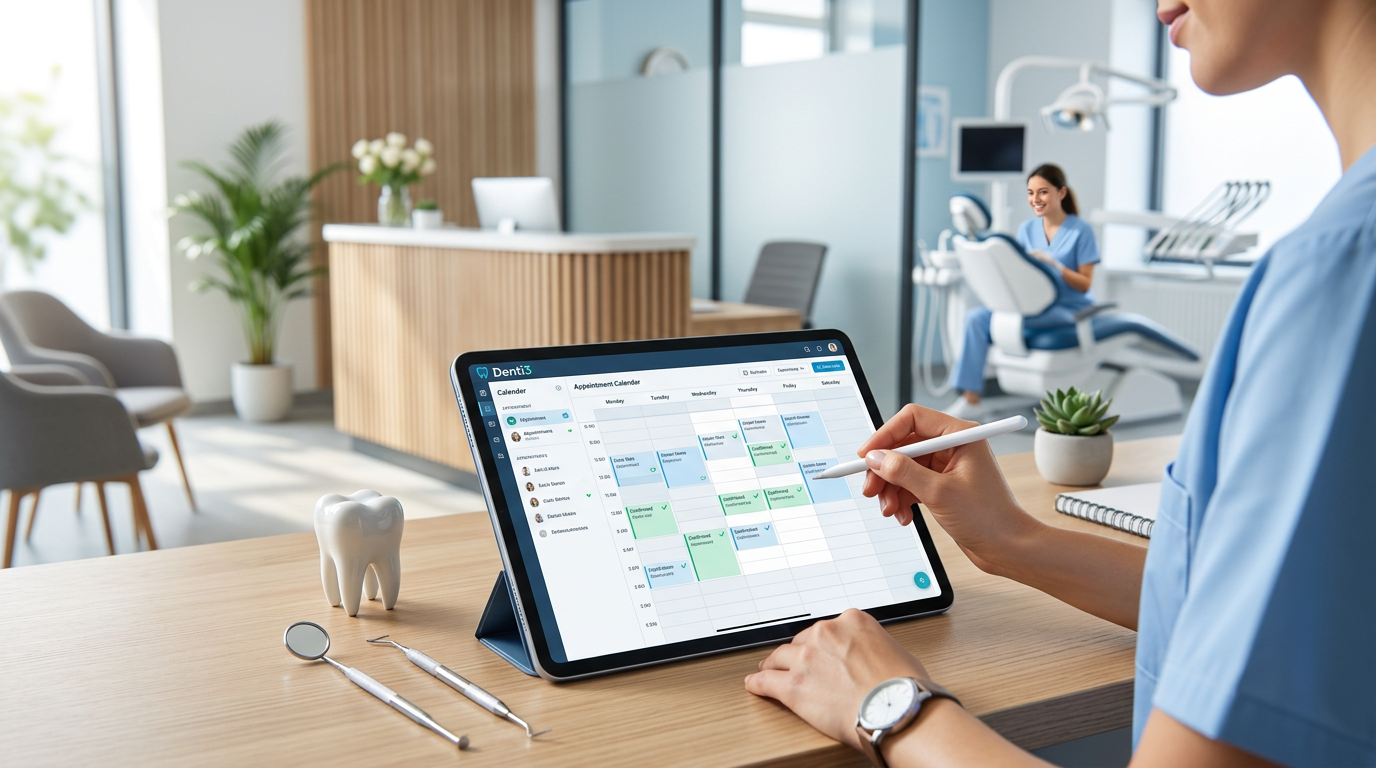
Denti360's scheduling tools are designed to help you build and maintain a realistic, punctual appointment schedule. Appointment durations are configurable by procedure type, ensuring that the time allocated matches the actual clinical requirement rather than an optimistic estimate. Buffer periods between appointments prevent the cascading delays that turn a busy morning into a chaotic afternoon. The schedule view gives your team real-time visibility into where things stand, enabling proactive communication with waiting patients when delays are unavoidable.
When your clinic runs on time — when patients learn from experience that a 2:30 appointment means they will be in the chair by 2:35 — the value of that appointment slot increases in their mind. They are less likely to miss it, less likely to arrive late, and more likely to refer others, because they know their time will be respected. Schedule discipline is one of the most powerful retention tools available to a dental practice, and it is directly supported by good dental practice management software.
Reducing No-Shows Is a Practice Growth Strategy
Every percentage point reduction in your no-show rate translates directly into increased revenue from your existing patient base and infrastructure — no additional marketing spend, no additional staff, no additional equipment. For most dental clinics in India, improving schedule utilisation from 75% to 85% represents a substantial revenue increase achieved through management improvement alone.
The five strategies outlined here are not theoretical; they are implemented daily by dental practices across India using Denti360. The results are measurable, the changes are manageable, and the platform provides the tools to execute all of them from a single dashboard.
If reducing missed appointments and improving schedule utilisation is a priority for your practice, we would love to show you exactly how Denti360 makes it happen. Book a free Denti360 demo and see the platform in action with your clinic's workflow in mind.