A treatment plan is a promise with several parts and no fixed end date. The dentist proposes a sequence of work, the patient agrees to some or all of it, and then the plan unfolds across months, interrupted by cost, availability, pain and life.
Treatment plan tracking is how a clinic knows where each of those promises currently stands. Done well it is invisible. Done badly it produces the most common failure in a dental practice: work that was agreed, never completed, and never followed up, with nobody aware anything was missed.
Why plans drift
Plans rarely fail because a patient refuses treatment. They fail in the gap between appointments, for reasons that are individually reasonable.
The patient accepts three items and books the first. The first is done, the second is booked, and then they cancel because of work. Six weeks pass. They return for an unrelated problem, that gets treated, and the original plan is now partially complete and entirely out of view. Nobody decided to abandon it. It simply stopped being the thing in front of anyone.
Cost creates a second, quieter drift. A patient agrees to the plan in principle and to the first stage financially. The remaining stages are a decision they intend to make later. In the clinic's mind the plan is accepted; in the patient's, part of it is pending. Neither is wrong, and they do not match.
The third is clinical revision. Conditions change between the assessment and the work, and a plan gets modified in the chair. If that revision lives in the dentist's notes rather than in the plan itself, the plan and the reality diverge from that point on.
What a trackable plan needs
Tracking requires a plan to be more than a list of intentions written into a note. Four properties make the difference.
| Property | What it enables | What its absence causes |
|---|---|---|
| Items are separate | Each can be completed, deferred or declined on its own | A part done plan reads as either done or not |
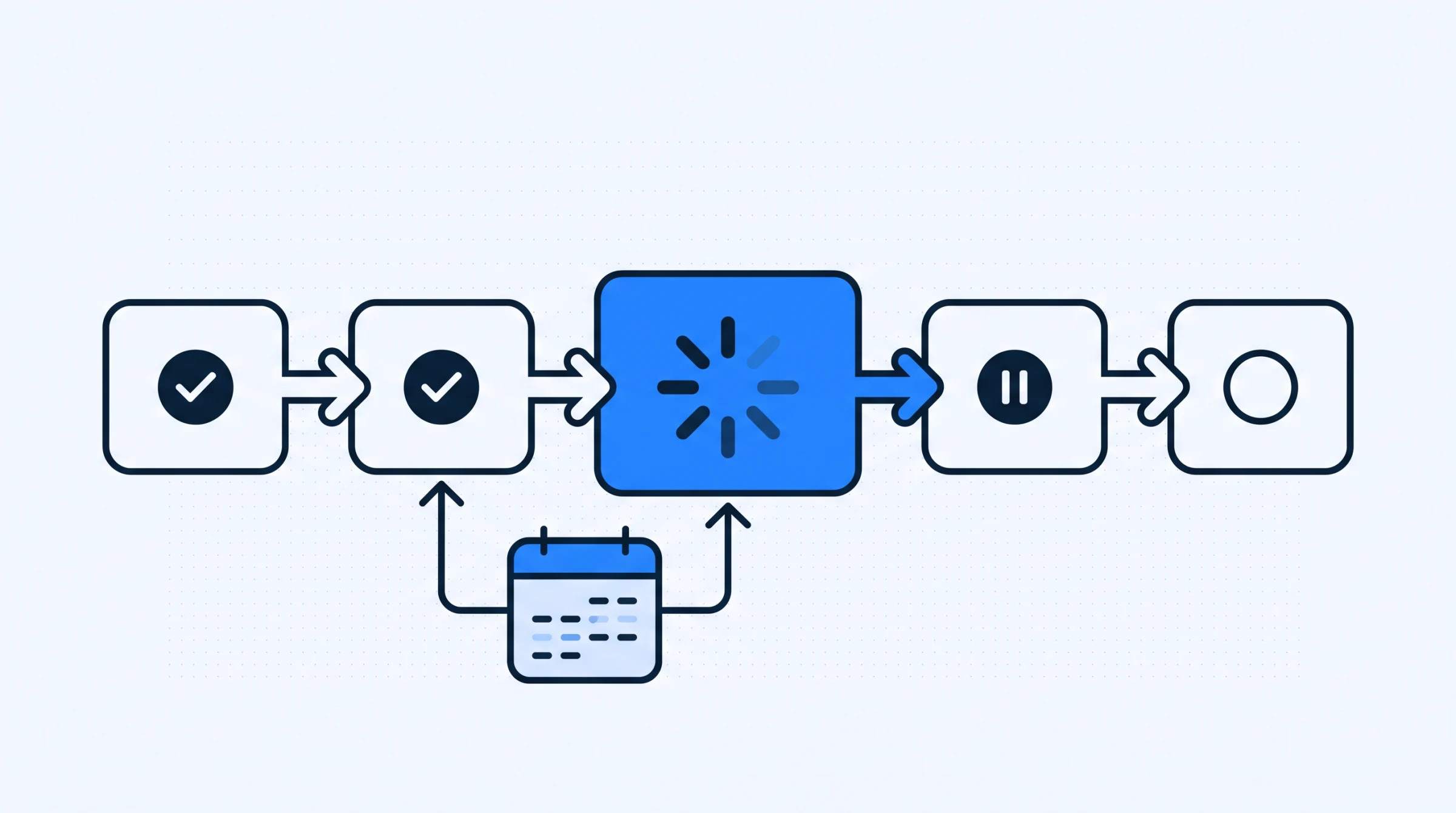
| Each item has a status | Proposed, accepted, scheduled, completed, declined | No way to see what is outstanding |
| The plan lives on the patient | Anyone opening the record sees it | Only the treating dentist knows it exists |
| Revisions are visible | You can see what changed and when | Plan and reality quietly diverge |
The second row is the one that turns a record into a tool. A plan with statuses can answer a question nobody can otherwise ask: which patients have accepted work they have not yet had. That list is almost always longer than a practice expects, and it is the single most valuable list a small clinic can produce.
The distinction between proposed and accepted matters more than it appears. Proposed is the clinic's view of what should happen. Accepted is the patient's decision. Collapsing them into one status means the clinic cannot tell the difference between work a patient declined and work nobody has discussed with them yet, which calls for entirely different conversations.
Making the plan visible to the whole team
A plan that only the treating dentist can see is not tracked, it is remembered, and memory is the thing the system was supposed to replace.
The receptionist is the person best placed to act on an outstanding plan, because they speak to the patient when they book, arrive and pay. If they can see that two accepted items remain, the follow up appointment is a natural sentence rather than a sales attempt. If they cannot, the patient leaves and the plan waits for the next unrelated visit.
This does not require giving reception full clinical access. What they need is the existence and status of outstanding items, not the clinical reasoning behind them. Where the plan sits on the patient record the whole team works from, that visibility happens without anyone being given information they do not need.
The other person who benefits is whichever dentist sees the patient next, who may not be the one who wrote the plan. In multi dentist practices this is routine, and a plan that is legible to a colleague is a different artefact from one written as a personal aide memoire.
The list worth running monthly
One report justifies the whole exercise: accepted treatment not yet completed, sorted by how long it has been outstanding.
Run it monthly and read it in three bands. Recent items, within about six weeks, need nothing; they are simply in progress. Items between six weeks and four months are the active opportunity, because the patient still remembers agreeing and the clinical picture has probably not changed. Items older than four months need a clinical judgement before any contact, since the plan may no longer be appropriate.
The contact itself should be a question rather than a reminder. Asking whether a patient still wants to proceed, and whether anything has changed, is both better care and better received than a message asserting that they are overdue. Some will have had the work elsewhere. Some decided against it and never said. Both are useful to record, because a declined item that stays marked accepted will keep appearing on the list forever.
The size of the list is itself a number worth tracking over time. A list that grows month after month means work is being accepted faster than it is being delivered, which is either a capacity problem or a booking one. A list that shrinks to nothing is not necessarily good news either; it can mean plans are being closed rather than completed.
Watch what the list tells you about the clinic as well as about patients. If a high proportion of accepted work is not completed, the issue is usually not patient reluctance. It is more often that follow ups are not booked before the patient leaves, which is a process the clinic controls.
Cost, consent and the awkward parts
Treatment plans sit where clinical judgement meets money, which is why the tracking has to handle both without conflating them.
Record what was quoted alongside what was proposed. A plan discussed six months ago at a price that has since changed is a difficult conversation if the patient remembers the figure and the clinic does not. Keeping the quoted amount with the plan item means the clinic can see what was said rather than reconstruct it.
Separate clinical acceptance from financial acceptance where they genuinely differ. A patient can agree that work is needed and not yet agree to pay for it. Systems that offer only accepted or declined force staff to pick one and lose the distinction, which then shows up as a patient who appears to have agreed and is surprised when contacted.
Be careful about how outstanding plans are used. A list of patients with accepted incomplete treatment is a clinical follow up tool. Treating it as a sales list changes the character of the contact, and patients notice the difference quickly. The clinics that get the most from this are the ones that use it to ask how someone is rather than to pursue revenue.
Booking the next step before the patient leaves
Almost every improvement in plan completion comes from one habit, and it is not a software feature. It is booking the next appointment while the patient is still at the desk.
The reasoning is unglamorous. A patient who leaves with an appointment has a commitment in their calendar and a reason to remember. A patient who leaves intending to call has a task competing with everything else in their week, and the clinic has handed the initiative to the person least motivated to act.
The obstacle is usually practical rather than reluctant. The patient does not know their availability for six weeks ahead, or the dentist has not yet decided how long the next appointment needs. Both have workable answers. Book a provisional slot that can be moved, which is far easier than creating one from nothing. And agree default durations by treatment type in advance, so the desk is not waiting for a clinical decision to make a booking.
This is where plan tracking and the calendar stop being separate subjects. A plan item marked accepted with no scheduled appointment is the precise definition of the work that will drift, and a clinic that can see that combination has found its follow up list without running any report at all.
Introducing it to an existing practice
The obstacle is not the software. It is that plans in most clinics currently live in notes, and converting them wholesale is not worth doing.
Start from a date. Every plan discussed from that day is entered as structured items with statuses. Historical plans are entered only when the patient next attends, which is the point at which somebody is reviewing them anyway. Within a year the active caseload has converted itself.
Agree the status names before anyone uses them, and keep the list short. Five is plenty: proposed, accepted, scheduled, completed, declined. Every status you add is a judgement someone has to make at the chair, and ambiguity at that moment produces inconsistent data that makes the monthly list untrustworthy.
Decide who updates status and when. The most reliable arrangement is that completion is recorded by whoever did the work, at the time, and acceptance is recorded when the patient says so rather than when the clinic assumes it. A status updated later from memory is the same problem the system was meant to solve, reappearing in a new place.
Expect the first monthly list to be misleading, because it will include historical plans that were abandoned years ago and never closed. Work through it once, mark the dead ones declined, and treat the second month as the first real one.
If you want to see how plans, appointments and balances sit on a single patient record, the feature overview shows the structure, and you can book a demo to run your own outstanding work list against it.