
The Critical Challenge of Emergency Dental Wait Times
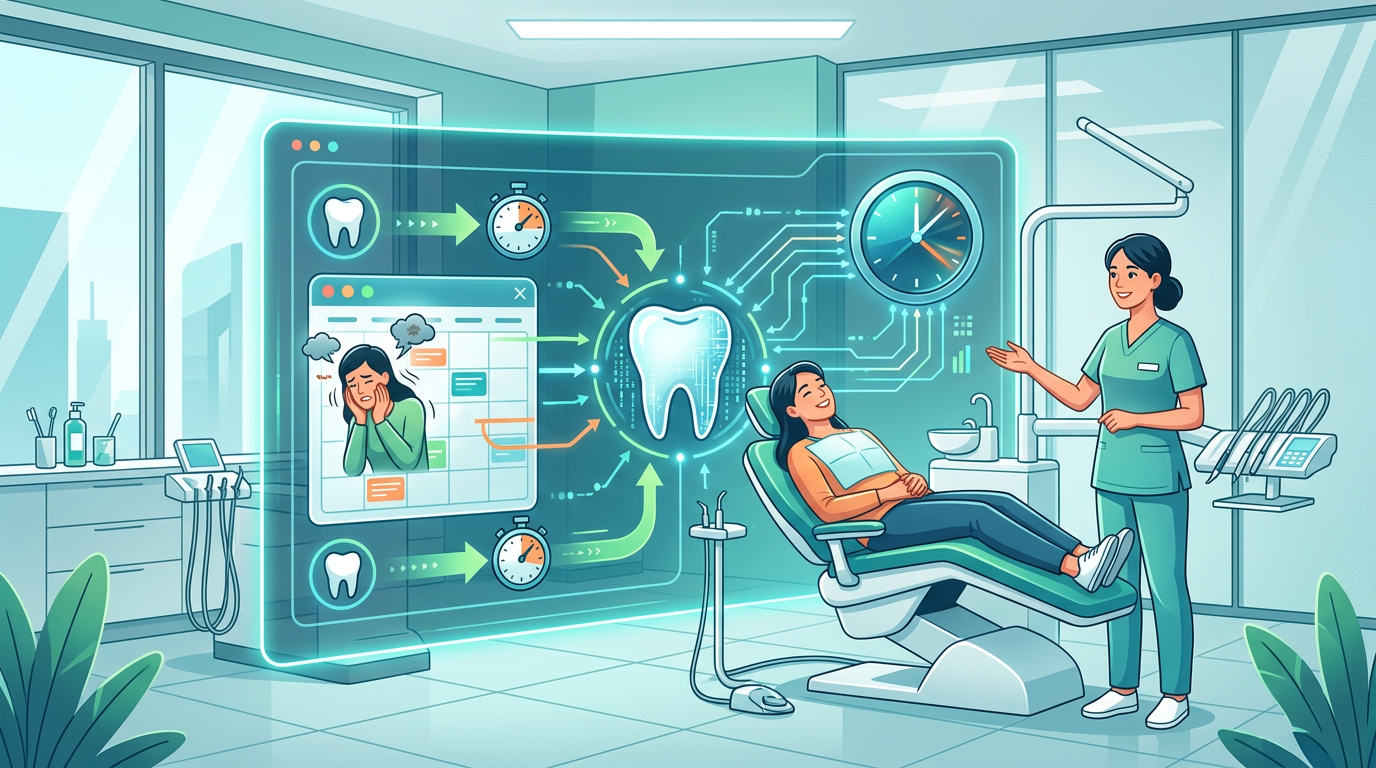
AI-powered dental scheduling slashes emergency wait times, turning one of a practice's most stressful pain points into a calm, optimized workflow. A patient in acute dental pain or trauma is not just seeking treatment; they want immediate relief and reassurance, and long waits deepen discomfort and anxiety, harm your reputation, and send patients elsewhere. Traditional emergency handling, manual juggling, overbooking, and inconvenient delays, locks practices in a cycle of inefficiency. Long waits for urgent cases can also lead to adverse health outcomes, damage a practice's reputation, and cost revenue as patients seek care elsewhere. This is where Artificial Intelligence steps in. Denti360 explores how AI-powered scheduling software revolutionizes the way practices manage emergency appointments, dramatically reducing wait times and elevating the standard of patient care.
Minimizing emergency wait times is about far more than convenience; it is a matter of clinical efficacy, patient trust, and operational excellence. Dental emergencies such as severe toothaches, abscesses, broken teeth, and lost fillings demand prompt attention, and delays can escalate a relatively minor issue into a more complex and costly problem requiring more invasive procedures. From a practice management perspective, inefficient emergency handling disrupts the entire clinic's workflow, fueling staff burnout, scheduling conflicts, and a generally chaotic environment. By embracing AI-powered solutions, practices move from reactive scheduling to a proactive, optimized system that prioritizes patient needs while maximizing operational efficiency.
Understanding the Bottlenecks in Traditional Emergency Scheduling
Before the solutions, it helps to identify the challenges that plague traditional emergency scheduling. These bottlenecks stem from manual processes, unpredictable demand, and a lack of real-time adaptability.
1. The Unpredictable Nature of Emergencies
Unlike routine check-ups or planned procedures, emergencies strike without warning. That unpredictability makes it incredibly hard to allocate time slots without either underutilizing resources, which loses revenue, or overbooking, which lengthens waits for everyone.
2. Manual Slot Allocation and Human Error
Many practices still rely on receptionists or office managers to manually find emergency slots. This is time-consuming and error-prone, leading to overlooked openings, double-booking, or misjudged time needs. The decision-making is subjective and lacks the comprehensive data analysis AI provides.
3. Inefficient Buffer Management
Some practices hold buffer slots to absorb emergencies. Well-intentioned but rigid, these buffers sit empty and lose income when no emergency arises, and quickly prove insufficient when several occur.
4. Lack of Real-Time Adaptability
Traditional systems cannot dynamically adjust schedules in real time. When a patient cancels last minute or an appointment finishes early, those newly available slots often go unfilled even with an emergency patient waiting.
5. Difficulty in Prioritization
Assessing the urgency of emergency cases is challenging without clinical input. A receptionist may struggle to distinguish a severe abscess needing immediate care from a lost filling that can wait, leading to sub-optimal prioritization.
6. Impact on Regular Appointments
Squeezing in emergencies often means delaying or rescheduling existing patients, causing frustration, negative reviews, and disrupted flow. This creates a ripple of dissatisfaction among emergency and routine patients alike.
The AI Advantage: How AI-Powered Scheduling Transforms Wait Times
AI-powered dental scheduling software meets these challenges head-on with advanced algorithms, machine learning, and predictive analytics. Here is how it changes the game for emergency appointments.
1. Predictive Demand Forecasting
AI algorithms analyze historical data, including past emergency patterns, seasonal trends, and local events, to predict when emergencies are most likely. Though not foolproof, this lets the software intelligently allocate flexible buffer slots during anticipated peaks, minimizing waste and maximizing availability when needed. If a practice consistently sees more emergencies on Monday mornings or after a holiday weekend, the AI suggests adjusting the schedule accordingly.
2. Dynamic Slot Optimization
This is where AI truly shines. Instead of fixed, rigid schedules, it creates a dynamic, self-optimizing system that constantly monitors for cancellations, no-shows, and early-finishing appointments. When a slot opens, the AI identifies it and, based on defined urgency criteria, suggests or auto-fills it with a waiting emergency patient. Valuable chair time is never wasted and urgent cases are seen faster.
3. Intelligent Triage and Prioritization
AI-powered systems integrate with patient intake forms, letting patients describe symptoms. Using natural language processing and practice-defined rules, the AI performs an initial objective triage, identifying keywords and symptom severity to assign a priority level. The most critical cases are flagged for immediate attention, guiding staff when multiple emergencies arise.
4. Resource Matching and Skill-Based Allocation
Beyond finding an open slot, AI considers which dentist or hygienist best suits a particular emergency based on skills, availability, and required equipment. If a complex extraction is needed, the AI prioritizes an oral surgeon's availability, ensuring the right provider at the right time and preventing delays from misassignment.
5. Automated Patient Communication
When an emergency slot opens, the software automatically notifies waiting patients by SMS or email. Patients confirm availability instantly, drastically cutting manual phone calls and ensuring open slots fill quickly and efficiently.
6. Minimized Impact on Routine Appointments
By intelligently finding and filling optimal emergency slots, AI reduces the need to disrupt existing appointments. The system identifies gaps or less disruptive periods to integrate emergencies, keeping the practice flowing smoothly and improving the experience for all patients.
7. Continuous Learning and Improvement
Machine learning sits at the heart of AI scheduling. The system continuously learns from new data, including successful placements, wait times, staff utilization, and clinical outcomes, refining its predictive models and optimization strategies over time. It becomes smarter and more effective the longer it runs.
Key Features of Denti360's AI-Powered Scheduling for Emergency Care
Denti360's AI-powered scheduling software is designed for the unique demands of emergency dental care. These features directly reduce wait times:
- Real-time schedule analysis: Continuously scans the entire schedule for openings, cancellations, and efficiency gains.
- Smart buffer management: Dynamically adjusts buffer slots based on predicted demand and real-time urgency for maximum utilization.
- Automated emergency waitlist management: Maintains a prioritized waitlist and automatically offers available slots by urgency and patient availability.
- Severity-based prioritization: Uses a customizable algorithm to assign priority levels so critical cases are addressed first.
- Provider-patient matching: Matches emergency patients with the most appropriate available clinician based on the procedure and provider expertise.
- Instant patient notification system: Automatically alerts waiting patients when a suitable slot opens, allowing quick confirmation.
- Integration with patient portals: Lets patients submit symptoms online for immediate AI-driven triage and faster assessment.
- Data analytics and reporting: Surfaces insights into emergency demand patterns, wait times, and resource utilization for data-driven improvements.
Explore the broader appointment scheduling capabilities that power these emergency workflows.
Implementing AI Scheduling: A Phased Approach
Integrating AI-powered scheduling for emergencies does not require an overnight overhaul. A phased approach ensures a smooth transition.
Phase 1: Assessment and Configuration
Begin by assessing current emergency protocols. Define urgency criteria, typical time allocations for various procedures, and preferred provider assignments. Configure the AI software with the practice's parameters, including operating hours, clinician schedules, and treatment room availability. This setup lets the AI learn your unique operational nuances.
Phase 2: Staff Training and Pilot Program
Thoroughly train front desk staff, hygienists, and dentists on the new system. A pilot, perhaps focused initially on a subset of emergency types or specific hours, surfaces and resolves early hurdles while building staff confidence in the system's benefits.
Phase 3: Gradual Rollout and Monitoring
Once staff are comfortable, gradually expand the AI system to all emergency appointments. Continuously monitor performance, watching wait times, patient feedback, and staff efficiency, and use the analytics to refine settings. Denti360's support team assists throughout, offering guidance and technical help.
Phase 4: Continuous Optimization
AI is not a set-it-and-forget-it solution. Regularly review performance reports, gather feedback from staff and patients, and update parameters as the practice evolves. As the AI gathers more data, its predictive capabilities improve, driving even greater efficiency and shorter wait times. This continuous learning cycle ensures the practice stays at the forefront of patient care.
Benefits Beyond Reduced Wait Times
Reducing wait times is the primary goal, but the benefits reach much further:
- Enhanced patient satisfaction: Prompt emergency care yields higher satisfaction, better reviews, and increased loyalty.
- Improved clinical outcomes: Timely intervention prevents conditions from worsening, leading to less complex treatments and better long-term oral health.
- Increased operational efficiency: Staff spend less time manually managing emergency schedules, freeing them for patient care and other tasks, so the whole clinic runs more smoothly.
- Optimized resource utilization: Fewer empty chairs and better allocation of staff and rooms raise revenue potential and use of expensive resources.
- Reduced staff stress and burnout: A predictable, organized schedule cuts the chaos of managing emergencies, creating a happier, more productive team.
- Competitive advantage: Consistently shorter emergency wait times set a practice apart, attracting patients seeking reliable, prompt care.
- Better data for practice growth: Insights on demand patterns, peak times, and resource needs inform strategic decisions for growth and staffing.
See the full range of benefits an intelligent platform delivers across your practice.
The Future of Dental Emergency Care in 2026 and Beyond
Looking toward 2026 and beyond, integrating AI into dental practice management becomes a necessity rather than a luxury. Modern patients increasingly demand immediate access and personalized care. AI-powered scheduling is a pivotal step in meeting those expectations, transforming the often-stressful experience of a dental emergency into a streamlined, efficient, reassuring process. Denti360 is committed to giving practices the tools to embrace this future and ensure optimal patient care and operational excellence.
AI will keep bringing more sophisticated capabilities, such as integration with tele-dentistry platforms for initial virtual triage, or predictive maintenance for dental equipment based on usage patterns to prevent downtime that could limit emergency availability. The potential for continuous improvement is immense, and early adopters will be best positioned for long-term success.
Embracing Innovation for Superior Patient Care
Reducing emergency wait times is a critical objective for any forward-thinking practice. Traditional approaches, burdened by unpredictability and manual inefficiencies, are no longer sufficient. AI-powered dental scheduling software offers a robust, intelligent, continuously improving solution. By leveraging predictive analytics, dynamic optimization, and automated communication, practices dramatically cut wait times, enhance satisfaction, improve efficiency, and deliver superior emergency care.
Ready to give patients the swift, compassionate care they deserve when emergencies strike? Discover how Denti360's AI-powered scheduling can cut your emergency wait times and transform your practice. Connect with Denti360 today to start building a more resilient, responsive practice.