
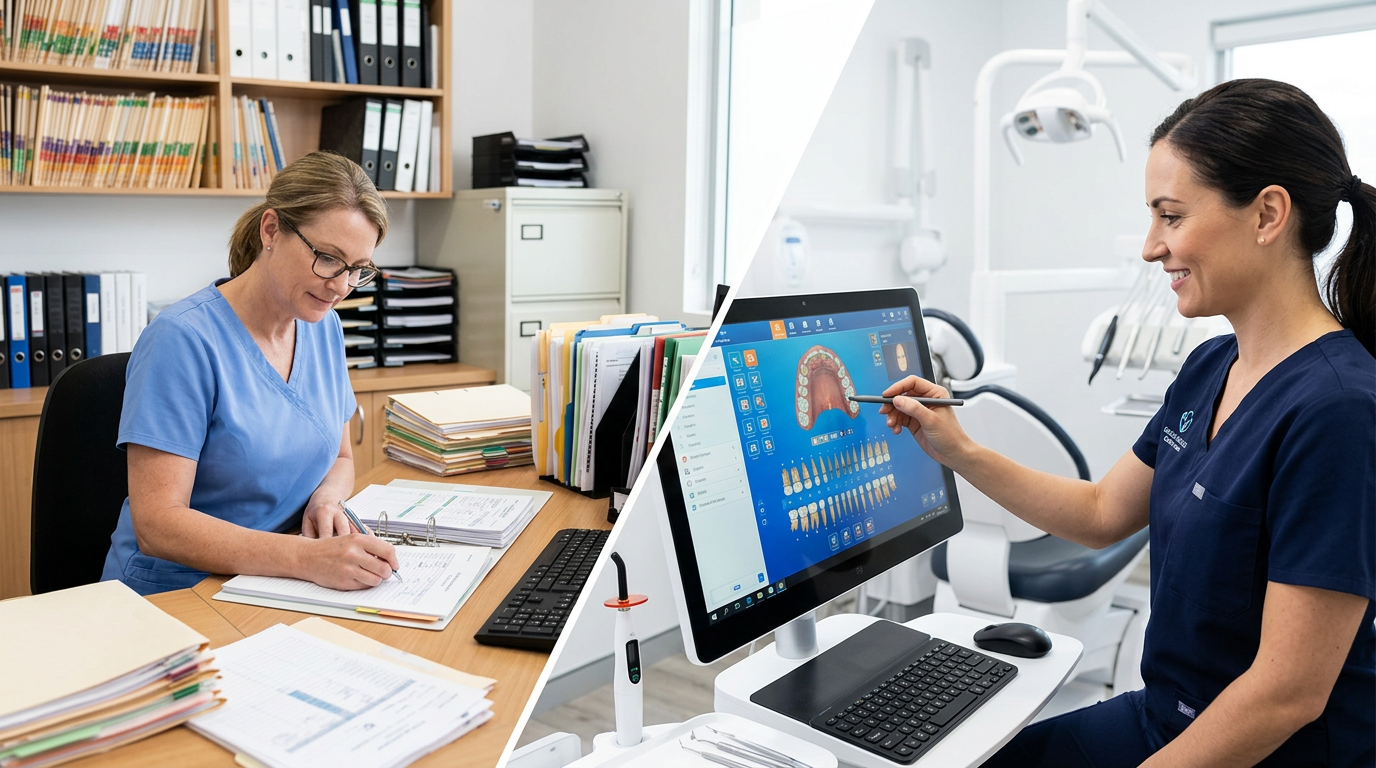
Walk into most dental clinics in India and you will still find filing cabinets. Rows of manila folders, handwritten treatment notes, carbon-copy prescription slips. It works — until it does not. A patient arrives at a branch clinic, but their records are at the main location. A hygienist cannot read the previous dentist's handwriting. An insurer requests documentation for a crown placed two years ago and the staff spend an hour searching. These are not hypothetical scenarios; they are weekly realities for practices still running on paper. Digital dental charting changes this equation entirely, and dental practice management software like Denti360 makes the transition straightforward for Indian clinics of every size.
What Paper Records Actually Cost Your Practice
The cost of paper-based dental records is easy to overlook because it is distributed across many small inefficiencies rather than appearing as a single line item. Consider what paper actually demands from your practice:
- Physical storage space that grows every year and competes with operatory space or waiting room comfort.
- Staff time spent locating, pulling, refiling, and photocopying records — time that could be spent on patient-facing tasks.
- Transcription errors when notes are handwritten quickly under chairside pressure.
- Duplication of effort when the same patient information is recorded in multiple places — intake form, clinical notes, billing record — with no guarantee of consistency.
- Vulnerability to loss — a fire, a flood, or a misplaced folder can permanently destroy records that are irreplaceable.
- Barriers to referral — sending records to a specialist means photocopying, faxing, or physically handing over documents, all of which introduce delays and security risks.
None of these costs are dramatic on their own. Together, they represent a significant drag on practice efficiency and a quiet but persistent risk to clinical quality.
The Case for Digital Dental Charting
Digital dental charting replaces paper forms with structured electronic records that are instantly searchable, consistently formatted, and accessible to authorised team members from any workstation. In a well-implemented dental software system, the clinical record becomes a living document that connects every aspect of a patient's care — from the first intake form to the most recent radiograph to the outstanding treatment plan.
Accuracy Through Structure
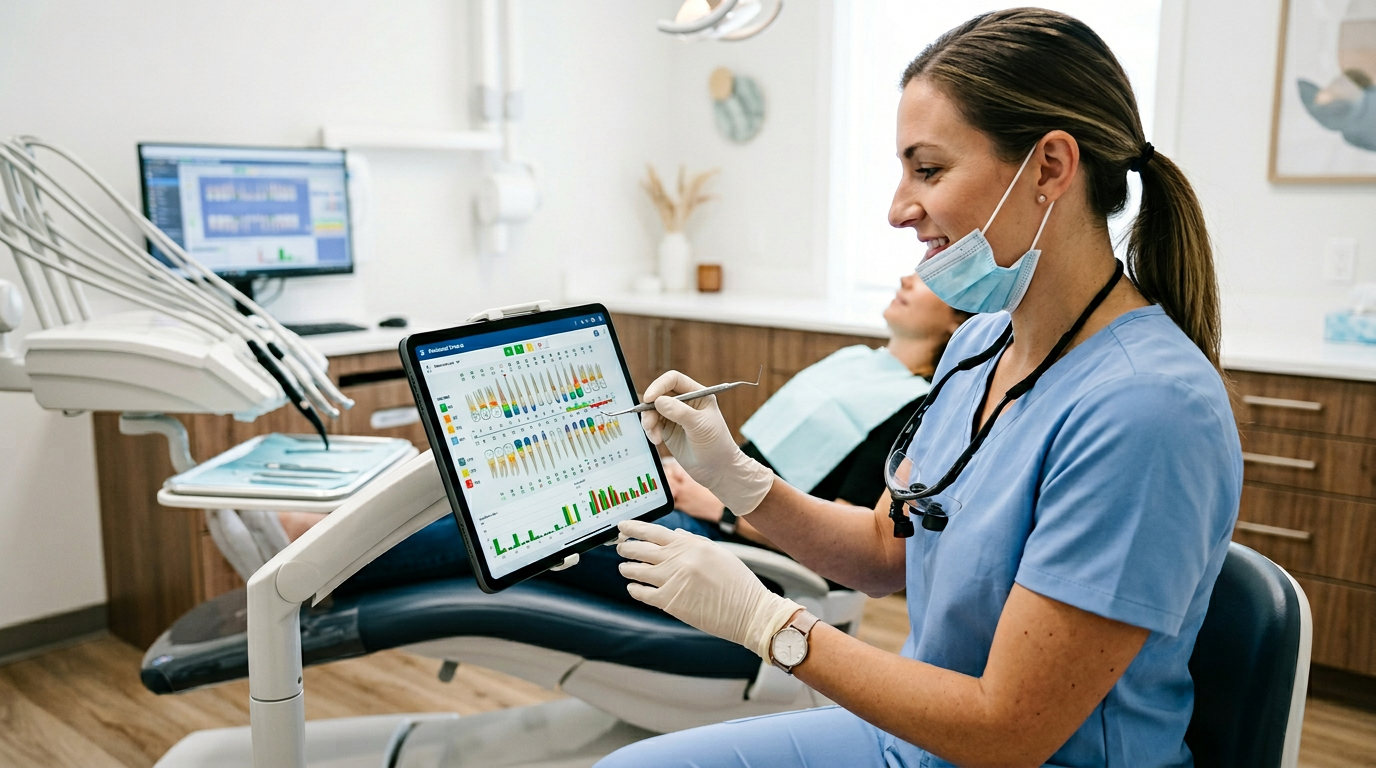
One of the most significant advantages of digital charting is that it imposes structure on data entry. Where a paper chart allows clinicians to write whatever they like in whatever format they prefer, a digital chart prompts for specific fields: probing depth, mobility grade, existing restorations, proposed treatment, next review date. Mandatory fields cannot be skipped. Drop-down menus enforce consistent terminology. The result is a record that is complete, legible, and comparable across visits and across team members.
This matters clinically. A new associate looking at a digital chart can understand exactly what the previous dentist documented and why. A hygienist preparing for a recall appointment can review the full periodontal history without deciphering handwriting or hunting through multiple paper sheets.
Speed at the Chair
Digital charting is faster than paper once the team is trained. Keyboard shortcuts, auto-populated fields, and pre-set treatment codes mean that documenting a routine appointment takes minutes rather than the extended period required to write legible notes by hand. Voice input further accelerates the process for periodontal charting, allowing the hygienist to call out measurements and have them captured directly without a second person writing them down. Time saved at the chair is time available for patient care or for seeing additional patients.
Efficiency Gains Across the Whole Practice
The efficiency benefits of digital dental charting extend well beyond the clinical record itself. When charting data is part of an integrated dental practice management system like Denti360, it connects directly to every downstream function.
Treatment Planning
Findings documented during a clinical examination flow directly into a draft treatment plan. The dentist can select proposed procedures, assign them to individual teeth, generate a cost estimate, and present the plan to the patient on-screen — all within the same session. There is no separate step of transferring handwritten notes into a different form.
Billing and Insurance
Treatment codes entered at the chair populate the billing record automatically. This eliminates the transcription step where a front-desk staff member interprets clinical notes and manually enters codes — a step that is a major source of billing errors. Accurate coding means fewer rejected insurance claims and faster payment.
Scheduling and Recall
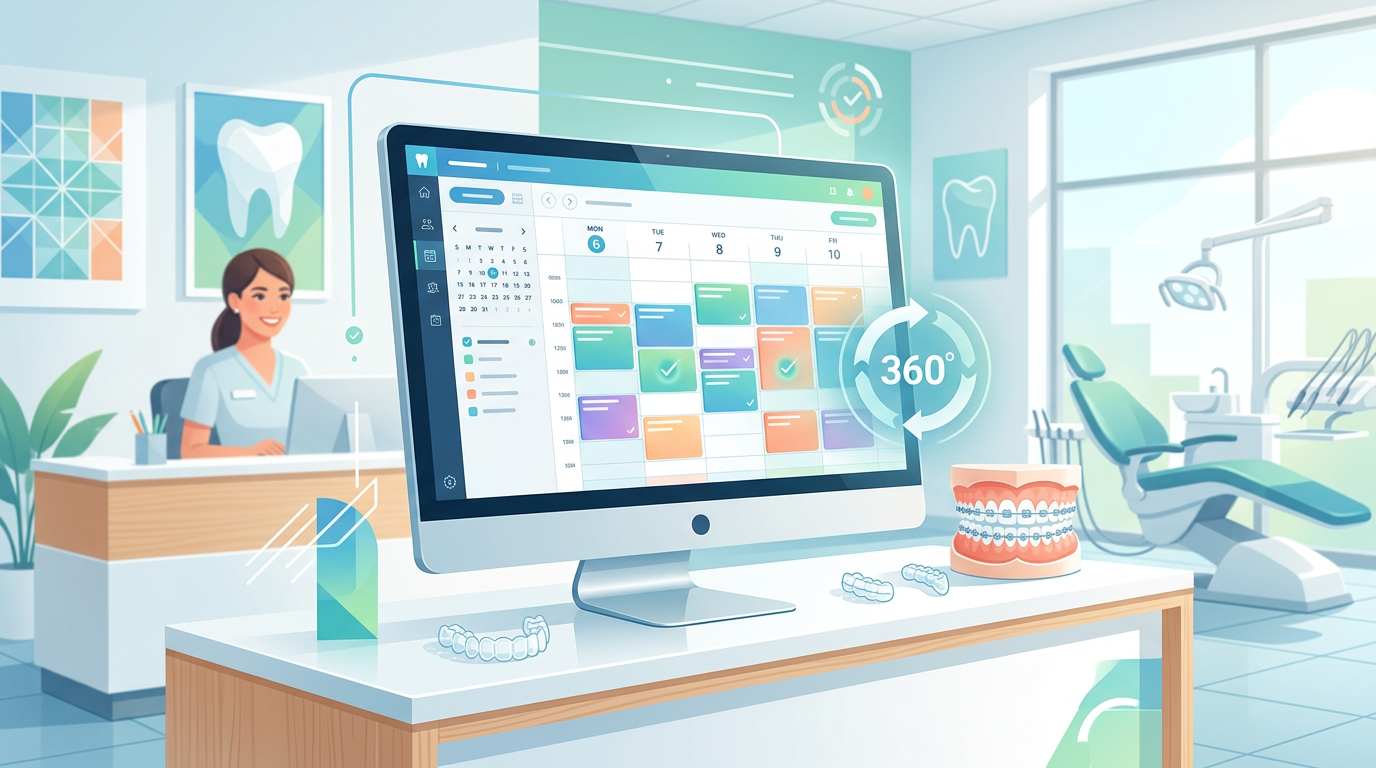
Digital records enable automated recall management. A patient due for their six-month cleaning can be identified by the system and sent a reminder without anyone manually reviewing a card file. Patients with specific risk factors — periodontal disease, high caries risk, post-surgical monitoring — can be flagged for shorter recall intervals, with the scheduling system applying the right interval automatically.
Addressing the Concerns About Going Digital
Dental professionals who have used paper records for years sometimes raise legitimate questions about the transition to digital charting. The most common concerns are worth addressing directly.
Data security: Digital records can be encrypted, access-controlled, and backed up automatically. A paper file in an unlocked cabinet is far less secure than a cloud-based record protected by multi-factor authentication and daily backups. Denti360 follows data security best practices appropriate for sensitive health records in the Indian context.
System downtime: A well-designed dental software system includes offline capability for core functions and automatic synchronisation when connectivity is restored. The risk of downtime is real but manageable — and it is worth comparing it against the permanent loss of a paper record damaged in a flood or fire.
Learning curve: Any new system requires training. Denti360 provides structured onboarding for the entire clinical and administrative team, and the interface is designed to be intuitive for dental professionals rather than requiring IT expertise. Most teams reach comfortable proficiency within a few weeks.
Digital Charting and the Future of Dental Practice in India
The regulatory and insurance environment in India is moving steadily toward digital health records. Practices that build digital infrastructure now will be better positioned as these standards evolve. Beyond compliance, digital dental charting is simply what modern patients expect from a modern clinic. A practice that can pull up a patient's complete history instantly, show them their X-rays on a large screen, and email them their treatment plan and cost breakdown is one that communicates competence and care.
Dental software India-wide is increasingly affordable and scalable, which means the transition from paper is within reach for solo practitioners and large group practices alike. Denti360 is designed specifically for the Indian dental market — with pricing, support, and features aligned to how Indian clinics actually operate.
Make the Switch with Denti360
The comparison between digital dental charting and paper records is not really a close call. Digital wins on accuracy, efficiency, security, and the ability to connect clinical data to every other function of the practice. The only real question is how to make the transition as smooth as possible — and that is exactly what Denti360 is designed to do.
Book a free Denti360 demo today and see how digital dental charting can transform the efficiency and accuracy of your practice from day one.