
Why Dental Scheduling Software Is Your Best Defense Against No-Shows
Dental scheduling software has become the most effective way to fight the empty chairs that quietly erode your production every week. The average dental practice experiences a no-show rate of 5-15%, sometimes higher, and each missed appointment means lost revenue, wasted chair time, and higher operational costs. Beyond the financial hit, no-shows disrupt workflow, drain staff productivity, and delay essential treatment for other patients. For Denti360, a leader in dental healthcare and technology, solving this problem is central to building efficient, patient-centric practices. This guide shows how advanced scheduling software acts as a strategic asset that reduces no-shows, transforms operations, and improves the patient experience.
In an increasingly competitive healthcare landscape, maximizing efficiency and patient retention is essential. The administrative burden of rescheduling and filling last-minute openings strains your team. Modern scheduling software addresses the root causes of no-shows and builds a more reliable appointment system that keeps your day on track.
Understanding the Root Causes of Patient No-Shows
Before fixing the problem, understand why patients miss appointments. Common reasons include:
- Forgetfulness: Patients simply forget their appointment details.
- Scheduling conflicts: Unforeseen work, family, or personal commitments arise.
- Lack of perceived urgency: Routine check-ups get deprioritized over other commitments.
- Anxiety or fear: Dental phobia leads to avoidance.
- Financial concerns: Patients cancel when they anticipate high costs or insurance issues.
- Poor communication: Inadequate or confusing appointment reminders.
- Inconvenient scheduling: Difficulty finding appointment times that fit their lifestyle.
Traditional methods rarely address these factors. Manual reminder calls are time-consuming and often ineffective, while paper-based systems lack the flexibility and proactive features needed to engage patients. Advanced dental appointment scheduling tools tackle these issues head-on.
How Advanced Scheduling Software Prevents No-Shows
Modern scheduling software goes far beyond booking appointments. It combines features that improve communication, increase patient convenience, and proactively prevent no-shows. Here is how it works.
1. Automated, Personalized Appointment Reminders
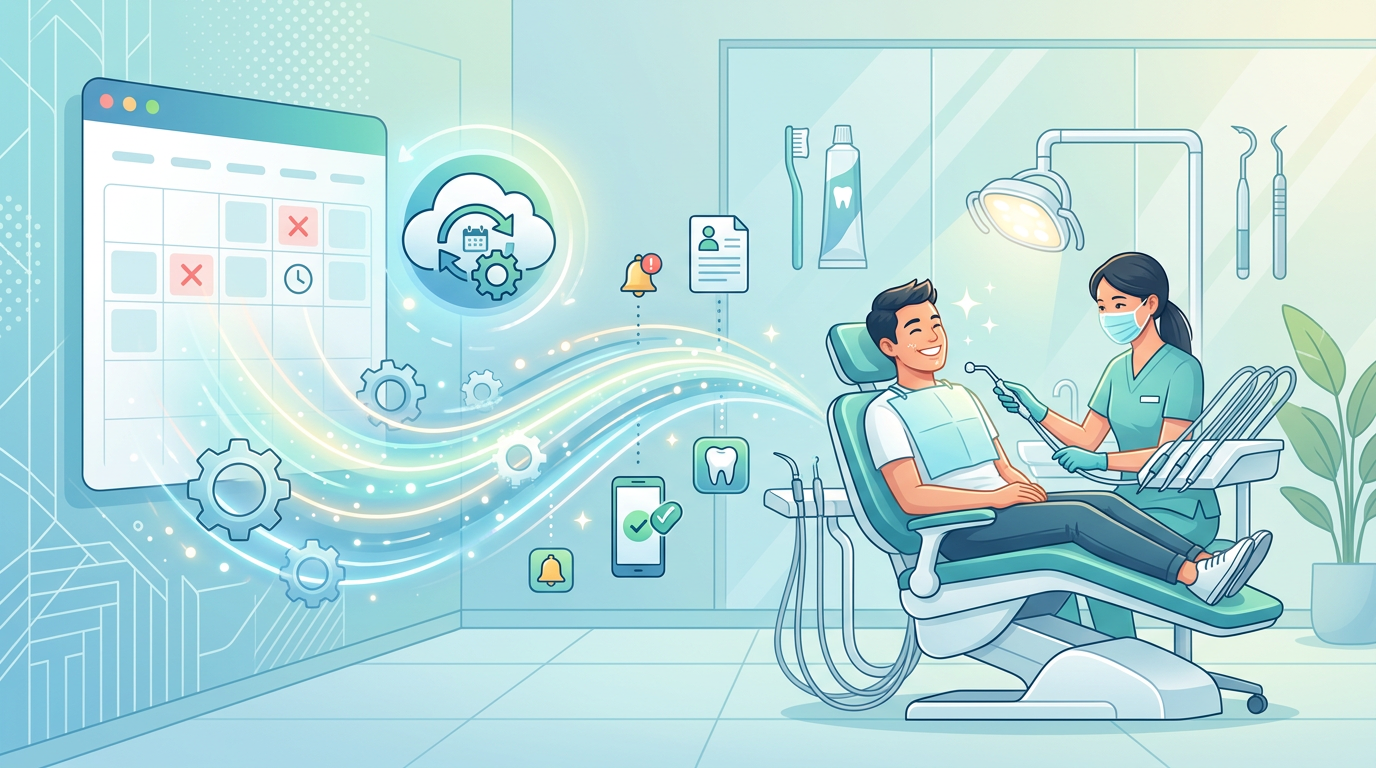
Automated, multi-channel reminders are among the most impactful features, directly combating forgetfulness and scheduling conflicts. Denti360's software lets practices:
- Customize reminder cadence: Send reminders days, hours, or a week before an appointment, with follow-ups, for example three days out, then 24 hours out.
- Offer multi-channel options: Patients choose SMS, email, or automated voice calls, so each message reaches them through their preferred channel.
- Personalize messages: Include patient names, dates and times, provider names, and contact information. For complex procedures, add a brief preparation note.
- Enable confirmations and reconfirmations: Patients confirm attendance directly from the reminder. If no confirmation arrives, automated reconfirmation attempts trigger.
- Use intelligent reminders: The system can detect an unconfirmed patient, send a different reminder, or alert staff for manual follow-up.
2. Online Patient Self-Scheduling
Letting patients book, reschedule, or cancel online offers unmatched convenience and lowers the barrier to keeping appointments. This feature delivers:
- 24/7 accessibility: Patients book anytime, anywhere, outside practice hours, often after work or on weekends.
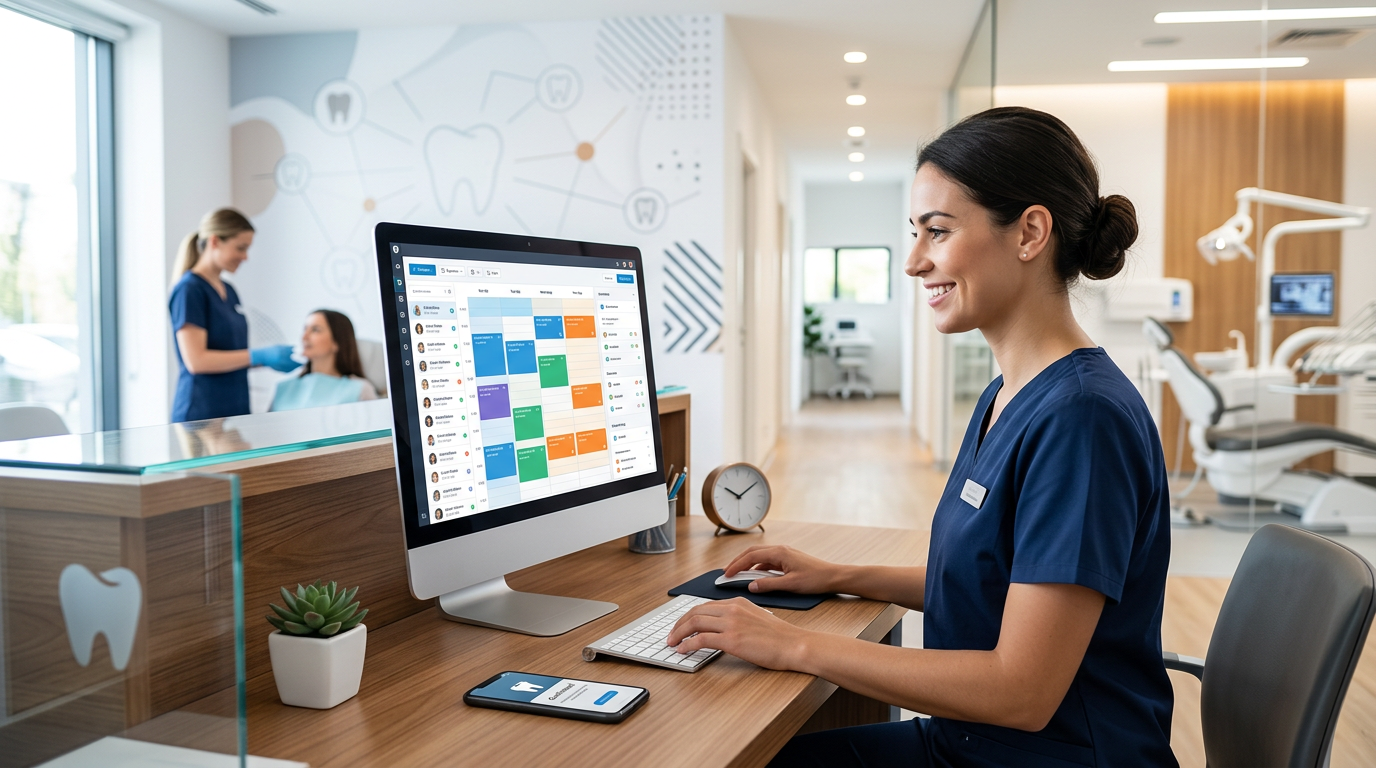
- Real-time availability: Patients see up-to-date openings, eliminating phone tag and double-bookings through direct calendar integration.
- Reduced phone volume: Front desk staff focus on in-person care and complex tasks instead of routine scheduling calls.
- Patient empowerment: Control over appointments increases ownership and commitment, making patients more likely to show up.
- Pre-screening for appointments: Custom questions ensure patients book the correct appointment type, such as new patient exam, emergency, or cleaning.
3. Waitlist Management and Smart Fill-Ins
Even with strong reminders, cancellations happen. Advanced software turns these openings into opportunities:
- Automated waitlist: Patients seeking earlier appointments or those on a cancellation list are automatically notified by text or email when an opening matching their criteria arises, often on a first-come, first-served basis.
- Smart fill-in algorithms: The software intelligently identifies suitable patients from the waitlist based on treatment needs, insurance, and previous appointment history, then offers them the newly available slot.
- Reduced downtime: This dynamic management dramatically minimizes schedule gaps, keeping dentists and hygienists productive and maximizing chair utilization throughout the day.
- Improved patient satisfaction: Patients appreciate getting an earlier appointment, especially for urgent needs, turning a potential frustration into a positive experience.
4. Integrated Patient Communication Platform
Beyond reminders, a robust communication system strengthens patient relationships:
- Two-way text messaging: Quick, informal communication for questions, confirmations, or directions without tying up phone lines, especially popular with younger patients.
- Pre-appointment forms and information: Patients complete paperwork online before their visit, saving office time, ensuring required details, and easing anxiety with a smoother check-in.
- Post-appointment follow-ups: Automated thank-you notes, care instructions, or feedback requests enhance the experience and show the practice cares.
- Educational content delivery: Share articles, videos, or instructions about an upcoming procedure to reduce anxiety and reinforce the visit's importance.
5. Robust Reporting and Analytics
Data drives smarter decisions. Advanced software provides:
- No-show rate tracking: Monitor no-show and cancellation rates by provider, time of day, day of the week, or patient segment to find bottlenecks.
- Revenue impact analysis: Calculate the financial cost of missed appointments for a clear view of the problem's scale.
- Patient behavior insights: Identify repeat offenders or higher-risk segments to inform targeted interventions like deposits or flexible scheduling.
- Reminder effectiveness: Analyze which methods and timings yield the highest confirmation rates and optimize accordingly.
- Chair utilization metrics: Understand how efficiently chairs are used to refine scheduling templates and staffing.
6. Streamlined Check-In and Check-Out
A smooth in-office experience boosts retention and reduces future cancellations caused by frustration:
- Digital intake forms: Patients complete forms on a tablet at arrival, integrating directly into their record.
- Automated payment processing: Simplify bills and co-pays, making the financial step less daunting.
- Future appointment booking: Easily book the next visit before patients leave, reinforcing commitment.
Best Practices for Implementing Scheduling Software
To maximize Denti360's scheduling solutions, follow these best practices:
- Tailor reminder settings: Adjust frequency and channels by appointment type, such as hygiene versus complex restorative, and by patient preference.
- Educate your patients: Inform them about online scheduling and communication options, highlighting convenience and control.
- Train your staff thoroughly: Ensure every team member can book appointments, manage waitlists, and analyze reports.
- Monitor and adapt: Review no-show data regularly and refine scheduling policies and communication strategies.
- Set clear cancellation policies: A communicated policy, perhaps with a small fee for repeat offenders where appropriate, encourages accountability.
- Integrate with your practice management system: Seamless integration keeps patient information, billing, and scheduling unified. Explore the full platform features that make this possible.
The ROI of Reducing No-Shows With Denti360
Investing in scheduling software like Denti360's delivers a significant return. By reducing no-shows, practices can expect:
- Increased revenue: More filled appointments mean higher production and collections, with even a small reduction adding up over a year.
- Improved staff productivity: Less time on manual calls and rescheduling frees staff for higher-value work.
- Better patient flow: A predictable schedule means smoother operations and less stress for staff and patients.
- Enhanced patient satisfaction: Modern convenience and personalized communication drive retention and referrals.
- Data-driven decision making: Analytics empower managers to optimize practice performance.
- Reduced operational costs: Less paper, fewer calls, and optimized staff time lower overhead.
Looking Ahead to 2025: The Future of Dental Scheduling
As we look toward 2025 and beyond, scheduling software will keep evolving. Expect deeper AI and machine learning integration to predict no-show risk, optimize schedules around provider availability and patient preferences, and deliver even more personalized communication. Denti360 is committed to staying at the forefront of these innovations, giving practices the tools to thrive in a dynamic healthcare environment.
Transform Your Scheduling With Denti360
Patient no-shows are a persistent drain on efficiency and profitability, but advanced scheduling software changes the equation. By combining automated reminders, online self-scheduling, intelligent waitlist management, and robust communication tools, Denti360 helps your office build a reliable, efficient, patient-centric appointment system that boosts revenue and strengthens relationships. See how these practice benefits apply to your office, then contact the Denti360 team for a personalized walkthrough and start reducing no-shows today.